 शुरुआतीखड़े होकर
गर्दन घुमाना
Neck Rolls
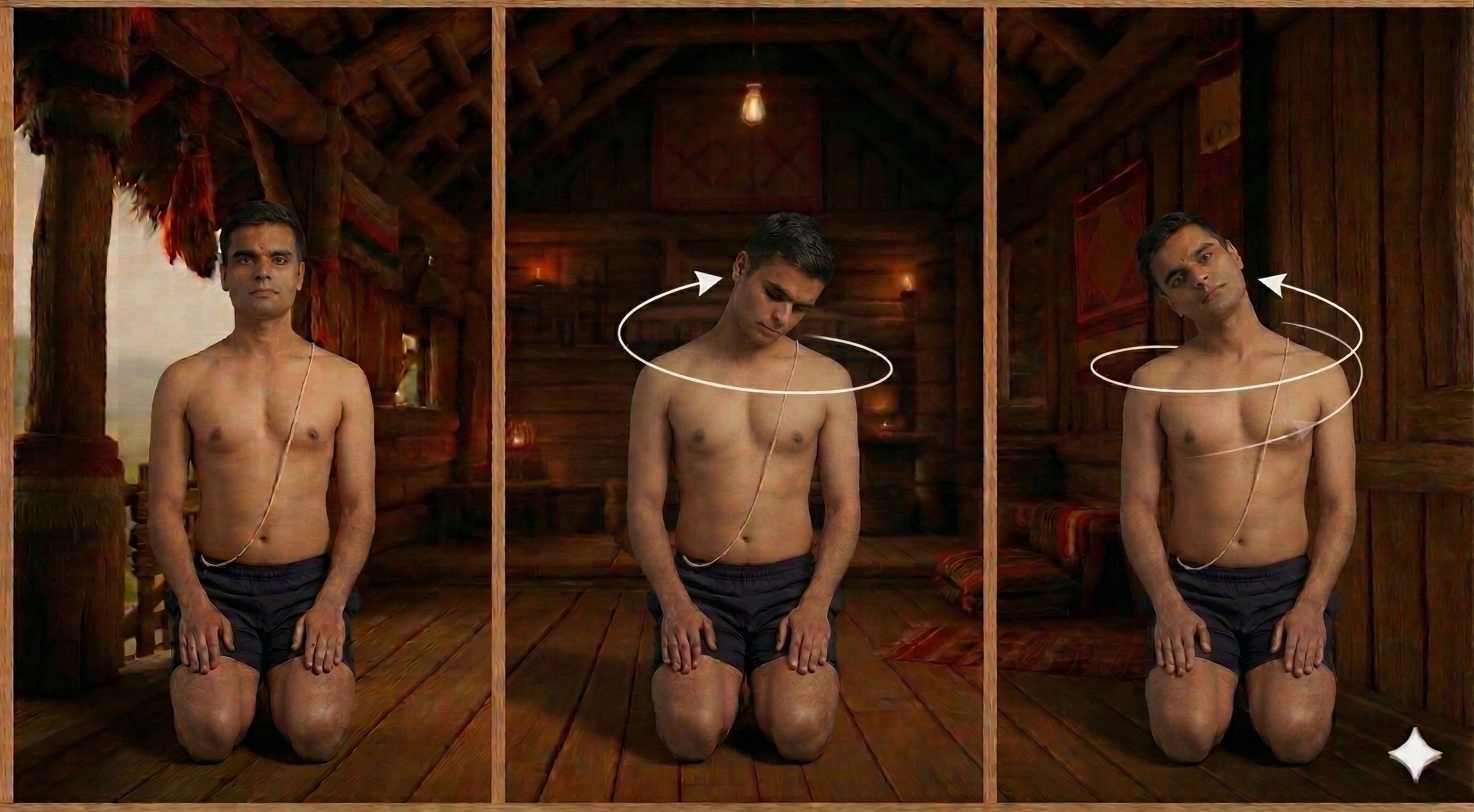
गर्दन का घुमाव एक कोमल ग्रीवा गतिशीलता व्यायाम है जो गर्दन को अर्ध-गोलाकार गति सीमा में ले जाता है।
फायदे
5Sternocleidomastoid (SCM)(releasing)
These prominent muscles run diagonally from behind your ears down to your collarbones and sternum, forming the 'V' at the front of your neck. As you gently roll your head from side to side, one SCM lengthens while the other subtly contracts, allowing for controlled movement and release. This action helps to unwind tension often held from forward head posture or stress, inviting a sense of freedom and openness in the throat and chest, facilitating the flow of Udana Vayu – the upward-moving energy.
Upper Trapezius(releasing)
The upper trapezius muscles are the large, triangular muscles that extend from the base of your skull, across your shoulders, and down your upper back. In Neck Rolls, as your head moves, these fibers are gently elongated and softened, releasing the 'hunch' or stiffness often felt in the shoulders and neck. This sustained, gentle stretch helps to melt away the physical manifestation of stress and responsibility, allowing a feeling of lightness and ease to settle into the shoulders and upper back.
Scalenes(releasing)
Deeply situated in the sides of your neck, the scalenes run from the cervical vertebrae down to your first two ribs. They are often silently tight, contributing to neck pain, shoulder tension, and even restricted breathing. The slow, deliberate motion of Neck Rolls provides a subtle, sustained stretch to these crucial muscles, helping to decompress the neck and improve local circulation. Releasing the scalenes can profoundly ease chronic tension headaches and allow for more expansive, unhindered breathing, connecting us more deeply to our vital life force, prana.
- पूर्ण शारीरिक विश्लेषण →
सावधानियाँ
3Neck Injury / Cervical Issues
Looking up, bearing head weight, or unsupported neck rotation can compress cervical vertebrae and irritate nerves.
Keep the head in a neutral position aligned with the spine; avoid deep neck extension, flexion, or unsupported rotation.
Vertigo / Dizziness
Rapid head movements and changes in head position can trigger dizziness and increase the risk of losing balance.
Keep both feet on the floor, fix the gaze on a single unmoving point at eye level, and stay near a wall.
विधि
चरण-दर-चरण निर्देश
सीधे खड़े हो जाएं या आराम से बैठ जाएं, रीढ़ (reedh) सीधी रखें।
अपनी ठोड़ी (thodi) को अपनी छाती (chati) की ओर झुकाएं।
धीरे-धीरे अपने दाहिने कान (kaan) को दाहिने कंधे (kandhe) की ओर ले जाएं।
अपनी गर्दन (gardan) को पीछे की ओर घुमाएं, लेकिन अगर दर्द (dard) हो तो पूरी तरह से पीछे न जाएं।
धीरे-धीरे अपने बाएं कान (kaan) को बाएं कंधे (kandhe) की ओर ले जाएं।
अपनी ठोड़ी (thodi) को वापस अपनी छाती (chati) की ओर ले जाएं।
इस circular motion को धीरे-धीरे 5 बार दोहराएं।
अब विपरीत दिशा में 5 बार दोहराएं।
श्वास (shwas) लेते रहें और तनाव (tanav) release करते रहें।
अपनी गर्दन (gardan) को center में वापस लाएं।
सहायक उपकरण
वैकल्पिक सहायता — आवश्यकतानुसार उपयोग करें
Folded Blanket
A blanket under the heel raises it slightly, making the pose accessible when calf tightness prevents the foot from staying grounded.
सामान्य गलतियाँ
शिक्षण संकेत
अभ्यास क्रम
अक्सर पूछे जाने वाले प्रश्न
गर्दन घुमाना के बारे में सामान्य प्रश्न
गर्दन घुमाना क्या है?
गर्दन का घुमाव एक कोमल ग्रीवा गतिशीलता व्यायाम है जो गर्दन को अर्ध-गोलाकार गति सीमा में ले जाता है।
गर्दन घुमाना के क्या फायदे हैं?
Releases neck and upper back tension। Improves cervical spine mobility। Relieves tension headaches।
गर्दन घुमाना किस स्तर के लिए है?
गर्दन घुमाना एक शुरुआती स्तर का आसन है। यह सभी के लिए उपयुक्त है।
गर्दन घुमाना कौन न करे?
Cervical spondylosis (move gently), Acute neck injury, Vertigo (avoid full circles) की स्थिति में यह आसन न करें।
गर्दन घुमाना के लिए कौन से उपकरण चाहिए?
blanket का उपयोग इस आसन को आसान बना सकता है।