 मध्यमखड़े होकर
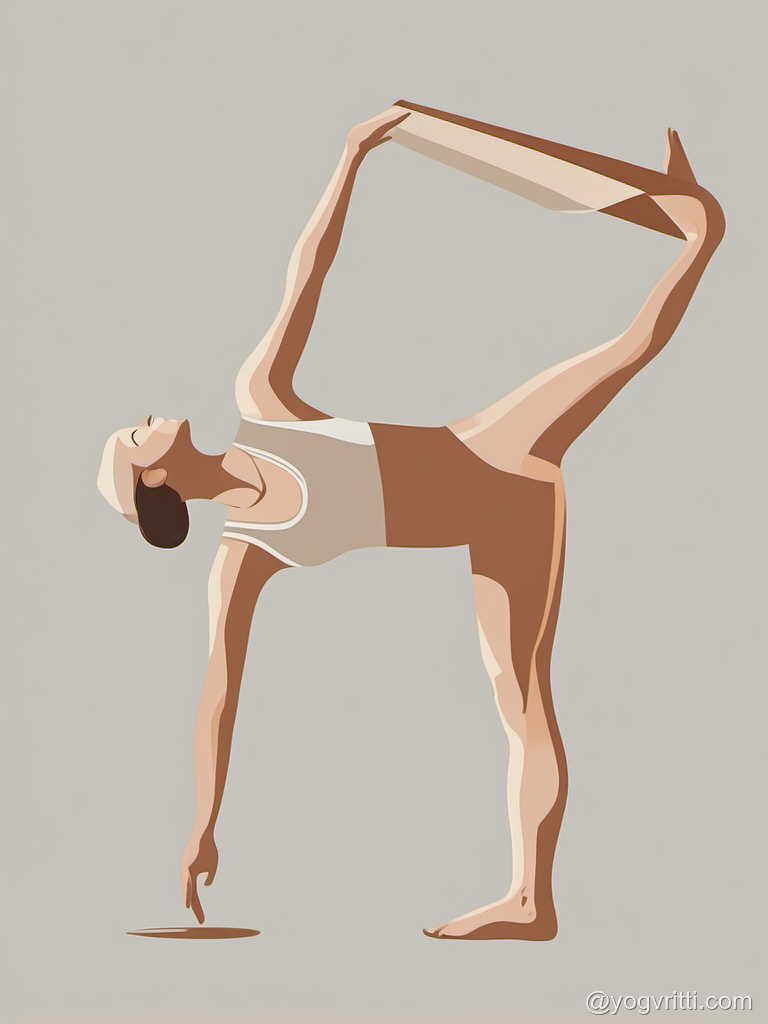
परिवृत्त अर्ध चंद्रासन
Revolved Half Moon Pose
परिवृत्त अर्ध चंद्रासन हाफ मून पोज़ का एक घुमावदार संस्करण है जो संतुलन में सुधार करता है, पैरों और कोर को मजबूत करता है, और रीढ़ की हड्डी के लचीलेपन को बढ़ाता है।
फायदे
5Hamstrings (standing leg)(lengthening)
The muscles running along the back of your standing thigh (hamstrings) are eccentrically lengthened with control as the hip flexes and the pelvis tilts, creating a stable yet responsive foundation. This intelligent engagement prevents hyperextension of the knee while cultivating a deep, sustained opening along the posterior chain. In yogic terms, this helps release 'apana vayu' – the downward-moving energy – fostering a profound sense of groundedness and ease in the lower body, directly influencing pelvic stability.
Gluteus Medius and Minimus (standing leg)(stabilizing)
These smaller, deeper muscles on the outer side of the standing hip (gluteus medius and minimus) are crucial for stabilizing the pelvis and preventing it from collapsing inwards or outwards. Their isometric contraction works tirelessly to maintain a level hip line, providing a steady anchor for the entire pose. This deep hip stability cultivates a sense of unwavering inner support, allowing the practitioner to find their center of gravity and root deeply into the earth.
Quadriceps (standing leg)(strengthening)
The powerful muscles on the front of the standing thigh (quadriceps) are strongly engaged to extend and straighten the knee without locking it, lifting the kneecap with intelligent action. This isometric strength brings heat and vitality to the leg, channeling 'prana' downwards and creating a feeling of unwavering strength and resolve from the ground up. This active engagement protects the knee joint and provides the necessary power for balance.
- पूर्ण शारीरिक विश्लेषण →
सावधानियाँ
5Low Blood Pressure
Rising quickly from low positions can cause a sudden drop in blood pressure, leading to dizziness or fainting.
Move slowly between positions, keep eyes open, and rest against a wall if dizziness arises.
Headache / Migraine
Physical exertion, inversions, and strong breath work can intensify an existing headache or trigger a migraine.
Avoid inversions and strong pranayama; rest in a supported, restorative posture with a cool cloth on the forehead.
Back Injury / Back Pain
Spinal flexion, extension, or rotation under load can compress vertebral discs or strain the paraspinal muscles.
Initiate the twist from the upper spine and ribs rather than forcing from the waist; keep both sitting bones grounded.
Pregnancy
Deep twists, abdominal compression, and lying flat on the back can restrict blood flow or cause discomfort as pregnancy progresses.
Twist from the upper thoracic spine only, opening the chest rather than compressing the abdomen; use a chair for support.
विधि
चरण-दर-चरण निर्देश
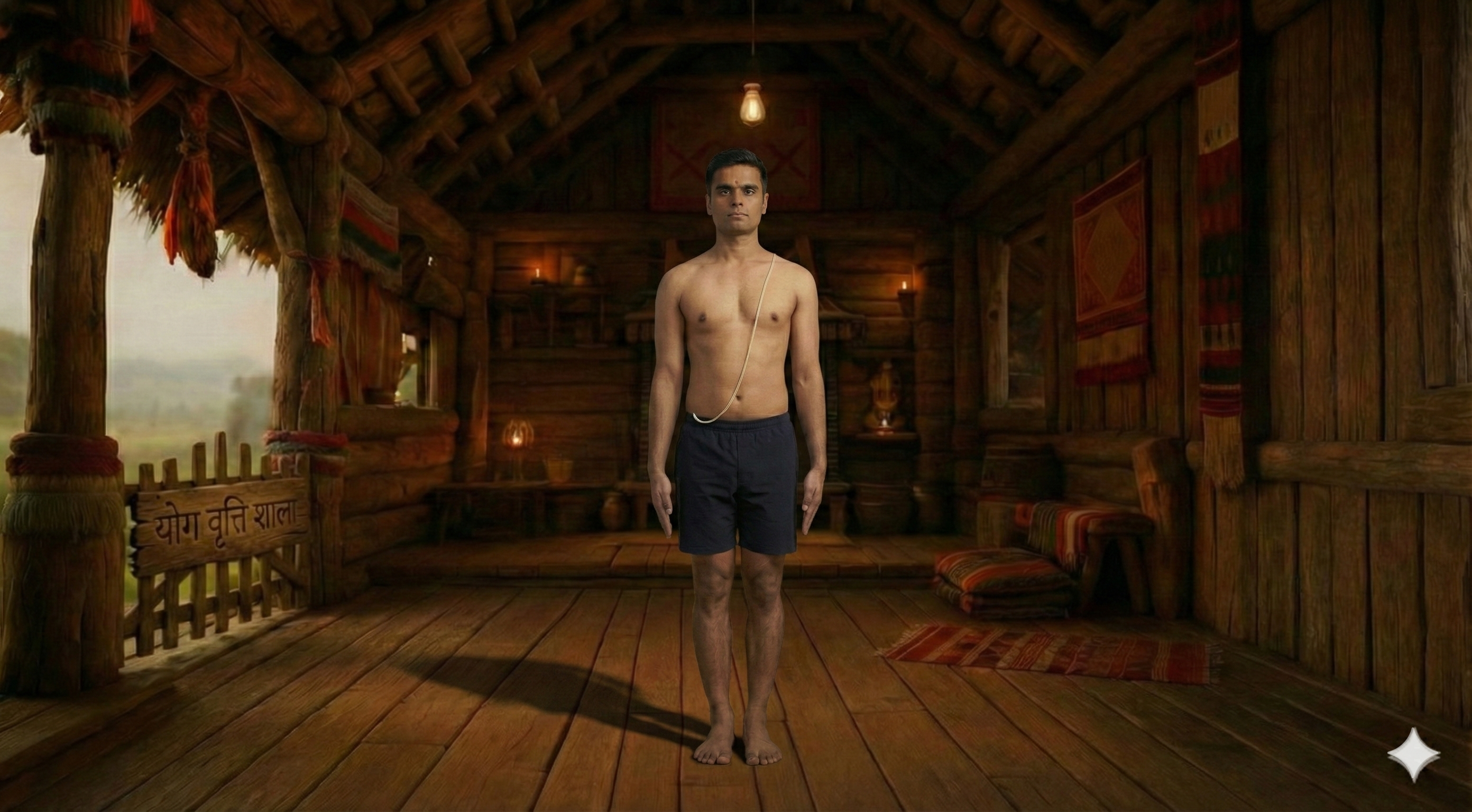
ताड़ासन में खड़े हो जाएं, पैर साथ में और हाथ शरीर के बगल में।
श्वास लें और पैरों को लगभग 3.5-4 फीट अलग फैलाएं।
अपने दाहिने पैर को 90 डिग्री बाहर घुमाएं और बाएं पैर को थोड़ा अंदर की ओर घुमाएं।
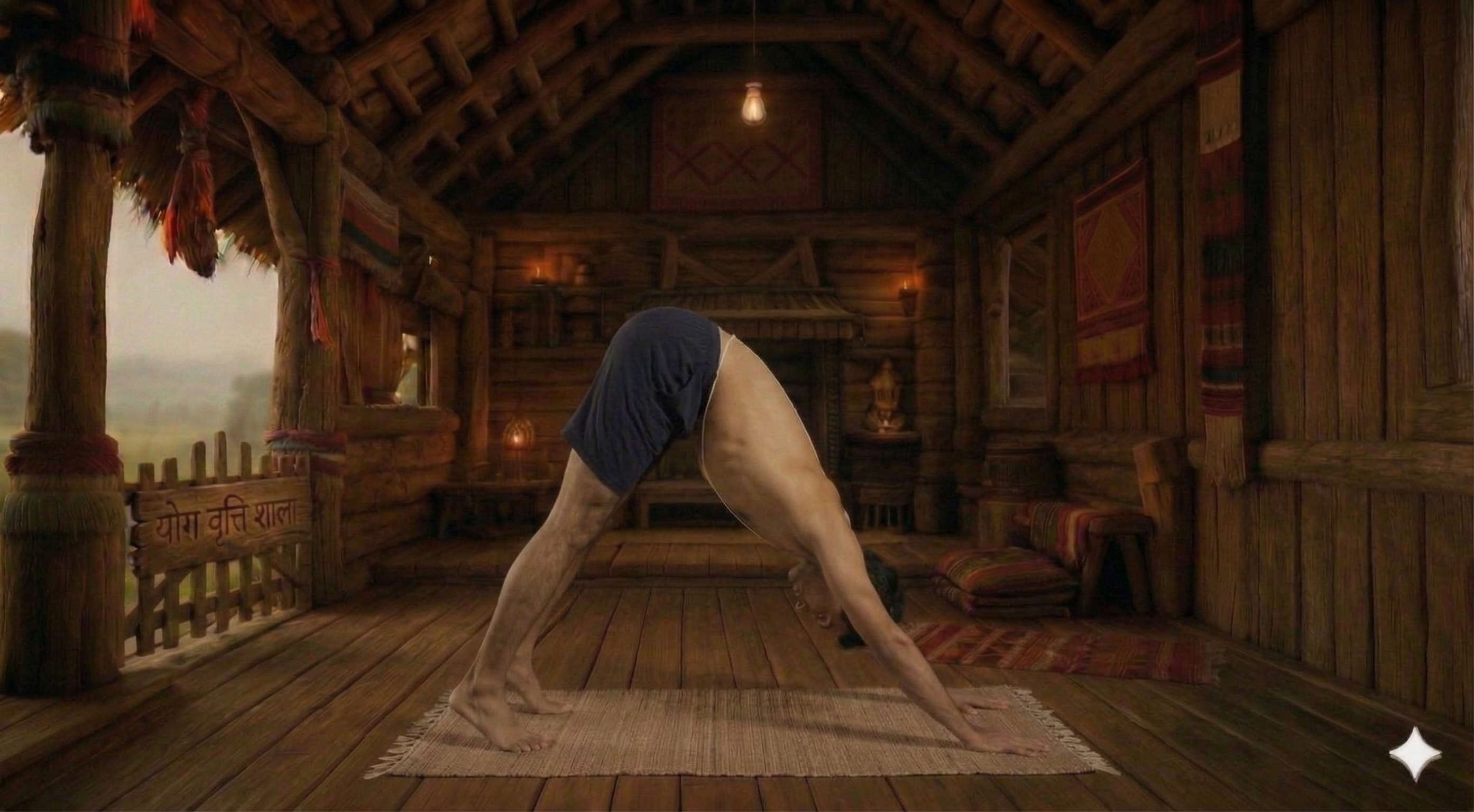
श्वास छोड़ें और दाहिने हिप से झुकें, बाएं हाथ को दाहिने पैर के बाहर फर्श पर रखें।
दाहिने हाथ को ऊपर की ओर उठाएं, उंगलियों को छत की ओर इंगित करें।
धीरे-धीरे बाएं पैर को फर्श से उठाएं, शरीर को दाहिने पैर और बाएं हाथ पर संतुलित करें।
रीढ़ को घुमाएं और दाहिने कंधे को पीछे की ओर घुमाएं।
अपनी दृष्टि को ऊपर की ओर उठाएं, दाहिने हाथ की ओर देखें।
30-60 सेकंड के लिए आसन में रहें, गहरी सांस लें।
श्वास छोड़ें और धीरे-धीरे बाएं पैर को फर्श पर वापस लाएं।
दाहिने हाथ को नीचे लाएं और सीधे खड़े हो जाएं।
ताड़ासन में वापस आ जाएं, फिर दूसरी तरफ से दोहराएं।
सहायक उपकरण
वैकल्पिक सहायता — आवश्यकतानुसार उपयोग करें
Yoga Block
Use a block to reduce the reach distance, support alignment, and make the posture accessible at your current level of flexibility.
विविधता देखें →Wall
The wall provides support, proprioceptive feedback, and confidence — use it to learn the correct alignment before practising independently.
सामान्य गलतियाँ
शिक्षण संकेत
अभ्यास क्रम

अक्सर पूछे जाने वाले प्रश्न
परिवृत्त अर्ध चंद्रासन के बारे में सामान्य प्रश्न
परिवृत्त अर्ध चंद्रासन क्या है?
परिवृत्त अर्ध चंद्रासन हाफ मून पोज़ का एक घुमावदार संस्करण है जो संतुलन में सुधार करता है, पैरों और कोर को मजबूत करता है, और रीढ़ की हड्डी के लचीलेपन को बढ़ाता है।
परिवृत्त अर्ध चंद्रासन के क्या फायदे हैं?
Improves balance and coordination। Strengthens the legs and core। Increases spinal flexibility।
परिवृत्त अर्ध चंद्रासन किस स्तर के लिए है?
परिवृत्त अर्ध चंद्रासन एक मध्यम स्तर का आसन है। शुरुआती लोग किसी योग गुरु के मार्गदर्शन में अभ्यास करें।
परिवृत्त अर्ध चंद्रासन कौन न करे?
Low blood pressure, Headaches, Back pain की स्थिति में यह आसन न करें।
परिवृत्त अर्ध चंद्रासन के लिए कौन से उपकरण चाहिए?
block, wall का उपयोग इस आसन को आसान बना सकता है।