 मध्यमखड़े होकर
विविधताएँ (1)

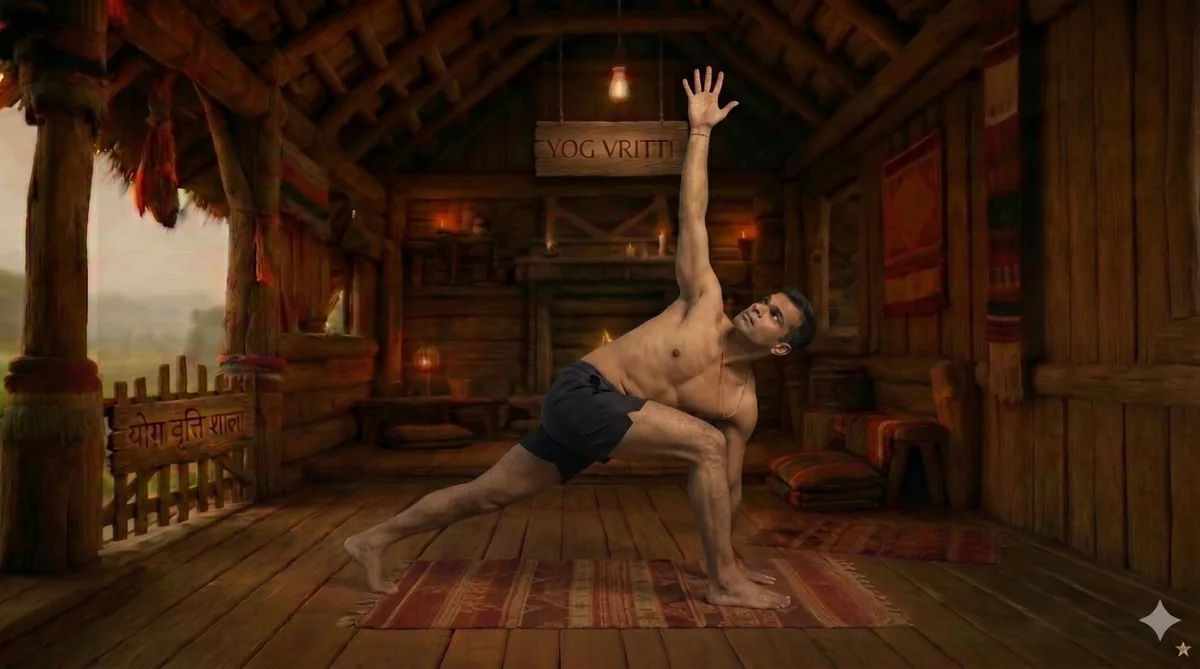
परिवृत्त पार्श्वकोणासन
Revolved Side Angle Pose
परिवृत्त पार्श्वकोणासन एक खड़ी घुमावदार मुद्रा है जो पैरों और कोर को मजबूत करती है, साथ ही रीढ़ की हड्डी के लचीलेपन में सुधार करती है। यह पेट के अंगों को भी उत्तेजित करती है और पाचन में सहायता करती है।
फायदे
6Quadriceps(strengthening)
The muscles on the front of your leading thigh (quadriceps femoris) work powerfully here, holding the deep bend in the knee. They are eccentrically loading to control the descent into the pose and then isometrically contracting to stabilize the knee joint, preventing collapse. This sustained effort builds incredible strength and endurance in the legs, cultivating a deep sense of tapas, or inner discipline and heat, that grounds your entire practice.
Glutes(stabilizing)
The muscles of the buttocks (gluteus maximus and medius) on the leading leg are crucial for stabilizing the hip and preventing the knee from collapsing inward. They engage to externally rotate the femur slightly, creating space in the hip joint and aligning the leg properly. This activation roots the lower body firmly, allowing the spine to twist more freely above a stable foundation, embodying the principle of sthira (steadiness) in the pose.
Hamstrings(lengthening)
The muscles along the back of the trailing thigh (hamstrings) receive a dynamic stretch as the hip extends and the knee straightens in the back leg. This lengthening is not passive; it requires active engagement of the quadriceps to protect the knee and deepen the stretch safely. Releasing tension in this posterior chain helps to free the pelvis and lower back, allowing apana vayu, the downward-moving energy, to flow more smoothly, contributing to a feeling of groundedness and release.
- पूर्ण शारीरिक विश्लेषण →
सावधानियाँ
5Headache / Migraine
Physical exertion, inversions, and strong breath work can intensify an existing headache or trigger a migraine.
Avoid inversions and strong pranayama; rest in a supported, restorative posture with a cool cloth on the forehead.
Low Blood Pressure
Rising quickly from low positions can cause a sudden drop in blood pressure, leading to dizziness or fainting.
Move slowly between positions, keep eyes open, and rest against a wall if dizziness arises.
Insomnia
Stimulating pranayama and energising poses can activate the sympathetic nervous system, making sleep harder if practised late in the day.
Practise calming, exhalation-focused breath work; avoid stimulating postures or pranayama close to bedtime.
Back Injury / Back Pain
Spinal flexion, extension, or rotation under load can compress vertebral discs or strain the paraspinal muscles.
Initiate the twist from the upper spine and ribs rather than forcing from the waist; keep both sitting bones grounded.
विधि
चरण-दर-चरण निर्देश
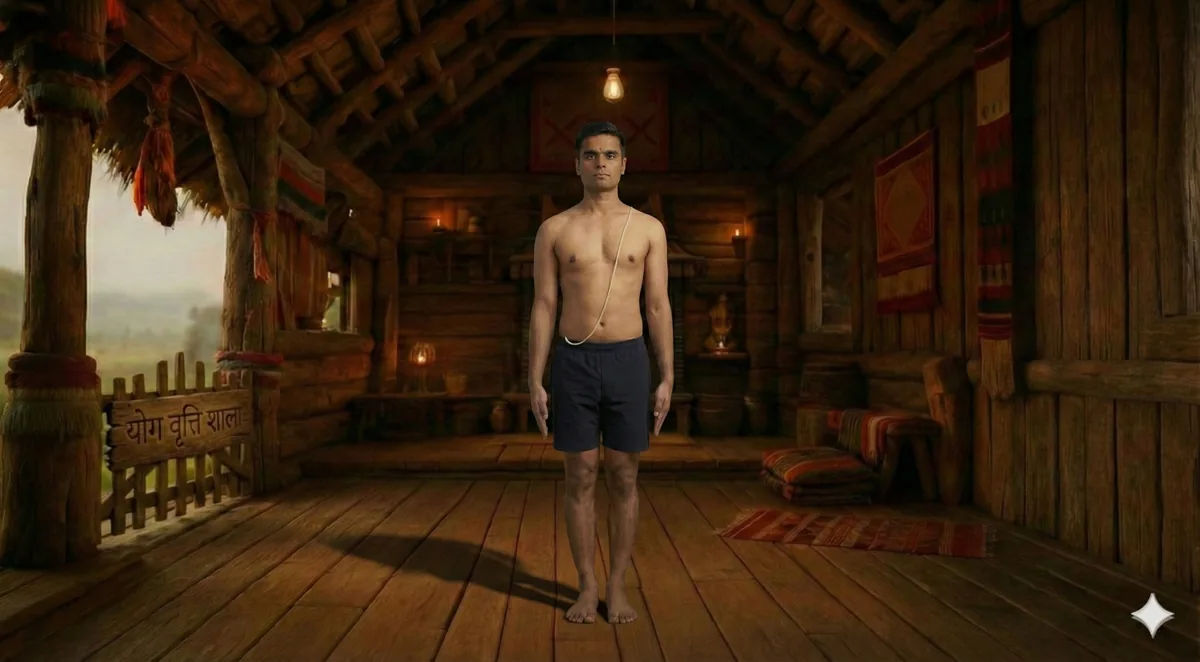
Tadasana में खड़े हों।
Exhale करते हुए, पैरों को 3-4 फीट अलग फैलाएँ।
दाहिने पैर को 90 डिग्री बाहर की ओर घुमाएँ, बाएँ पैर को थोड़ा अंदर की ओर घुमाएँ।
Inhale करते हुए, हाथों को कंधों की ऊँचाई तक फैलाएँ, हथेलियाँ नीचे की ओर।
Exhale करते हुए, दाहिने घुटने को 90 डिग्री पर मोड़ें, घुटना टखने के ऊपर।
बाएँ हाथ को दाहिने पैर के बाहरी तरफ ज़मीन पर रखें, या दाहिने पैर के अंदरूनी तरफ।
दाहिने हाथ को ऊपर आकाश की ओर उठाएँ, उंगलियाँ ऊपर की ओर।
अपनी दृष्टि को ऊपर दाहिने हाथ की उंगलियों पर टिकाएँ।
अपने core muscles को engage करें और twist को गहरा करें।
30-60 सेकंड के लिए इस स्थिति में रहें, सामान्य रूप से साँस लेते रहें।
Inhale करते हुए, धीरे-धीरे सीधे खड़े हों।
Exhale करते हुए, हाथों को नीचे लाएँ और Tadasana में वापस आ जाएँ। दूसरी तरफ से दोहराएँ।
सहायक उपकरण
वैकल्पिक सहायता — आवश्यकतानुसार उपयोग करें
Yoga Block
Use a block to reduce the reach distance, support alignment, and make the posture accessible at your current level of flexibility.
सामान्य गलतियाँ
शिक्षण संकेत
अभ्यास क्रम
अक्सर पूछे जाने वाले प्रश्न
परिवृत्त पार्श्वकोणासन के बारे में सामान्य प्रश्न
परिवृत्त पार्श्वकोणासन क्या है?
परिवृत्त पार्श्वकोणासन एक खड़ी घुमावदार मुद्रा है जो पैरों और कोर को मजबूत करती है, साथ ही रीढ़ की हड्डी के लचीलेपन में सुधार करती है। यह पेट के अंगों को भी उत्तेजित करती है और पाचन में सहायता करती है।
परिवृत्त पार्श्वकोणासन के क्या फायदे हैं?
Strengthens legs and core। Improves spinal flexibility। Stimulates abdominal organs।
परिवृत्त पार्श्वकोणासन किस स्तर के लिए है?
परिवृत्त पार्श्वकोणासन एक मध्यम स्तर का आसन है। शुरुआती लोग किसी योग गुरु के मार्गदर्शन में अभ्यास करें।
परिवृत्त पार्श्वकोणासन कौन न करे?
Headaches, Low blood pressure, Insomnia की स्थिति में यह आसन न करें।
परिवृत्त पार्श्वकोणासन के लिए कौन से उपकरण चाहिए?
block का उपयोग इस आसन को आसान बना सकता है।