 मध्यमखड़े होकर
विविधताएँ (1)
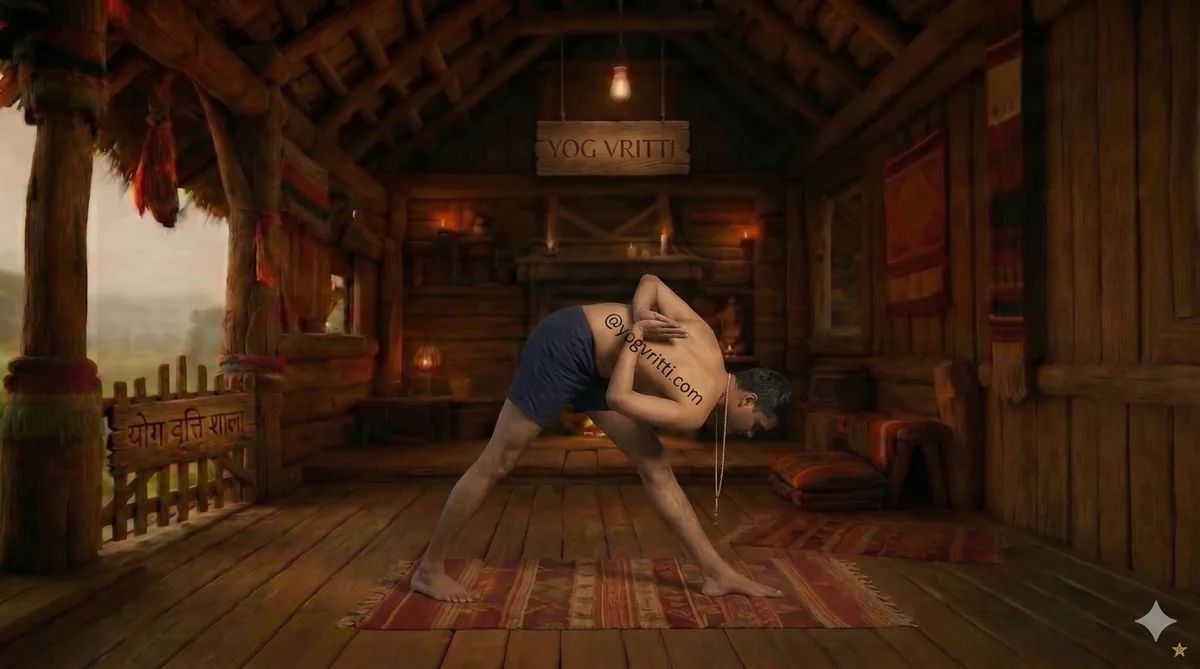
पार्श्वोत्तानासन पश्चिम नमस्कारासन
Pyramid Pose with Reverse Prayer
पार्श्वोत्तानासन पश्चिम नमस्कारासन एक तीव्र पार्श्व खिंचाव है जो एक आगे की ओर झुकने को कंधे के सलामी बल्लेबाज के साथ जोड़ता है। यह हैमस्ट्रिंग, रीढ़ और कंधों को खींचता है जबकि संतुलन में सुधार करता है और मानसिक शांति को बढ़ावा देता है।
फायदे
5Hamstrings(lengthening)
The large muscles at the back of your thighs (hamstrings) are meticulously lengthened here, particularly in the front leg, fostering a deep release. This isn't a passive slump but an active reaching from the inner heel, which engages the quadriceps to protect the knee and deepen the stretch. Energetically, this sustained lengthening helps to release stored apana vayu, bringing a profound sense of grounding and stability to the lower body, settling the mind. Over time, this practice improves the elasticity of the entire posterior chain, alleviating chronic tension in the lower back and pelvis.
Back Muscles(enhanced thoracic extension and lengthening)
While the back muscles generally lengthen in the forward bend of the root pose, the reverse Namaste actively encourages a more pronounced extension and lift through the thoracic spine. This counteracts the natural tendency to round the upper back in a deep forward fold, creating a dynamic interplay between spinal flexion in the lower back and extension in the upper back. This engagement cultivates greater suppleness and awareness in the often-stiff middle and upper back, directly supporting the shoulder opening.
Shoulder Girdle Muscles(deepening external rotation and adduction; active stabilization)
In the root pose, the shoulder girdle muscles might be passively releasing or actively stabilizing to support the hands on the floor. Here, they are intensely engaged in a complex action of external rotation, adduction, and extension to bring the hands together behind the back. This active engagement stretches the pectorals and anterior deltoids, while simultaneously strengthening the rhomboids and posterior deltoids to draw the shoulder blades down and back, creating significant opening across the chest.
- पूर्ण शारीरिक विश्लेषण →
सावधानियाँ
4Back Injury / Back Pain
Spinal flexion, extension, or rotation under load can compress vertebral discs or strain the paraspinal muscles.
Bend both knees generously, hinge from the hips rather than rounding the spine, and rest hands on blocks or thighs.
Shoulder Injury
Overhead loading and extreme shoulder rotation can impinge the subacromial space and overload rotator cuff tendons.
Reduce the range of motion, avoid full arm extension, and use props to limit load on the shoulder joint.
High Blood Pressure
Vigorous effort and inverted positions temporarily raise blood pressure in the head, increasing strain on blood vessels.
Keep the head above the heart by bending the knees deeply and resting forearms on thighs rather than reaching to the floor.
Knee Injury
Deep flexion or rotation at the knee can strain ligaments, meniscus, or cartilage, especially in a compromised joint.
Bend the knees generously to protect the joint and keep the weight in the heels rather than the toes.
विधि
चरण-दर-चरण निर्देश
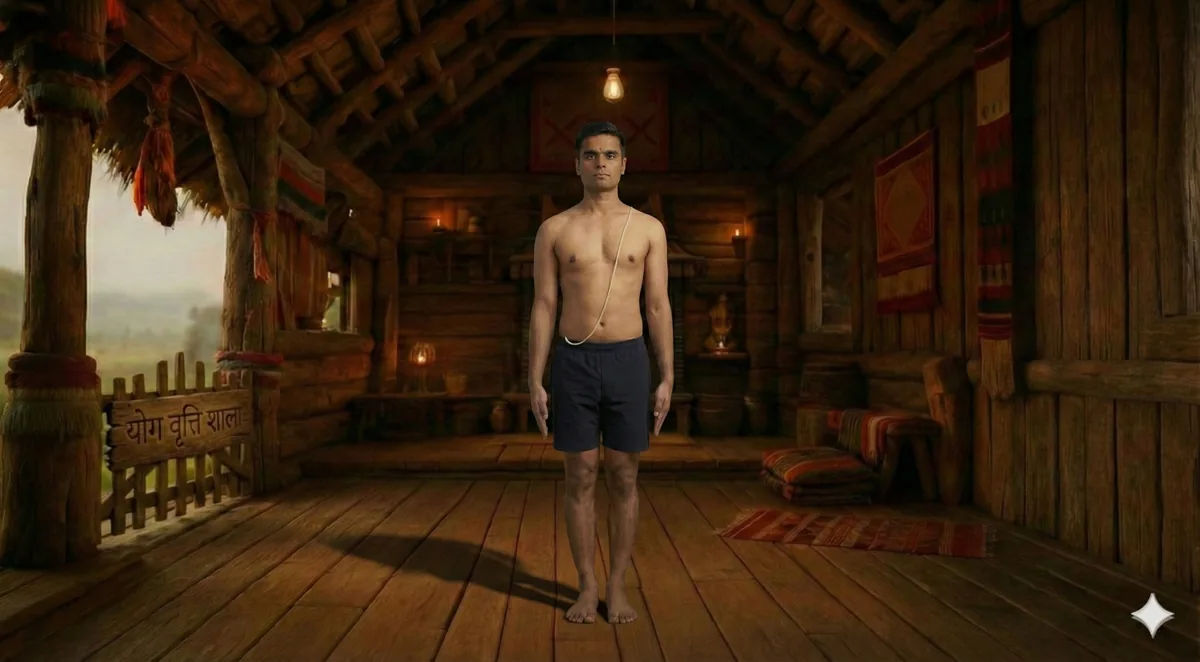
Tadasana में खड़े हो जाएं।
अपने हाथों को अपनी पीठ के पीछे नमस्कार मुद्रा में लाएं। अगर यह संभव नहीं है, तो अपनी कोहनियों को विपरीत हाथों से पकड़ें।
श्वास अंदर लें, और श्वास छोड़ते हुए, अपने दाहिने पैर को लगभग 4 फीट पीछे ले जाएं, पैर को 45 डिग्री के कोण पर घुमाएं।
अपने कूल्हों को वर्ग रखें और अपने धड़ को अपने दाहिने पैर की ओर घुमाएं।
श्वास अंदर लें, अपनी रीढ़ को लंबा करें।
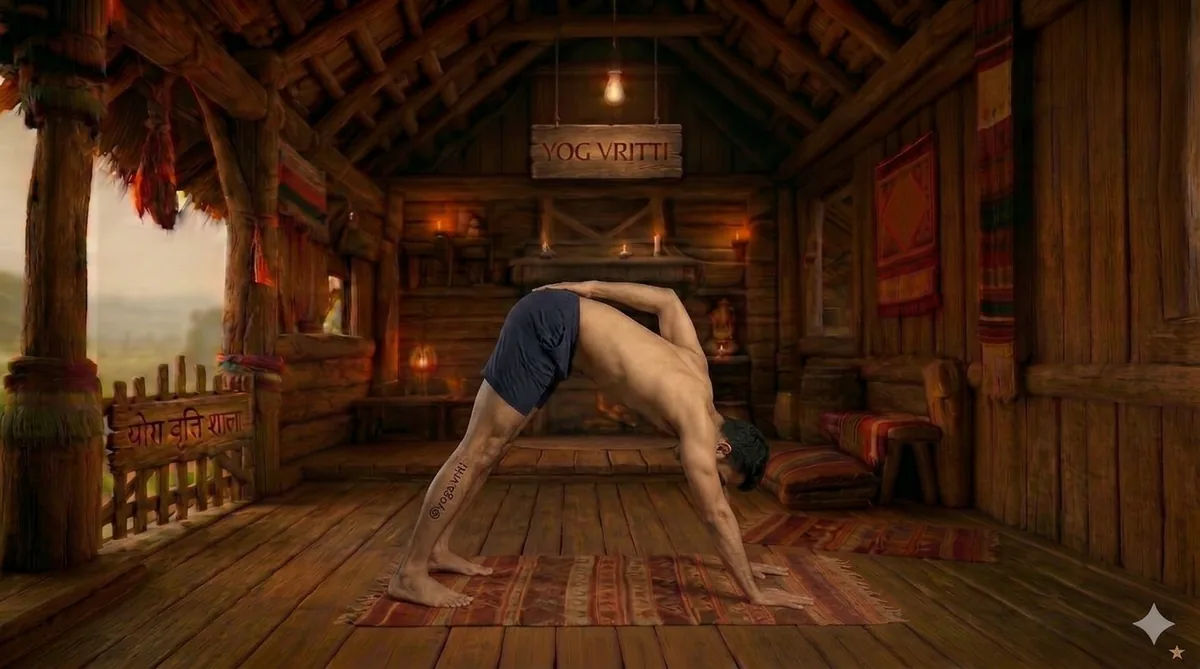
श्वास छोड़ते हुए, कूल्हों से आगे झुकें, अपनी छाती को अपने दाहिने घुटने की ओर लाएं।
अपनी पीठ को सीधा रखें और अपने पेट को अंदर खींचें।
30-60 सेकंड के लिए इस स्थिति में रहें, सामान्य रूप से श्वास लें।
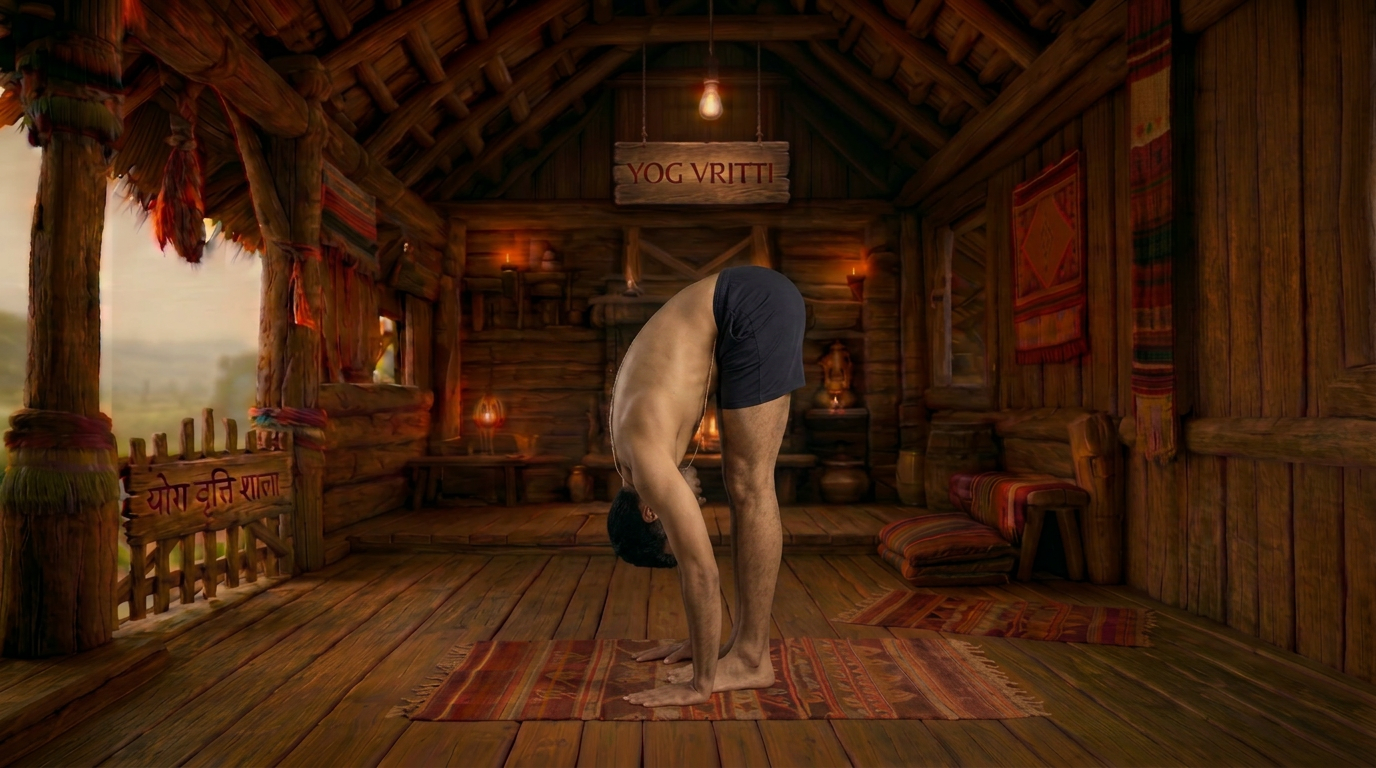
श्वास अंदर लेते हुए, धीरे-धीरे ऊपर आएं।
श्वास छोड़ते हुए, अपने पैर को आगे लाएं और Tadasana में वापस आ जाएं।
दूसरी तरफ दोहराएं।
सहायक उपकरण
वैकल्पिक सहायता — आवश्यकतानुसार उपयोग करें
Yoga Block
Place blocks under the hands at any height to allow the spine to lengthen fully before attempting to reach the floor — prioritising posture over depth.
सामान्य गलतियाँ
शिक्षण संकेत
अभ्यास क्रम
अक्सर पूछे जाने वाले प्रश्न
पार्श्वोत्तानासन पश्चिम नमस्कारासन के बारे में सामान्य प्रश्न
पार्श्वोत्तानासन पश्चिम नमस्कारासन क्या है?
पार्श्वोत्तानासन पश्चिम नमस्कारासन एक तीव्र पार्श्व खिंचाव है जो एक आगे की ओर झुकने को कंधे के सलामी बल्लेबाज के साथ जोड़ता है। यह हैमस्ट्रिंग, रीढ़ और कंधों को खींचता है जबकि संतुलन में सुधार करता है और मानसिक शांति को बढ़ावा देता है।
पार्श्वोत्तानासन पश्चिम नमस्कारासन के क्या फायदे हैं?
Stretches the hamstrings, spine, and shoulders। Strengthens the legs and core। Improves balance।
पार्श्वोत्तानासन पश्चिम नमस्कारासन किस स्तर के लिए है?
पार्श्वोत्तानासन पश्चिम नमस्कारासन एक मध्यम स्तर का आसन है। शुरुआती लोग किसी योग गुरु के मार्गदर्शन में अभ्यास करें।
पार्श्वोत्तानासन पश्चिम नमस्कारासन कौन न करे?
Back pain, Shoulder injury, High blood pressure की स्थिति में यह आसन न करें।
पार्श्वोत्तानासन पश्चिम नमस्कारासन के लिए कौन से उपकरण चाहिए?
block का उपयोग इस आसन को आसान बना सकता है।