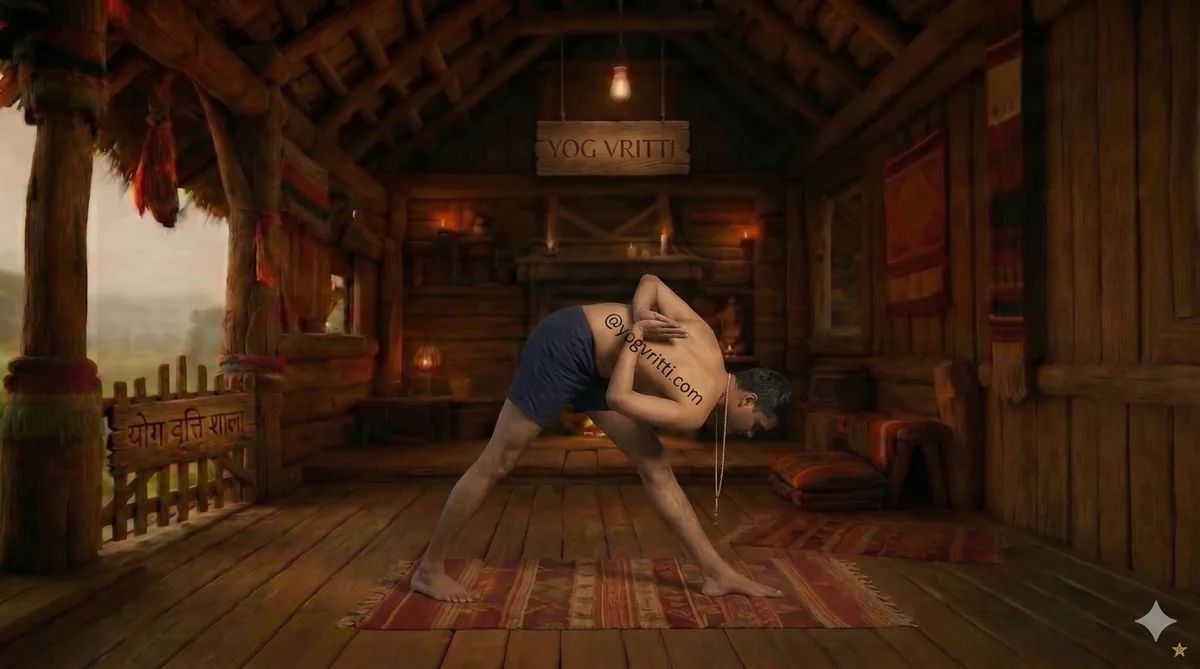
 मध्यमखड़े होकर
विविधताएँ (1)

पार्श्वोत्तनासन
Intense Side Stretch Pose
पार्श्वोत्तनासन हैमस्ट्रिंग, कूल्हों और रीढ़ को गहराई से फैलाता है, जबकि पैरों और कोर को मजबूत करता है। यह पाचन में सुधार करता है और मन को शांत करता है।
फायदे
5Hamstrings(lengthening)
The large muscles at the back of your thighs (hamstrings) are meticulously lengthened here, particularly in the front leg, fostering a deep release. This isn't a passive slump but an active reaching from the inner heel, which engages the quadriceps to protect the knee and deepen the stretch. Energetically, this sustained lengthening helps to release stored apana vayu, bringing a profound sense of grounding and stability to the lower body, settling the mind. Over time, this practice improves the elasticity of the entire posterior chain, alleviating chronic tension in the lower back and pelvis.
Hip Flexors(stabilizing)
The deep hip flexors, particularly the psoas and iliacus, play a dual role here, stabilizing the pelvis while allowing the deep hip flexion of the front leg. For the back leg, if the pelvis is squared and the leg is strong, the psoas of that leg experiences a subtle yet significant lengthening, preventing the lower back from rounding prematurely. This engagement cultivates a sense of intelligent support from the core, connecting the lower body to the trunk. Yogically, a released psoas allows for deeper breathing and a greater sense of ease and fluidity in movement, releasing stored tension often associated with fear and emotional holding.
Back Muscles(lengthening)
The long muscles running along either side of your spine (erector spinae) and the deeper, smaller stabilizing muscles (multifidus) are meticulously engaged and lengthened in this pose. As you fold forward, these muscles are asked to release and lengthen, particularly in the lumbar and thoracic regions, while also working eccentrically to control the descent. This dual action decompresses the spinal discs and cultivates a sense of spaciousness along the entire vertebral column. Energetically, this targeted spinal lengthening helps to awaken the dormant energy at the base of the spine, fostering clarity and an upright awareness.
- पूर्ण शारीरिक विश्लेषण →
सावधानियाँ
4Back Injury / Back Pain
Spinal flexion, extension, or rotation under load can compress vertebral discs or strain the paraspinal muscles.
Bend both knees generously, hinge from the hips rather than rounding the spine, and rest hands on blocks or thighs.
High Blood Pressure
Vigorous effort and inverted positions temporarily raise blood pressure in the head, increasing strain on blood vessels.
Keep the head above the heart by bending the knees deeply and resting forearms on thighs rather than reaching to the floor.
Glaucoma / Eye Pressure
Inverted and head-below-heart positions increase intraocular pressure, which can be harmful for those with elevated eye pressure.
Practise with hands on blocks and knees bent so the head remains above heart level.
Hamstring Injury
Aggressive stretching of a torn or strained hamstring can reinjure muscle fibres — the attachment near the sitting bone is especially vulnerable.
Bend the knees significantly to remove tension from the hamstrings; fold only as far as the spine stays long.
विधि
चरण-दर-चरण निर्देश
Tadasana में खड़े हो जाएँ।
पैरों को लगभग 3-4 फीट की दूरी पर फैलाएँ।
दाहिने पैर को 90 डिग्री बाहर की ओर घुमाएँ, बाएँ पैर को थोड़ा अंदर की ओर।
हाथों को पीछे की ओर नमस्कार मुद्रा में लाएँ।
श्वास लें और रीढ़ की हड्डी को सीधा करें।
श्वास छोड़ते हुए, कूल्हों से आगे झुकें, छाती को दाहिने पैर की ओर ले जाएँ।
रीढ़ की हड्डी को सीधा रखने की कोशिश करें और कंधों को ढीला रखें।
5-10 श्वासों तक इस स्थिति में रहें।
श्वास लेते हुए, वापस ऊपर आ जाएँ।
हाथों को खोलें और Tadasana में वापस आ जाएँ।
अब यही क्रिया बाएँ तरफ से दोहराएँ।
सहायक उपकरण
वैकल्पिक सहायता — आवश्यकतानुसार उपयोग करें
Yoga Block
Place blocks under the hands at any height to allow the spine to lengthen fully before attempting to reach the floor — prioritising posture over depth.
Wall
Place hands on the wall at hip height and walk back to create a right angle — a gentler version that still provides deep spinal decompression.
सामान्य गलतियाँ
शिक्षण संकेत
अभ्यास क्रम
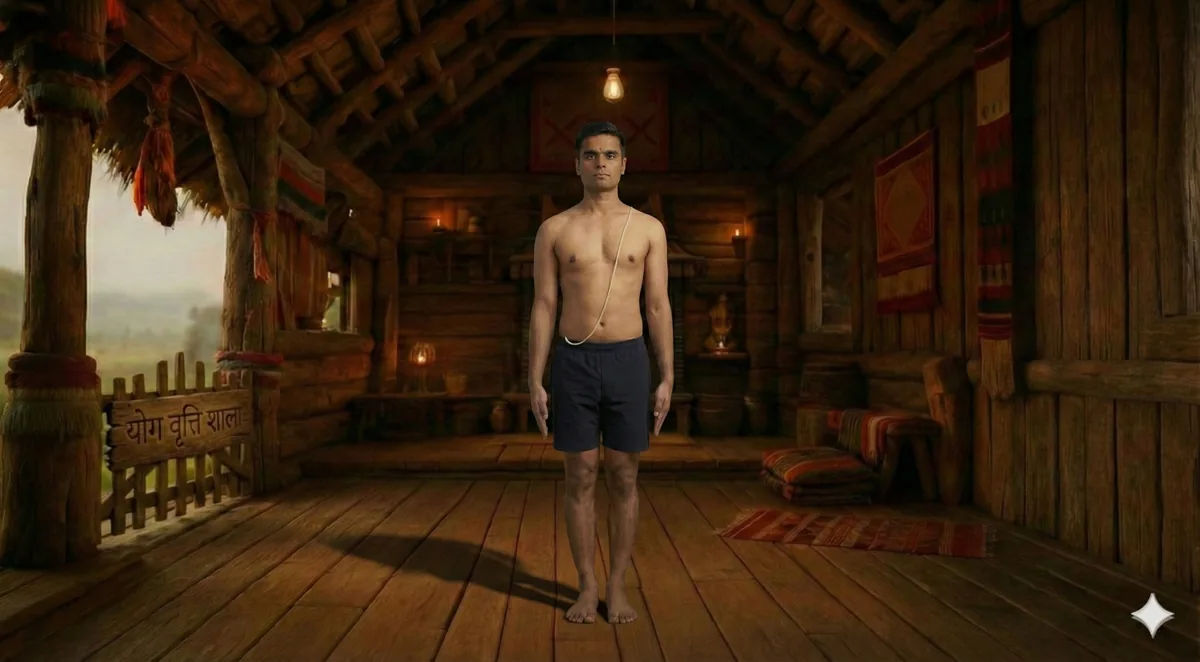
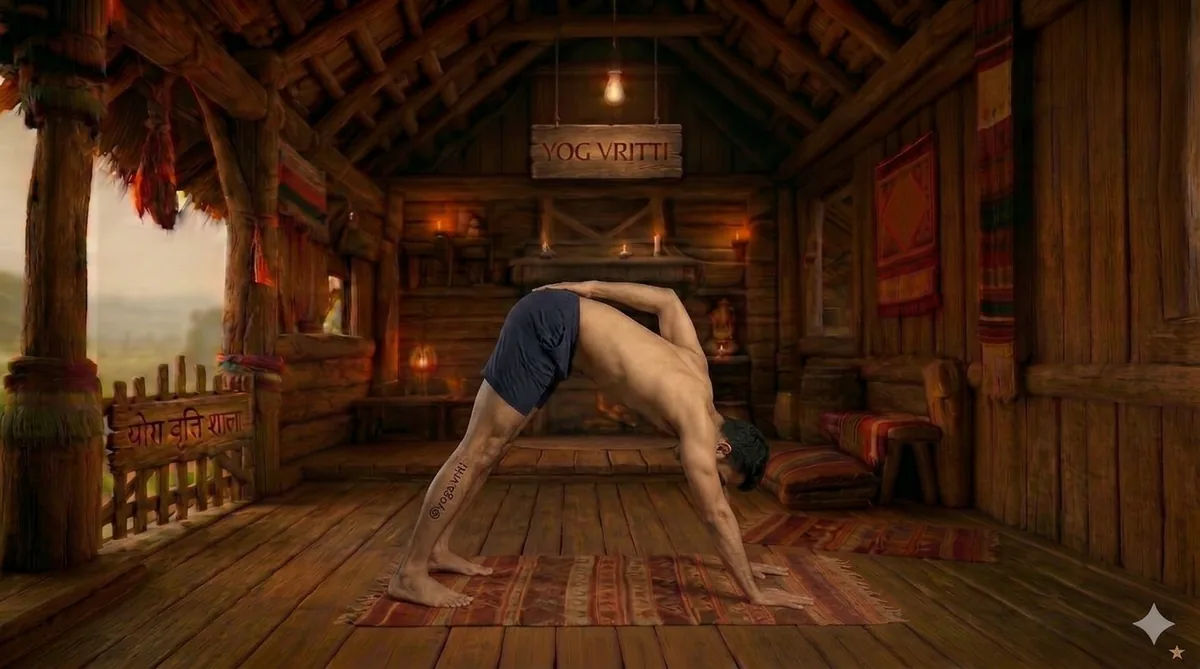
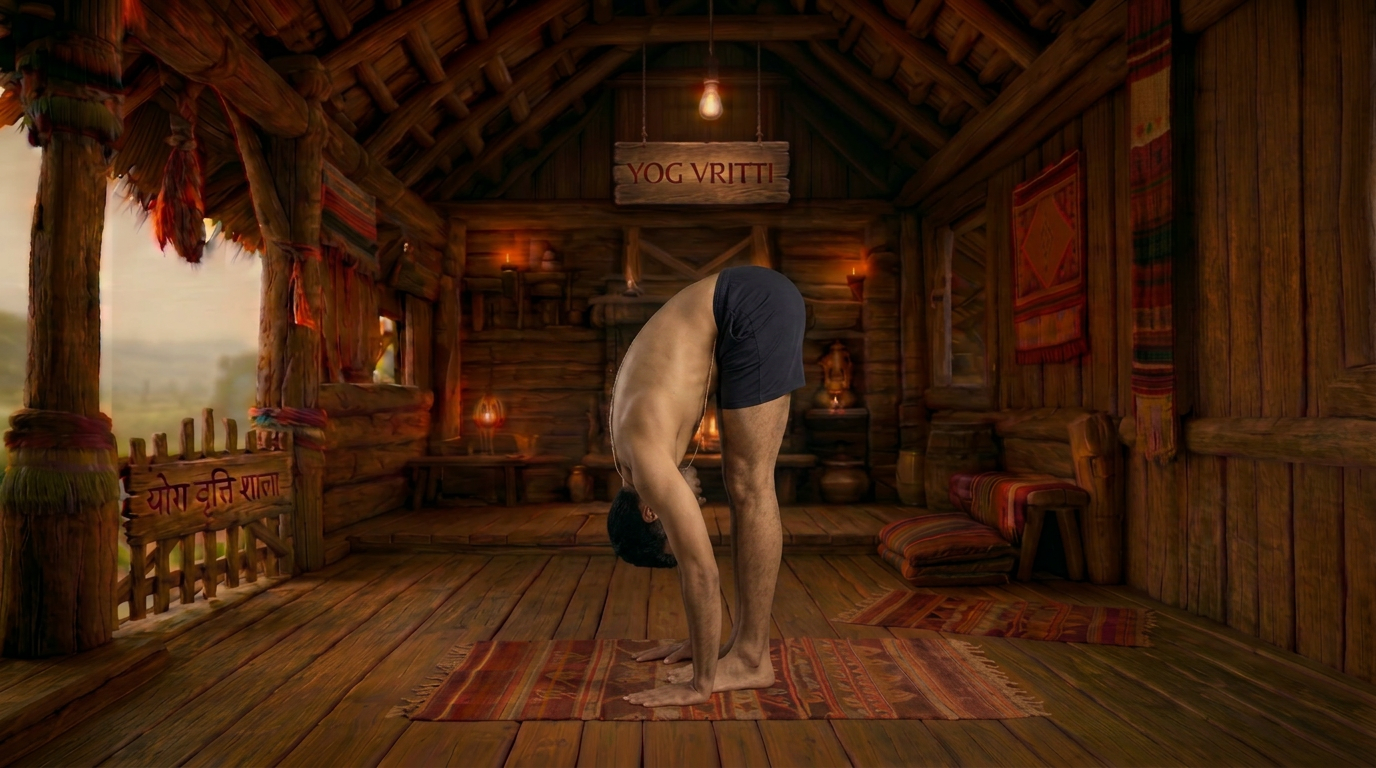
अक्सर पूछे जाने वाले प्रश्न
पार्श्वोत्तनासन के बारे में सामान्य प्रश्न
पार्श्वोत्तनासन क्या है?
पार्श्वोत्तनासन हैमस्ट्रिंग, कूल्हों और रीढ़ को गहराई से फैलाता है, जबकि पैरों और कोर को मजबूत करता है। यह पाचन में सुधार करता है और मन को शांत करता है।
पार्श्वोत्तनासन के क्या फायदे हैं?
Stretches hamstrings, hips, and spine। Strengthens legs and core muscles। Improves digestion।
पार्श्वोत्तनासन किस स्तर के लिए है?
पार्श्वोत्तनासन एक मध्यम स्तर का आसन है। शुरुआती लोग किसी योग गुरु के मार्गदर्शन में अभ्यास करें।
पार्श्वोत्तनासन कौन न करे?
Back injuries, High blood pressure, Glaucoma की स्थिति में यह आसन न करें।
पार्श्वोत्तनासन के लिए कौन से उपकरण चाहिए?
block, wall का उपयोग इस आसन को आसान बना सकता है।