शलभासन
Locust Pose
शलभासन पीठ की मांसपेशियों, ग्लूट्स और हैमस्ट्रिंग को मजबूत करता है। इस आसन में पेट के बल लेटकर पैरों, छाती और हाथों को जमीन से ऊपर उठाना शामिल है, जो स्थिरता बनाए रखने के लिए पीठ की मांसपेशियों को संलग्न करता है।
फायदे
5Spinal Erectors(strengthening)
These long muscles run vertically alongside your spine, from your pelvis all the way up to your skull. In Salabhasana, they actively contract to lift your chest and head away from the floor, working against gravity to extend the spinal column. This isometric and concentric work builds endurance and strength in the muscles responsible for maintaining upright posture, directly counteracting the slumping often seen in modern life. The sustained engagement awakens the 'agni' or inner fire in the core, translating into a feeling of invigorated stability and confidence in your upright stance.
Glutes(strengthening)
The large muscles of your buttocks, primarily the gluteus maximus, are powerful engines in Salabhasana, contracting strongly to lift your legs from the floor. This action extends the hip joint, bringing the thighbone (femur) into line with the torso and pelvis. By engaging these muscles with intelligence, we protect the lower back and learn to distribute the effort across the entire posterior chain, fostering a sense of grounded power that radiates through the lower body. This grounding energy helps to stabilize apana vayu, promoting a feeling of security and rootedness.
Hamstrings(strengthening)
Located on the back of your thighs, the hamstrings work in concert with the glutes to extend the hip and lift the legs in Salabhasana. While their primary action is knee flexion, here they assist in hip extension and help to straighten the knees, contributing to the lift and length of the legs. This active engagement strengthens them in a lengthened position, which is crucial for balanced leg strength and can help alleviate tightness often associated with sitting, bringing a sense of lightness and freedom to the lower limbs. The intelligent engagement here prevents gripping and encourages a harmonious distribution of strength.
- पूर्ण शारीरिक विश्लेषण →
सावधानियाँ
4Back Injury / Back Pain
Spinal flexion, extension, or rotation under load can compress vertebral discs or strain the paraspinal muscles.
Limit the depth of the backbend, engage the core actively before moving, and avoid any movement that creates pinching in the lumbar spine.
Neck Injury / Cervical Issues
Looking up, bearing head weight, or unsupported neck rotation can compress cervical vertebrae and irritate nerves.
Do not allow the head to drop back unsupported; keep the chin slightly tucked and look forward rather than up.
Headache / Migraine
Physical exertion, inversions, and strong breath work can intensify an existing headache or trigger a migraine.
Avoid inversions and strong pranayama; rest in a supported, restorative posture with a cool cloth on the forehead.
Pregnancy
Deep twists, abdominal compression, and lying flat on the back can restrict blood flow or cause discomfort as pregnancy progresses.
Widen the stance, avoid deep abdominal compression and twists, and consult a qualified prenatal yoga teacher.
विधि
चरण-दर-चरण निर्देश
पेट के बल लेटें, पैर सीधे और हाथ शरीर के बगल में रखें, हथेलियाँ नीचे की ओर। (Pet ke bal letein, pair seedhe aur haath shareer ke bagal mein rakhein, hatheliyan neeche ki or.)
श्वास अंदर लें, पेट की मांसपेशियों को कस लें। (Shwas andar lein, pet ki manspeshiyon ko kas lein.)
श्वास छोड़ते हुए, दोनों पैरों, छाती और हाथों को ज़मीन से ऊपर उठाएं। (Shwas chhodte hue, dono pairon, chhati aur haathon ko zameen se upar uthayein.)
शरीर को नाभि पर संतुलित रखें। (Shareer ko nabhi par santulit rakhein.)
पैरों को सीधा रखें और कंधों को नीचे की ओर खींचें। (Pairon ko seedha rakhein aur kandhon ko neeche ki or kheenchein.)
गर्दन को ज्यादा न मोड़ें, नज़रें सामने रखें। (Gardan ko zyada na modein, nazrein saamne rakhein.)
श्वास सामान्य रखें और 20-30 सेकंड तक इस स्थिति में रहें। (Shwas samanya rakhein aur 20-30 second tak is sthiti mein rahein.)
श्वास छोड़ते हुए, धीरे-धीरे पैरों, छाती और हाथों को ज़मीन पर लाएं। (Shwas chhodte hue, dheere-dheere pairon, chhati aur haathon ko zameen par laayein.)
कुछ सेकंड के लिए आराम करें और दोहराएं। (Kuch second ke liye aaram karein aur dohraayein.)
सहायक उपकरण
वैकल्पिक सहायता — आवश्यकतानुसार उपयोग करें
Folded Blanket
A rolled blanket under the thoracic spine opens the chest gently and supports the backbend, making it accessible as a restorative variation.
सामान्य गलतियाँ
शिक्षण संकेत
अभ्यास क्रम
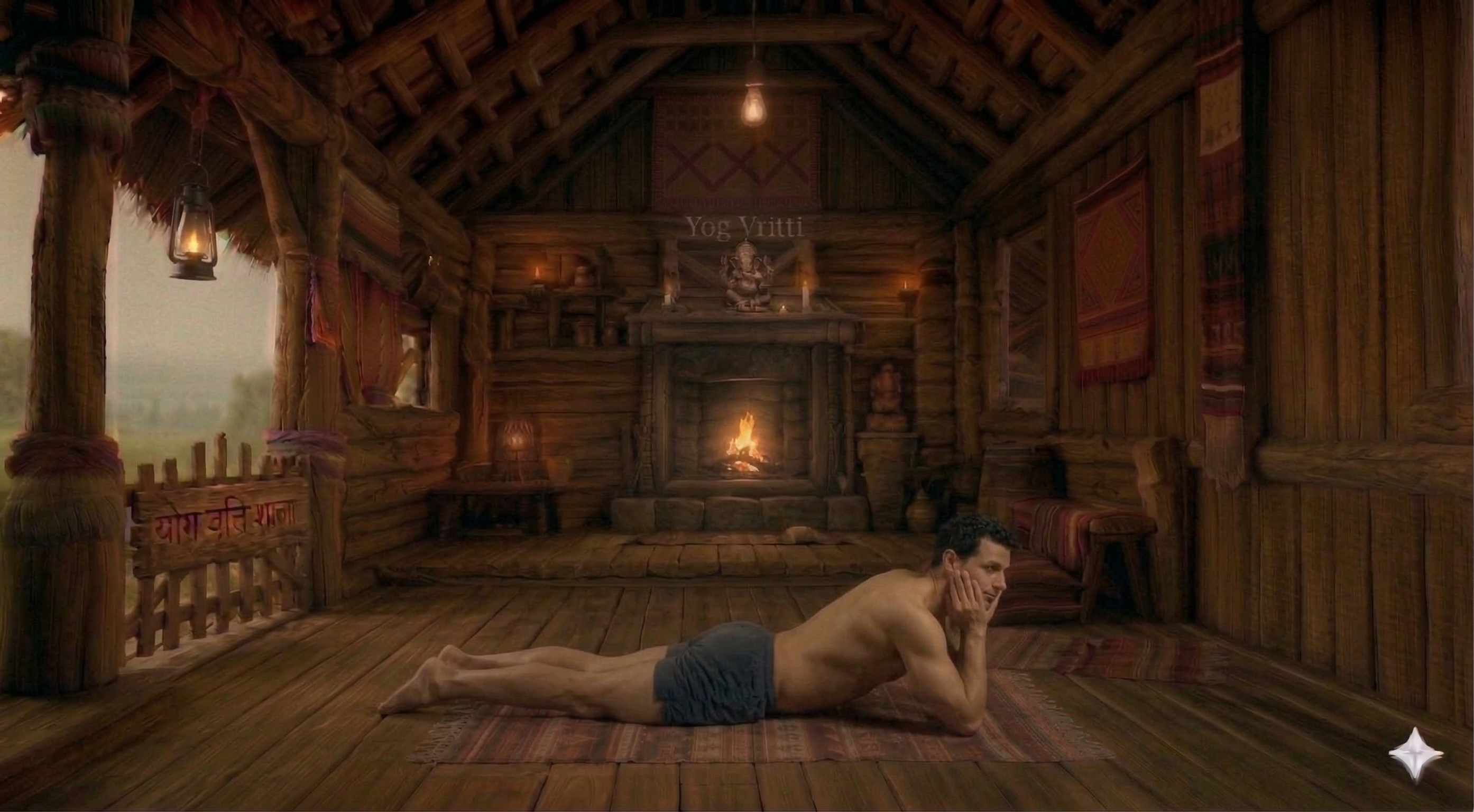
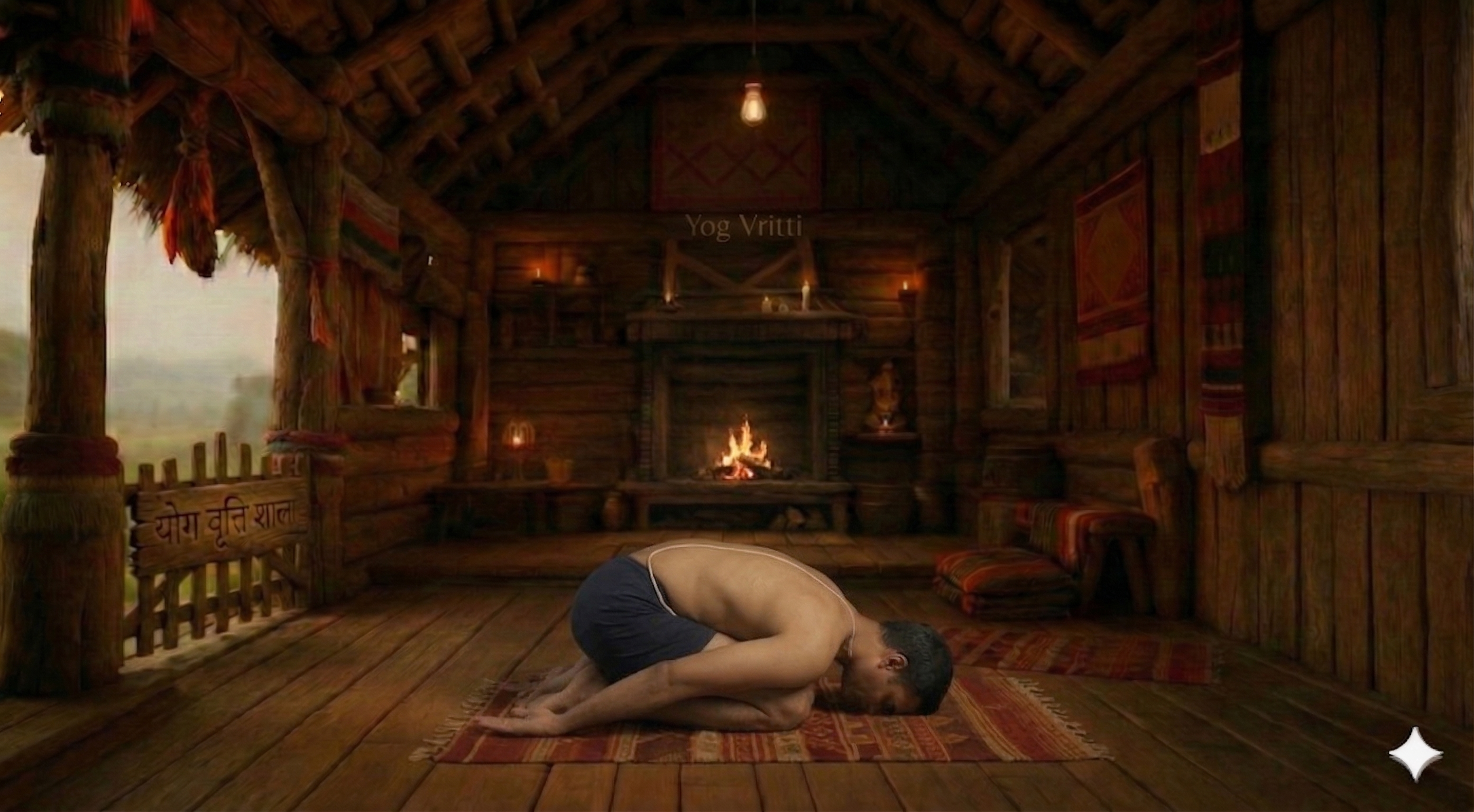
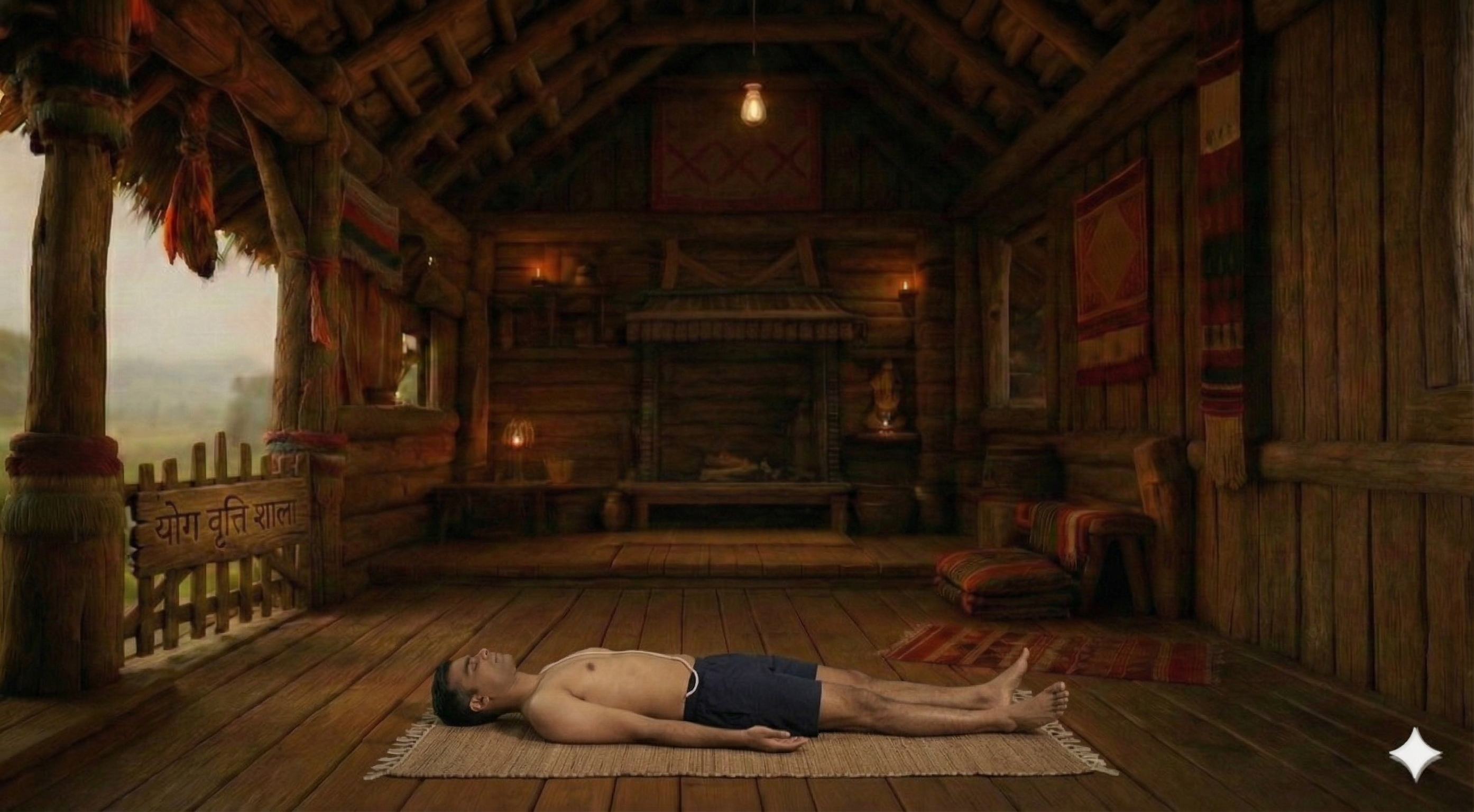
अक्सर पूछे जाने वाले प्रश्न
शलभासन के बारे में सामान्य प्रश्न
शलभासन क्या है?
शलभासन पीठ की मांसपेशियों, ग्लूट्स और हैमस्ट्रिंग को मजबूत करता है। इस आसन में पेट के बल लेटकर पैरों, छाती और हाथों को जमीन से ऊपर उठाना शामिल है, जो स्थिरता बनाए रखने के लिए पीठ की मांसपेशियों को संलग्न करता है।
शलभासन के क्या फायदे हैं?
Strengthens back muscles। Strengthens glutes and hamstrings। Tones abdominal organs।
शलभासन किस स्तर के लिए है?
शलभासन एक शुरुआती स्तर का आसन है। यह सभी के लिए उपयुक्त है।
शलभासन कौन न करे?
Back injury, Neck injury, Headache की स्थिति में यह आसन न करें।
शलभासन के लिए कौन से उपकरण चाहिए?
blanket का उपयोग इस आसन को आसान बना सकता है।