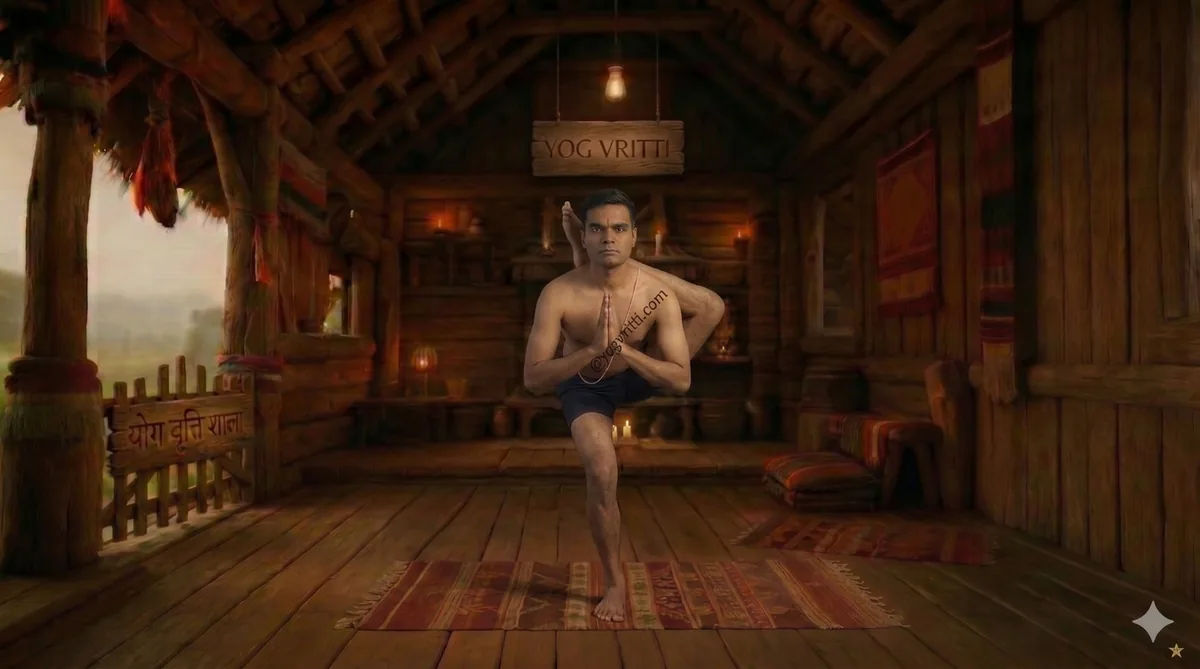
 उन्नतखड़े होकर
एक पाद शीर्ष पादासन
Standing Foot-Behind-Head Pose
एक पाद शीर्ष पादासन एक अत्यंत उन्नत खड़ी मुद्रा है जिसके लिए असाधारण कूल्हे के लचीलेपन, हैमस्ट्रिंग की लंबाई और संतुलन की आवश्यकता होती है। यह कूल्हे को गहराई से खोलता है और अभ्यासकर्ता की स्थिरता और शरीर जागरूकता को चुनौती देता है।
फायदे
5- Dramatically increases hip flexibility
- Stretches hamstrings and groin
- Strengthens standing leg and core
- Improves balance and concentration
- Enhances body awareness
- पूर्ण शारीरिक विश्लेषण →
सावधानियाँ
7Hip Injury
Deep hip flexion, external rotation, or weight-bearing can aggravate labral tears, impingement, or bursitis.
Do not force the hip into deep external rotation; keep the foot turned out only as far as is pain-free.
Knee Injury
Deep flexion or rotation at the knee can strain ligaments, meniscus, or cartilage, especially in a compromised joint.
Do not allow the knee to travel beyond the ankle; keep weight evenly distributed and use a block under the hand for support.
Sciatica
Certain hip stretches and forward bends pull on the sciatic nerve, temporarily increasing radiating pain down the leg.
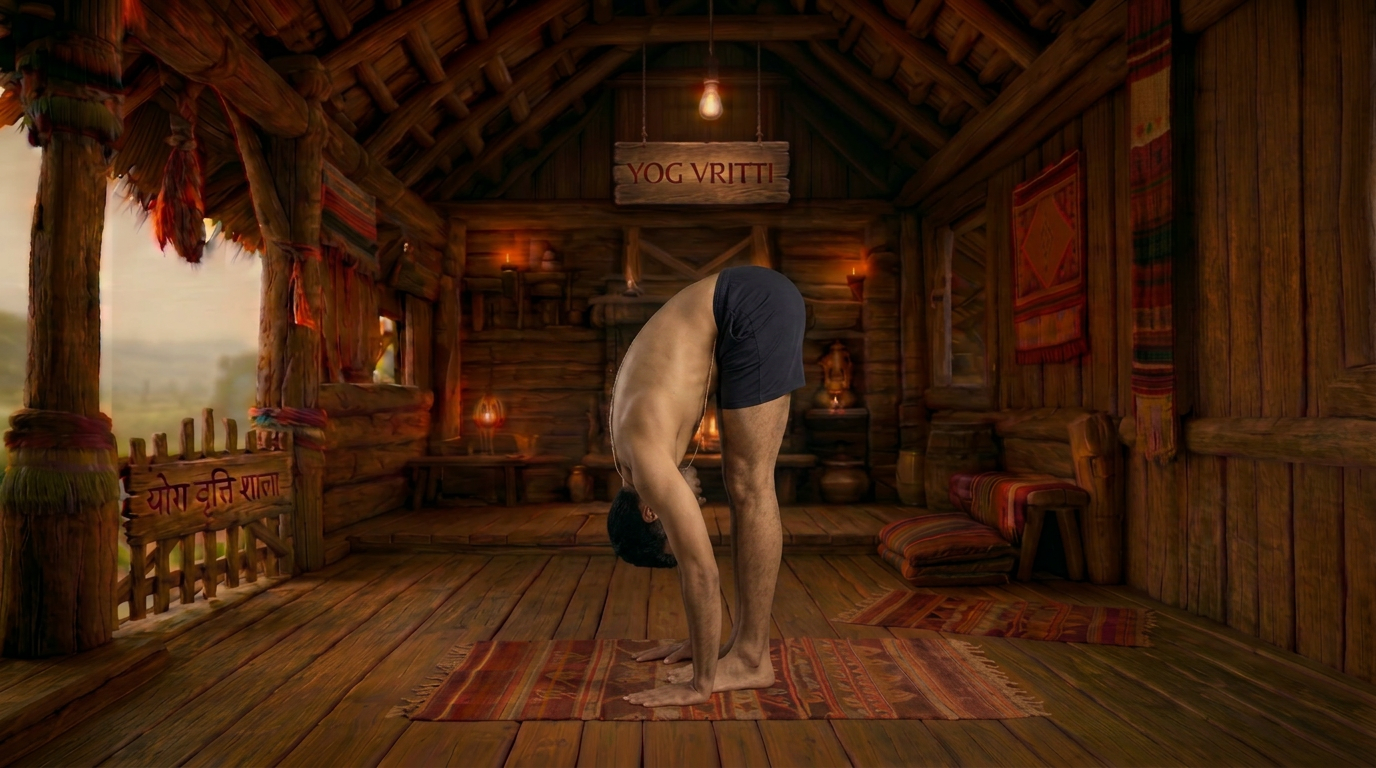
Keep a slight bend in the knees and engage the core to support the lumbar spine before folding.
Hamstring Injury
Aggressive stretching of a torn or strained hamstring can reinjure muscle fibres — the attachment near the sitting bone is especially vulnerable.
Do not try to straighten the legs fully; prioritise a neutral pelvis and neutral lower back over hamstring length.
विधि
चरण-दर-चरण निर्देश
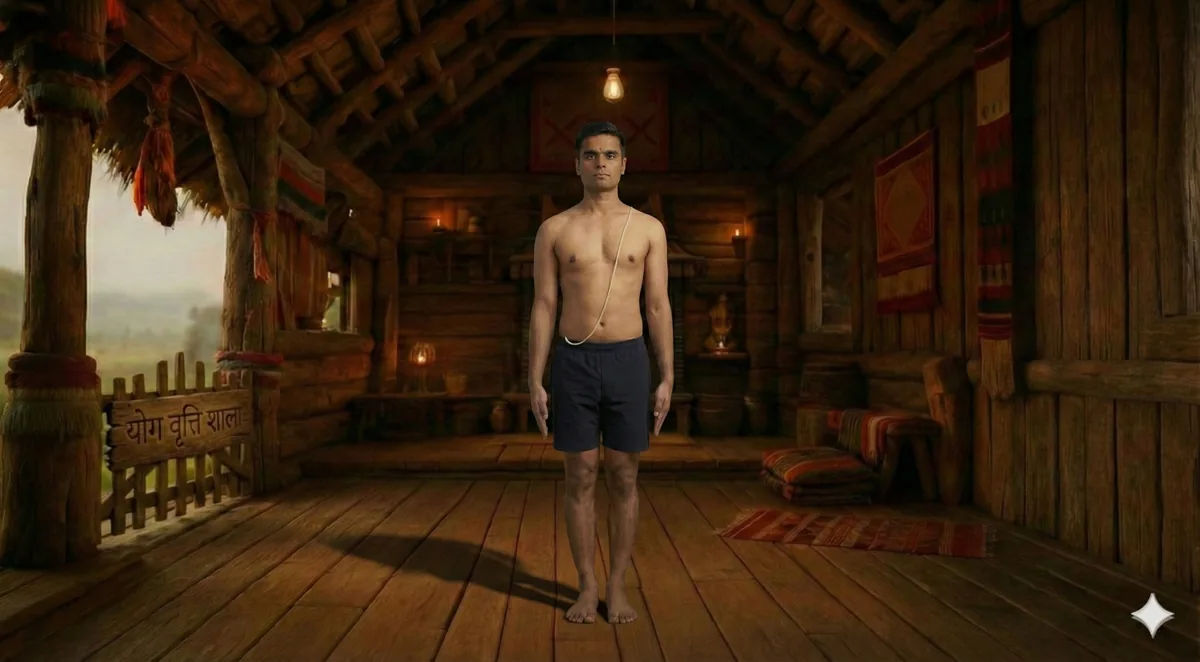
ताड़ासन में खड़े हो जाएं। श्वास अंदर लेते हुए दाहिने घुटने को मोड़ें और दाहिने पैर को ऊपर उठाएं।
दोनों हाथों से दाहिने पैर को पकड़ें, दाहिने घुटने को छाती की ओर लाएं।
श्वास बाहर निकालते हुए, दाहिने पैर को धीरे-धीरे ऊपर उठाएं और दाहिने पैर को दाहिने हाथ से पकड़कर दाहिने कंधे पर टिकाएं।
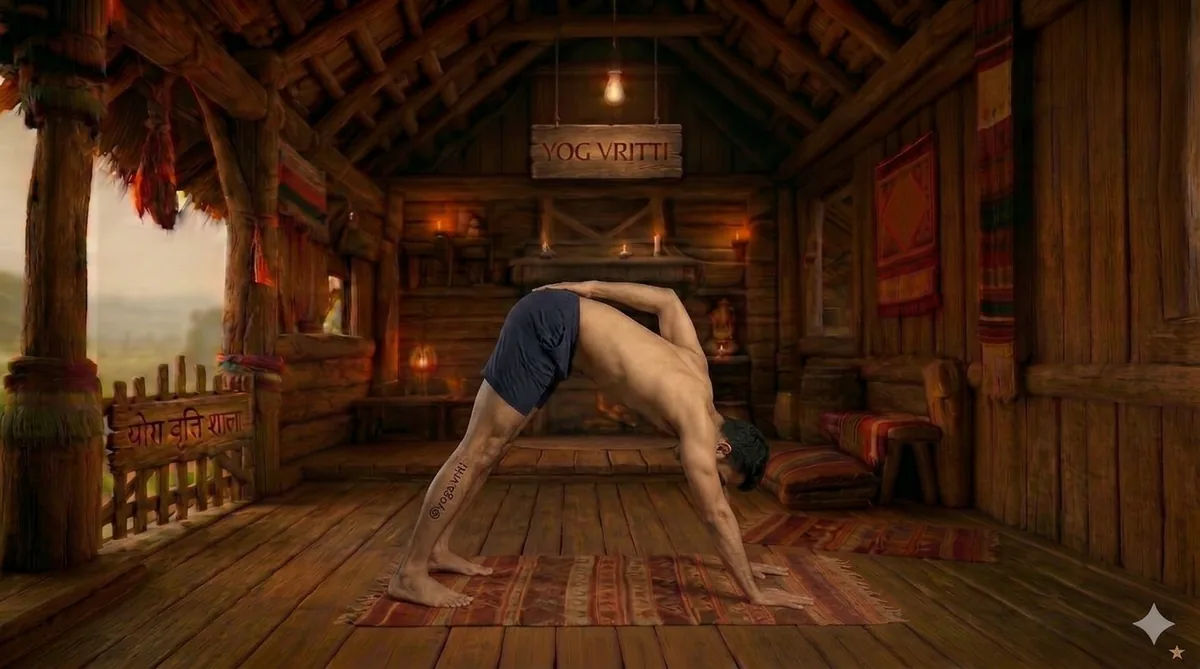
दाहिने पैर को सिर के पीछे ले जाने के लिए धड़ को थोड़ा आगे झुकाएं।
दाहिने पैर को गर्दन के पीछे और सिर के ऊपर से ले जाएं, दाहिने घुटने को ऊपर की ओर और बाहर की ओर खोलें।
दाहिने हाथ को दाहिने पैर के नीचे से ले जाकर दाहिने पैर के अंगूठे को पकड़ें।
बाएं हाथ को अंजलि मुद्रा में छाती पर लाएं या संतुलन के लिए कमर पर रखें।
खड़े बाएं पैर को सीधा और मजबूत रखें, जांघ को ऊपर की ओर खींचें।
रीढ़ को लंबा करें और छाती को खोलें। कूल्हों को जितना हो सके उतना समान स्तर पर रखें।
कुछ श्वासों के लिए रुकें, संतुलन और स्थिरता बनाए रखें।
श्वास बाहर निकालते हुए धीरे-धीरे पैर को छोड़ें और ताड़ासन में वापस आएं। दूसरी तरफ दोहराएं।
सामान्य गलतियाँ
शिक्षण संकेत
अभ्यास क्रम
अक्सर पूछे जाने वाले प्रश्न
एक पाद शीर्ष पादासन के बारे में सामान्य प्रश्न
एक पाद शीर्ष पादासन क्या है?
एक पाद शीर्ष पादासन एक अत्यंत उन्नत खड़ी मुद्रा है जिसके लिए असाधारण कूल्हे के लचीलेपन, हैमस्ट्रिंग की लंबाई और संतुलन की आवश्यकता होती है। यह कूल्हे को गहराई से खोलता है और अभ्यासकर्ता की स्थिरता और शरीर जागरूकता को चुनौती देता है।
एक पाद शीर्ष पादासन के क्या फायदे हैं?
Dramatically increases hip flexibility। Stretches hamstrings and groin। Strengthens standing leg and core।
एक पाद शीर्ष पादासन किस स्तर के लिए है?
एक पाद शीर्ष पादासन एक उन्नत स्तर का आसन है। शुरुआती लोग किसी योग गुरु के मार्गदर्शन में अभ्यास करें।
एक पाद शीर्ष पादासन कौन न करे?
Severe hip injury, Knee injury, Sciatica की स्थिति में यह आसन न करें।