 शुरुआतीपीठ के बल
सुप्त पवनमुक्तासन
Supine Wind-Relieving Pose
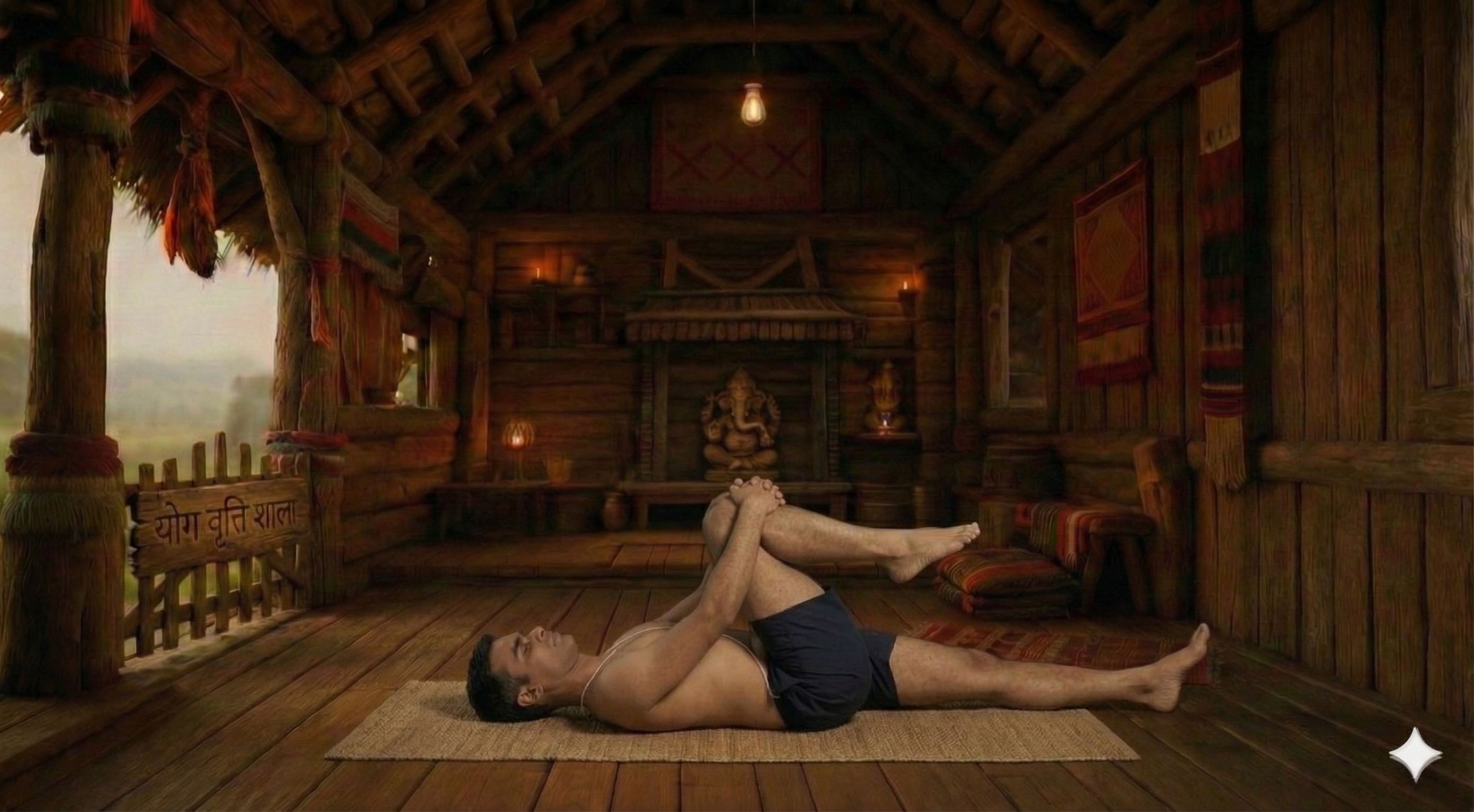
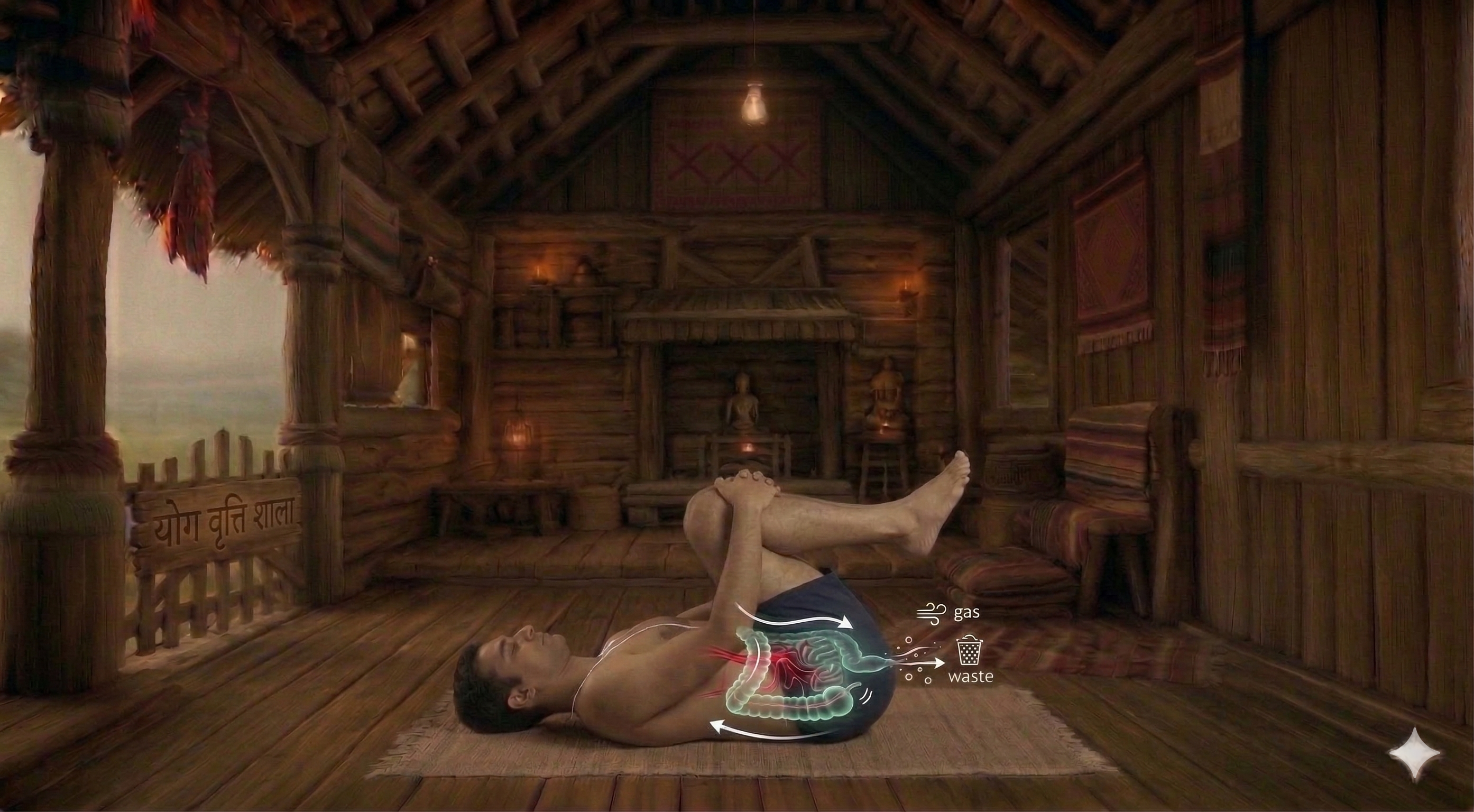
सुप्त पवनमुक्तासन, वायु-मुक्ति मुद्रा, लेटी हुई स्थिति में दोनों घुटनों को छाती की ओर खींचती है, पेट को दबाती है और पाचन अंगों की मालिश करती है।
फायदे
5Gluteals (buttocks)(lengthening)
The large muscles of your buttocks (gluteals), particularly the gluteus maximus, receive a gentle, sustained stretch as the thighs approximate the chest. This action helps to release chronic tightness often accumulated from prolonged sitting, which can contribute to lower back stiffness and restricted hip movement. Yogically, this release helps to unlock stored tension in the pelvic bowl, allowing for greater energetic freedom and a sense of grounding in the lower body. Regular practice cultivates suppleness in these powerful hip extensors.
Hip Flexors (front of hips)(releasing)
While the hips are in flexion, the act of drawing the knees towards the chest helps to gently release chronic tension in the deep hip flexors, primarily the iliopsoas, which connect the lumbar spine to the femur. This sustained, passive release can alleviate anterior pelvic tilt and reduce the compressive strain these muscles often exert on the lumbar spine. Energetically, releasing these deep muscles can unblock stagnant energy in the lower abdomen and pelvis, promoting a sense of ease, mobility, and emotional freedom.
Erector Spinae (lower back muscles)(lengthening)
The gentle rounding of the lower back in Supta Pawanmuktasana provides a mild, traction-like stretch to the erector spinae muscles, which run along either side of the spine. This action helps to decompress the lumbar vertebrae and soften the rigidity often held in the lower back from daily upright posture and stress. The practitioner feels a widening and softening sensation across the sacrum and lower back, fostering a profound sense of surrender and ease. This cultivates a more pliable, responsive spine, both physically and energetically.
- पूर्ण शारीरिक विश्लेषण →
सावधानियाँ
4Recent Surgery
Surgical wounds and healing tissues need time before being subjected to the mechanical stress of yoga postures.
Wait for full medical clearance from your surgeon; begin with gentle breath work and progress only as healing allows.
Hernia
Strong abdominal compression and breath-holding under strain increase intra-abdominal pressure and can worsen a hernia.
Avoid any position that creates a bulging sensation in the abdomen; keep the torso upright.
Pregnancy
Deep twists, abdominal compression, and lying flat on the back can restrict blood flow or cause discomfort as pregnancy progresses.
Widen the feet to hip-width or more; fold to a 45-degree angle rather than full depth to avoid abdominal compression.
Knee Injury
Deep flexion or rotation at the knee can strain ligaments, meniscus, or cartilage, especially in a compromised joint.
Bend the knees generously to protect the joint and keep the weight in the heels rather than the toes.
विधि
चरण-दर-चरण निर्देश
पीठ के बल लेट जाएं, पैर कूल्हे-चौड़ाई से अलग और हाथ शरीर के बगल में रखें। (Lie on your back with your legs hip-width apart and your arms by your sides.)
श्वास छोड़ते हुए, दोनों घुटनों को छाती की ओर लाएं। (Exhale and draw both knees towards your chest.)
अपने हाथों से अपनी पिंडलियों या जांघों को पकड़ें। (Hold onto your shins or thighs with your hands.)
अपनी गर्दन और कंधों को ढीला छोड़ दें। (Relax your neck and shoulders.)
अपनी श्वास को गहरा और स्थिर रखें। (Maintain a deep and steady breath.)
श्वास छोड़ते हुए, अपने सिर को धीरे से घुटनों की ओर उठाएं, अपनी ठुड्डी को अपनी छाती की ओर लाएं। (Exhaling, gently lift your head towards your knees, bringing your chin towards your chest.)
सुनिश्चित करें कि आपकी lower back फर्श पर टिकी हुई है। (Ensure your lower back remains in contact with the floor.)
30 सेकंड तक इस स्थिति में रहें। (Hold this position for 30 seconds.)
श्वास लेते हुए, धीरे-धीरे अपने सिर को फर्श पर वापस लाएं और पैरों को सीधा करें। (Inhale and slowly lower your head back to the floor and straighten your legs.)
विश्राम करें और कुछ सामान्य श्वास लें। (Relax and take a few normal breaths.)
सामान्य गलतियाँ
शिक्षण संकेत
अभ्यास क्रम
अक्सर पूछे जाने वाले प्रश्न
सुप्त पवनमुक्तासन के बारे में सामान्य प्रश्न
सुप्त पवनमुक्तासन क्या है?
सुप्त पवनमुक्तासन, वायु-मुक्ति मुद्रा, लेटी हुई स्थिति में दोनों घुटनों को छाती की ओर खींचती है, पेट को दबाती है और पाचन अंगों की मालिश करती है।
सुप्त पवनमुक्तासन के क्या फायदे हैं?
Relieves trapped gas and bloating। Massages the digestive organs। Stretches the lower back and spine।
सुप्त पवनमुक्तासन किस स्तर के लिए है?
सुप्त पवनमुक्तासन एक शुरुआती स्तर का आसन है। यह सभी के लिए उपयुक्त है।
सुप्त पवनमुक्तासन कौन न करे?
Recent abdominal surgery, Hernia, Late-term pregnancy की स्थिति में यह आसन न करें।