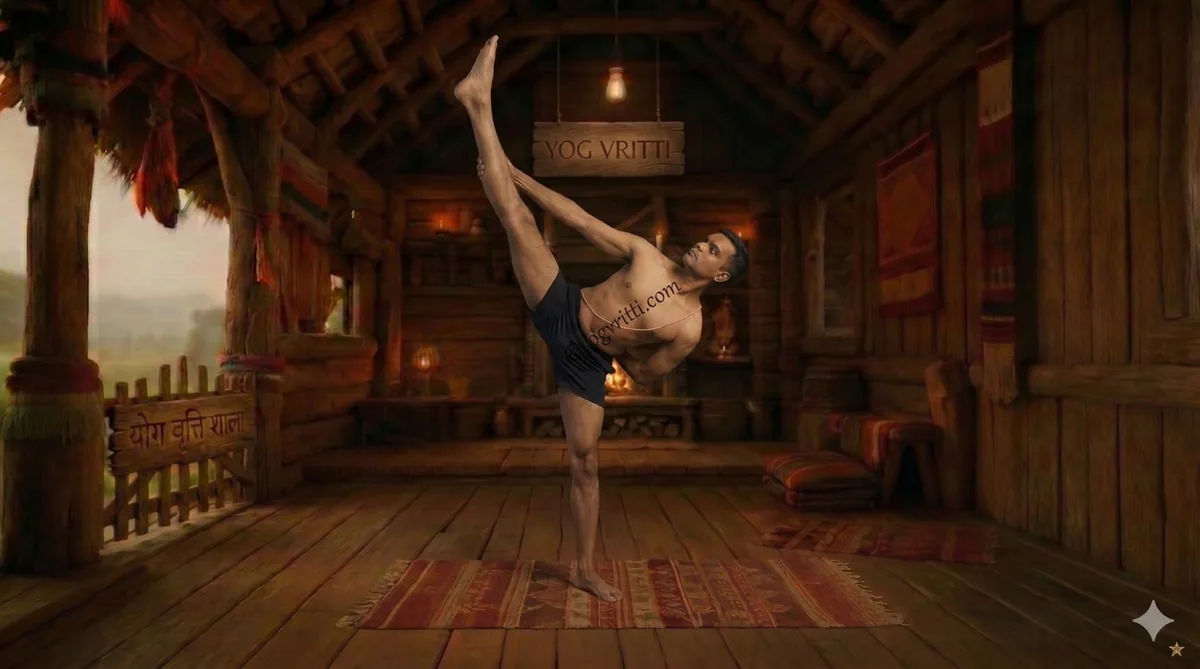
 उन्नतखड़े होकर
स्वर्ग द्विजासन
Bird of Paradise Pose
स्वर्ग द्विजासन, या बर्ड ऑफ पैराडाइज़ पोज़, एक उन्नत स्टैंडिंग बैलेंस पोज़ है जो हैमस्ट्रिंग और कूल्हों को गहराई से फैलाता है, साथ ही खड़े पैर और कोर को मजबूत करता है। यह गहन एकाग्रता और स्थिरता की मांग करता है, जिससे अनुग्रह और खुलेपन की भावना आती है।
फायदे
6Hamstrings(lengthening)
The muscles along the back of the lifted thigh (hamstrings) undergo a significant, sustained lengthening in this pose, particularly as the knee extends. This is not a passive hang but an active release, encouraging the muscle spindles to gradually relax and increase their resting length over time. From a yogic perspective, this deep opening in the posterior chain helps to release stored 'apana vayu,' the downward-moving energy, often associated with stagnant emotional patterns, promoting a feeling of liberation and ease in the pelvis.
Hip Flexors(lengthening)
While the standing leg's hip flexors are engaged to stabilize the pelvis, the hip flexors of the lifted leg experience a gentle yet profound lengthening, especially if the leg is actively extending from the hip. This counter-intuitive lengthening occurs as the entire leg is drawn away from the torso, creating space in the anterior hip joint. Releasing tension in the hip flexors, often tight from prolonged sitting, can alleviate lower back compression and allow for a freer flow of 'prana' into the pelvic region, enhancing vitality and creative energy.
Quadriceps(strengthening)
The muscles at the front of the standing thigh (quadriceps) are intensely engaged to maintain a strong, stable base, working eccentrically to prevent the knee from collapsing and isometrically to hold the extension. This deep activation builds muscular endurance and bone density in the weight-bearing leg, creating a powerful foundation. Energetically, this strength in the 'sthira' (steadiness) of the standing leg allows the 'sukha' (ease) of the lifted leg to unfold, embodying the balance between effort and surrender that is central to yoga practice.
- पूर्ण शारीरिक विश्लेषण →
सावधानियाँ
6Hip Injury
Deep hip flexion, external rotation, or weight-bearing can aggravate labral tears, impingement, or bursitis.
Limit the range of hip movement, avoid positions that cause clicking or sharp pain, and use props to support the hip.
Knee Injury
Deep flexion or rotation at the knee can strain ligaments, meniscus, or cartilage, especially in a compromised joint.
Bend the knees generously to protect the joint and keep the weight in the heels rather than the toes.
Ankle Injury
Unstable or injured ankle joints can be overstressed by weight-bearing, extreme dorsiflexion, or plantar flexion.
Avoid deep dorsiflexion; keep a slight bend in the ankle and use blocks under the hands.
Shoulder Injury
Overhead loading and extreme shoulder rotation can impinge the subacromial space and overload rotator cuff tendons.
Reduce the range of motion, avoid full arm extension, and use props to limit load on the shoulder joint.
विधि
चरण-दर-चरण निर्देश
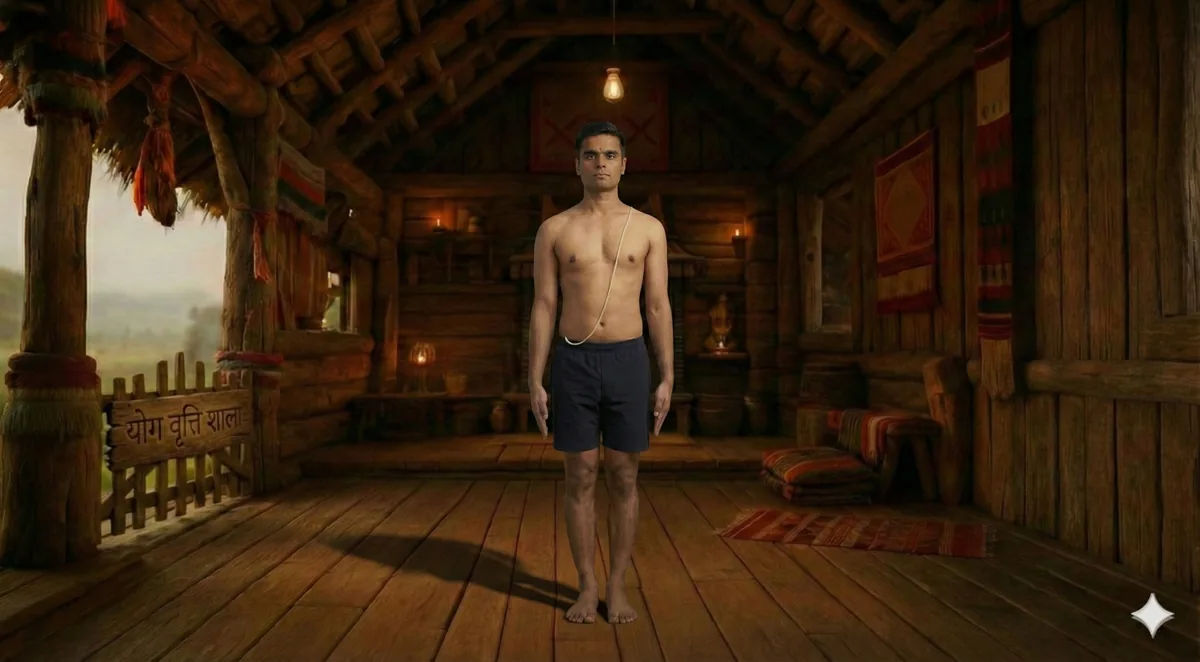
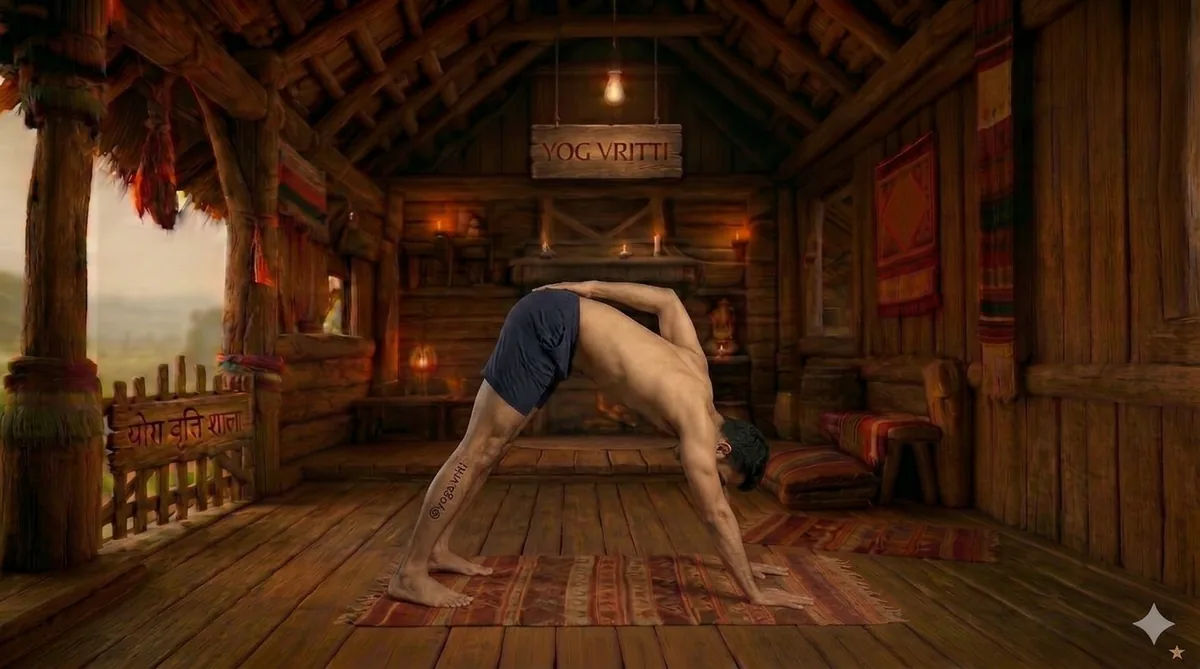
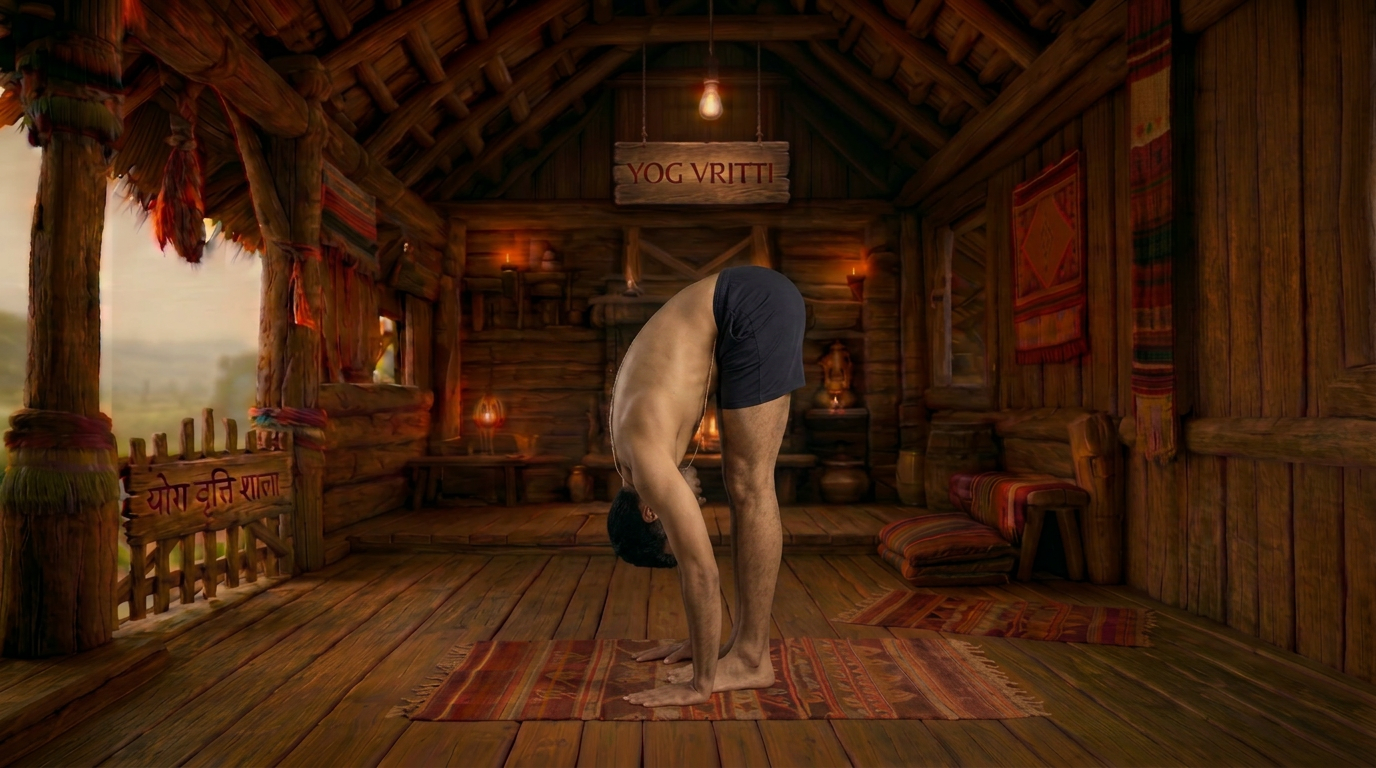
उत्थित पार्श्वकोणासन (Utthita Parsvakonasana) से शुरू करें, जिसमें दाहिना घुटना मुड़ा हुआ हो और दाहिने हाथ को दाहिने पैर के बाहर ज़मीन पर रखा हो।
दाहिने हाथ को दाहिने जाँघ के नीचे से ले जाएँ और बाएँ हाथ को पीठ के पीछे से ले जाकर हाथों को आपस में बाँधें (bind)। यदि आवश्यक हो तो पट्टी (strap) का उपयोग करें।
श्वास लेते हुए, अपना वज़न दाहिने पैर पर स्थानांतरित करें और धीरे-धीरे बाएँ पैर को दाहिने पैर के पास लाएँ।
श्वास छोड़ते हुए, दाहिने पैर को मज़बूत रखें और धीरे-धीरे बाएँ पैर को ज़मीन से ऊपर उठाएँ।
जैसे ही संतुलन बनता है, श्वास लेते हुए धीरे-धीरे बाएँ पैर को सीधा करें, उसे ऊपर की ओर फैलाएँ।
छाती को खुला रखें, कंधों को पीछे खींचें और दृष्टि (gaze) को सामने या थोड़ा ऊपर रखें।
कोर को सक्रिय रखें और संतुलन बनाए रखने के लिए साँस पर ध्यान केंद्रित करें।
इस स्थिति में कुछ साँसों तक रुकें, फिर श्वास छोड़ते हुए धीरे-धीरे बाएँ पैर को नीचे लाएँ और हाथों को खोलें।
दूसरी तरफ भी दोहराएँ।
सहायक उपकरण
वैकल्पिक सहायता — आवश्यकतानुसार उपयोग करें
Yoga Strap
Loop a strap around the feet when the hands cannot reach — this maintains proper spinal length and prevents rounding the lower back to close the gap.
सामान्य गलतियाँ
शिक्षण संकेत
अभ्यास क्रम
अक्सर पूछे जाने वाले प्रश्न
स्वर्ग द्विजासन के बारे में सामान्य प्रश्न
स्वर्ग द्विजासन क्या है?
स्वर्ग द्विजासन, या बर्ड ऑफ पैराडाइज़ पोज़, एक उन्नत स्टैंडिंग बैलेंस पोज़ है जो हैमस्ट्रिंग और कूल्हों को गहराई से फैलाता है, साथ ही खड़े पैर और कोर को मजबूत करता है। यह गहन एकाग्रता और स्थिरता की मांग करता है, जिससे अनुग्रह और खुलेपन की भावना आती है।
स्वर्ग द्विजासन के क्या फायदे हैं?
Deeply stretches hamstrings, groin, and hip flexors। Strengthens the standing leg, ankles, and core। Improves balance, concentration, and focus।
स्वर्ग द्विजासन किस स्तर के लिए है?
स्वर्ग द्विजासन एक उन्नत स्तर का आसन है। शुरुआती लोग किसी योग गुरु के मार्गदर्शन में अभ्यास करें।
स्वर्ग द्विजासन कौन न करे?
Hip injury or pain, Knee injury or pain, Ankle injury or instability की स्थिति में यह आसन न करें।
स्वर्ग द्विजासन के लिए कौन से उपकरण चाहिए?
strap का उपयोग इस आसन को आसान बना सकता है।