 उन्नतखड़े होकर
त्रिविक्रमासन
Three Steps Pose
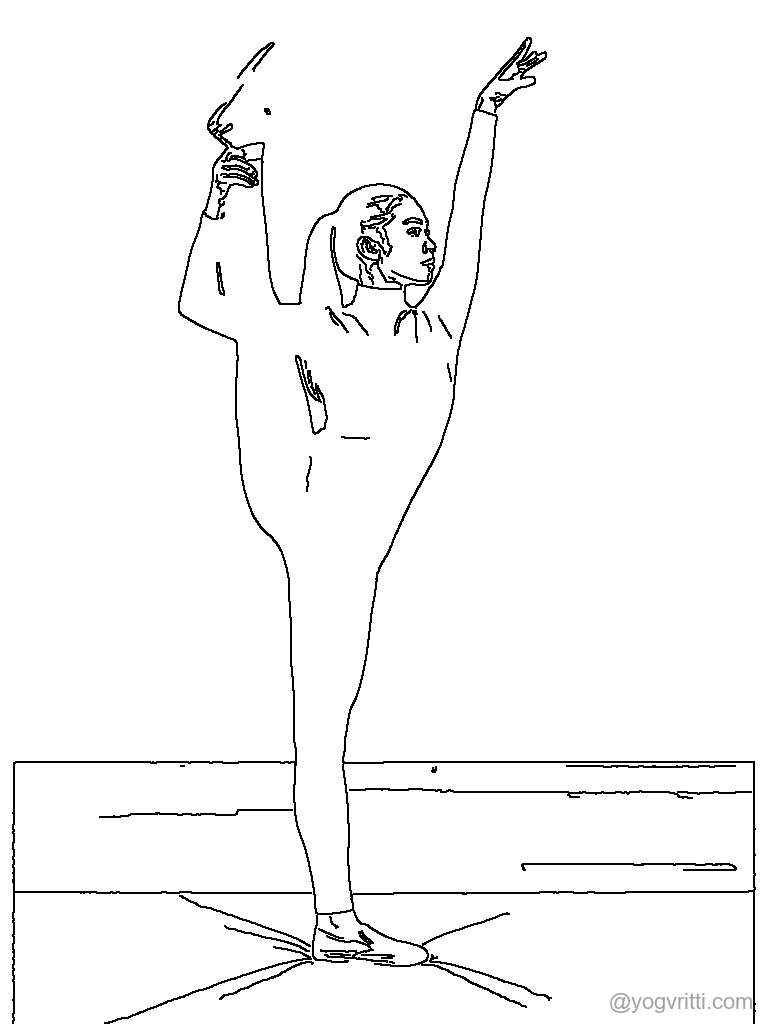
त्रिविक्रमासन खड़े होकर पूर्ण स्प्लिट है — एक पैर कान तक।
फायदे
3Hamstrings(lengthening)
These powerful muscles at the back of the lifted thigh undergo an intense, sustained stretch, extending from the sitting bone to just below the knee. This deep lengthening isn't about forcing, but about patiently coaxing the muscle fibers to release their ingrained tightness, often accumulated from prolonged sitting. From a yogic perspective, this unwinding helps to free apana vayu, facilitating a downward flow of energy and relieving stiffness that can impede the flow of prana in the lower limbs.
Hip Flexors(lengthening)
The muscles at the front of the standing hip (iliopsoas and rectus femoris) are actively engaged to maintain the stability of the pelvis, while the hip flexors of the lifted leg are eccentrically lengthening to allow the leg to rise high, yet also concentrically contracting to hold it there. This dynamic interplay helps to release chronic tension often held deep within the core, which can compress the lower spine. Energetically, freeing the hip flexors can unlock emotional blockages, promoting a sense of freedom and openness in the pelvic bowl.
Quadriceps(strengthening)
In the standing leg, the quadriceps are powerfully engaged, straightening the knee and anchoring the limb firmly to the earth, creating a strong foundation for the entire posture. Simultaneously, the quadriceps of the lifted leg are actively engaged in eccentric lengthening to allow for the full extension of the knee, creating space and preventing hyperextension. This dual action cultivates both stability and intelligent release, bringing a feeling of strength and focused intention to the lower body.
- पूर्ण शारीरिक विश्लेषण →
सावधानियाँ
3Hamstring Injury
Aggressive stretching of a torn or strained hamstring can reinjure muscle fibres — the attachment near the sitting bone is especially vulnerable.
Do not try to straighten the legs fully; prioritise a neutral pelvis and neutral lower back over hamstring length.
Hip Injury
Deep hip flexion, external rotation, or weight-bearing can aggravate labral tears, impingement, or bursitis.
Do not force the hip into deep external rotation; keep the foot turned out only as far as is pain-free.
Balance Disorders
Impaired proprioception increases the risk of falls during standing and balancing poses.
Practise with one hand on a wall or chair back; keep both feet wider than hip-width for a stable base.
विधि
चरण-दर-चरण निर्देश
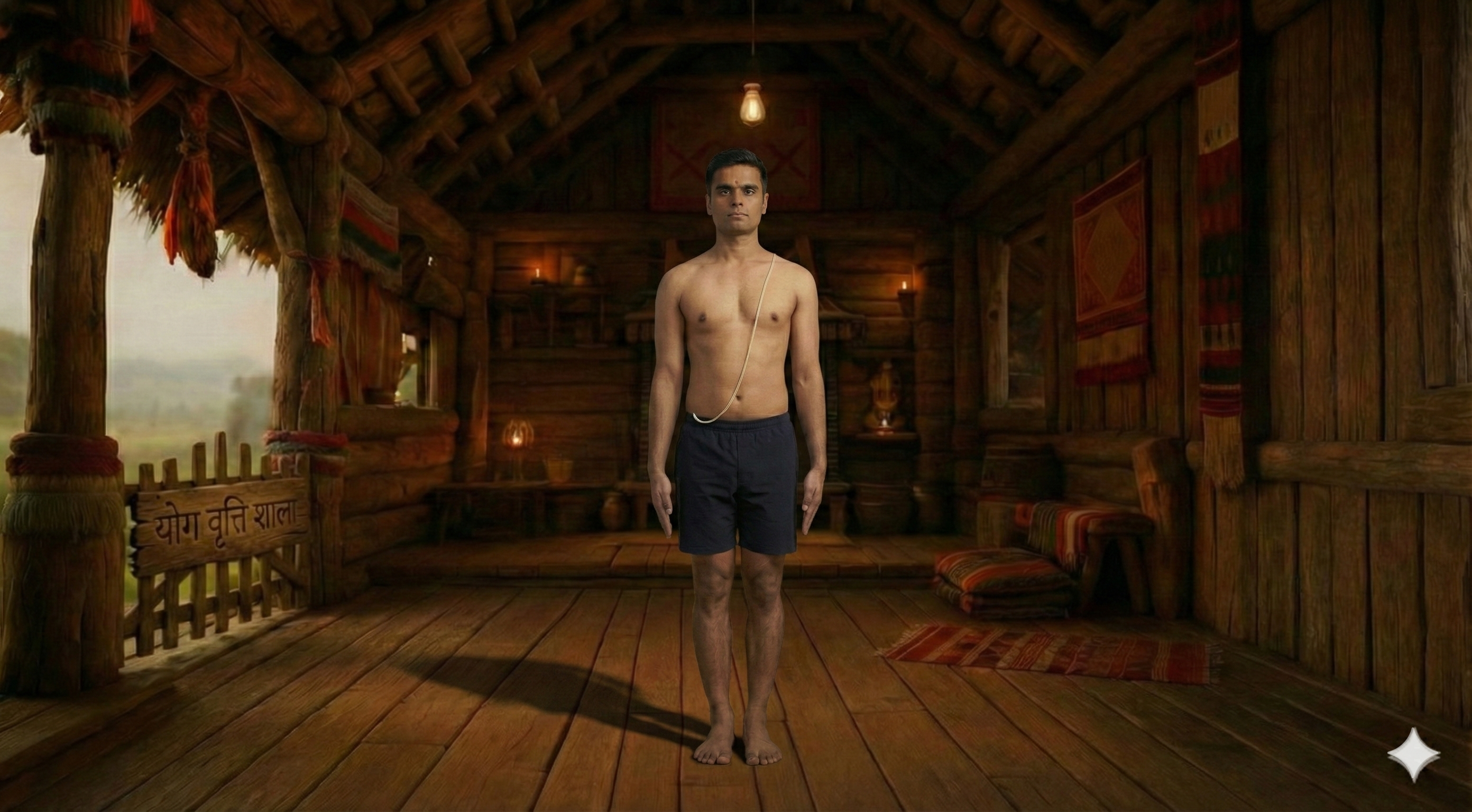
ताड़ासन में खड़े हों।
दायां पैर ऊपर उठाएं, दाएं हाथ से अंगूठा पकड़ें।
दायां पैर सीधा — ऊपर, कान के बगल।
बायां पैर सीधा, मजबूत।
पूर्ण स्टैंडिंग स्प्लिट — 180°।
धड़ सीधा।
दृष्टि सामने। 3-5 सांसें।
धीरे-धीरे पैर नीचे।
दूसरी तरफ दोहराएं।
ताड़ासन।
सहायक उपकरण
वैकल्पिक सहायता — आवश्यकतानुसार उपयोग करें
Yoga Strap
A strap extends your reach and allows the pose to be held with correct alignment before full flexibility is established.
सामान्य गलतियाँ
शिक्षण संकेत
अभ्यास क्रम

अक्सर पूछे जाने वाले प्रश्न
त्रिविक्रमासन के बारे में सामान्य प्रश्न
त्रिविक्रमासन क्या है?
त्रिविक्रमासन खड़े होकर पूर्ण स्प्लिट है — एक पैर कान तक।
त्रिविक्रमासन के क्या फायदे हैं?
Extreme hamstring and hip flexibility। Standing balance mastery। Full body integration।
त्रिविक्रमासन किस स्तर के लिए है?
त्रिविक्रमासन एक उन्नत स्तर का आसन है। शुरुआती लोग किसी योग गुरु के मार्गदर्शन में अभ्यास करें।
त्रिविक्रमासन कौन न करे?
Hamstring injuries, Hip injuries, Balance disorders की स्थिति में यह आसन न करें।
त्रिविक्रमासन के लिए कौन से उपकरण चाहिए?
strap का उपयोग इस आसन को आसान बना सकता है।