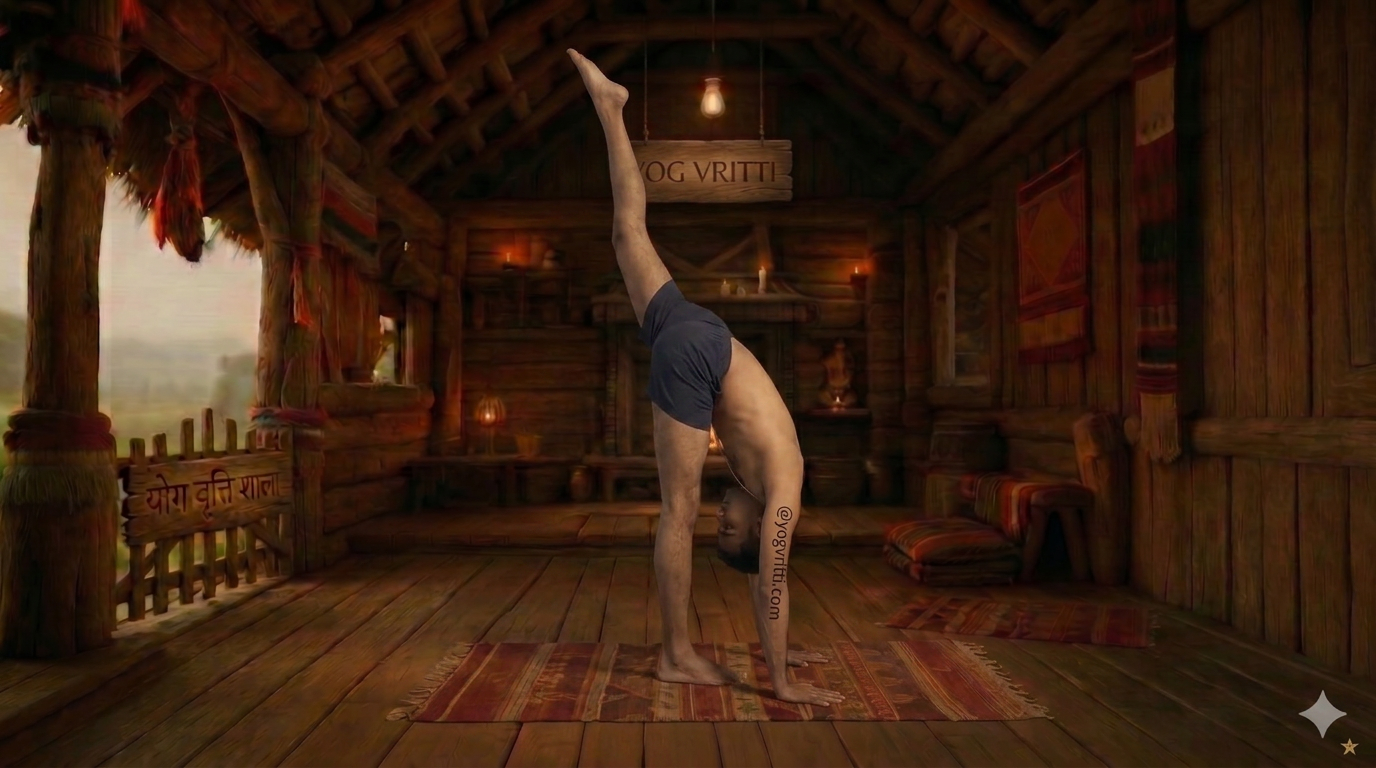
 मध्यमखड़े होकर
ऊर्ध्व प्रसारित एक पादासन
Standing Splits
ऊर्ध्व प्रसारित एक पादासन, या स्टैंडिंग स्प्लिट्स, एक उन्नत संतुलन आगे की ओर झुकने वाला आसन है जो हैमस्ट्रिंग और हिप फ्लेक्सर को गहराई से फैलाता है। यह खड़े पैर और कोर में ताकत बनाता है जबकि एकाग्रता और स्थिरता विकसित करता है।
फायदे
6Hamstrings(lengthening)
The long muscles running along the back of your lifted thigh (hamstrings) receive a deep, sustained release in this pose, not a forced stretch but a patient unwinding. As you hold and breathe, the nervous system gradually allows these muscles to let go of years of tension stored from sitting and stress. In yogic understanding, this releases apana vayu – the downward-moving energy – allowing a feeling of groundedness and ease in the lower body, directly reducing the pull on the lower back.
Glutes(stabilizing)
On the standing leg, the buttock muscles (glutes) are powerfully engaged to stabilize the hip and keep the pelvis level, preventing it from tilting or collapsing. This isometric contraction builds strength and endurance in the foundation of the pose, creating a sense of rootedness and connection to the earth. For the lifted leg, the glutes, especially the maximus, are lengthened, releasing deep-seated tension often held in the pelvic region, which can free emotional blockages.
Hip Flexors(lengthening)
The deep muscles at the front of the hip of the lifted leg (hip flexors, particularly the psoas and iliacus) receive a significant lengthening as the leg extends upwards and the torso folds forward. This release is crucial for improving hip mobility and can alleviate tension that often contributes to lower back pain. Yogically, releasing the psoas, a muscle deeply connected to our 'fight or flight' response, can free up emotional holding, bringing a profound sense of ease and spaciousness to the core.
- पूर्ण शारीरिक विश्लेषण →
सावधानियाँ
5Hamstring Injury
Aggressive stretching of a torn or strained hamstring can reinjure muscle fibres — the attachment near the sitting bone is especially vulnerable.
Bend the knees significantly to remove tension from the hamstrings; fold only as far as the spine stays long.
Hip Injury
Deep hip flexion, external rotation, or weight-bearing can aggravate labral tears, impingement, or bursitis.
Limit the range of hip movement, avoid positions that cause clicking or sharp pain, and use props to support the hip.
Sciatica
Certain hip stretches and forward bends pull on the sciatic nerve, temporarily increasing radiating pain down the leg.
Bend the knees deeply to reduce tension on the sciatic nerve; prioritise a long spine over straight legs.
Recent Surgery
Surgical wounds and healing tissues need time before being subjected to the mechanical stress of yoga postures.
Wait for full medical clearance from your surgeon; begin with gentle breath work and progress only as healing allows.
विधि
चरण-दर-चरण निर्देश
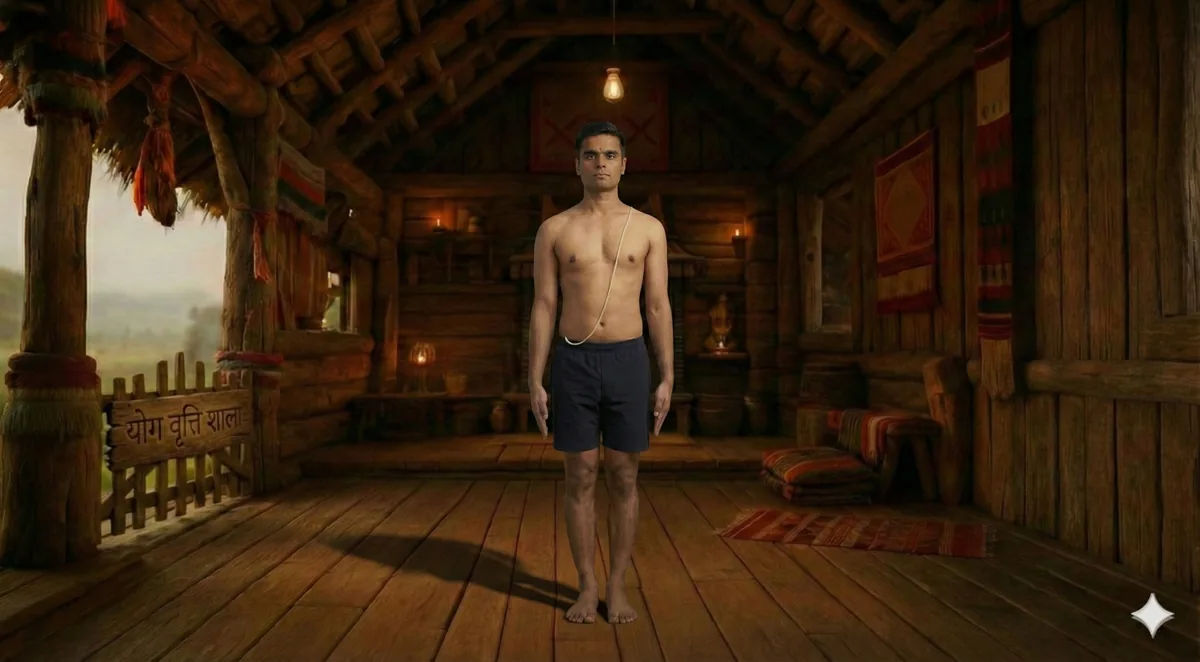
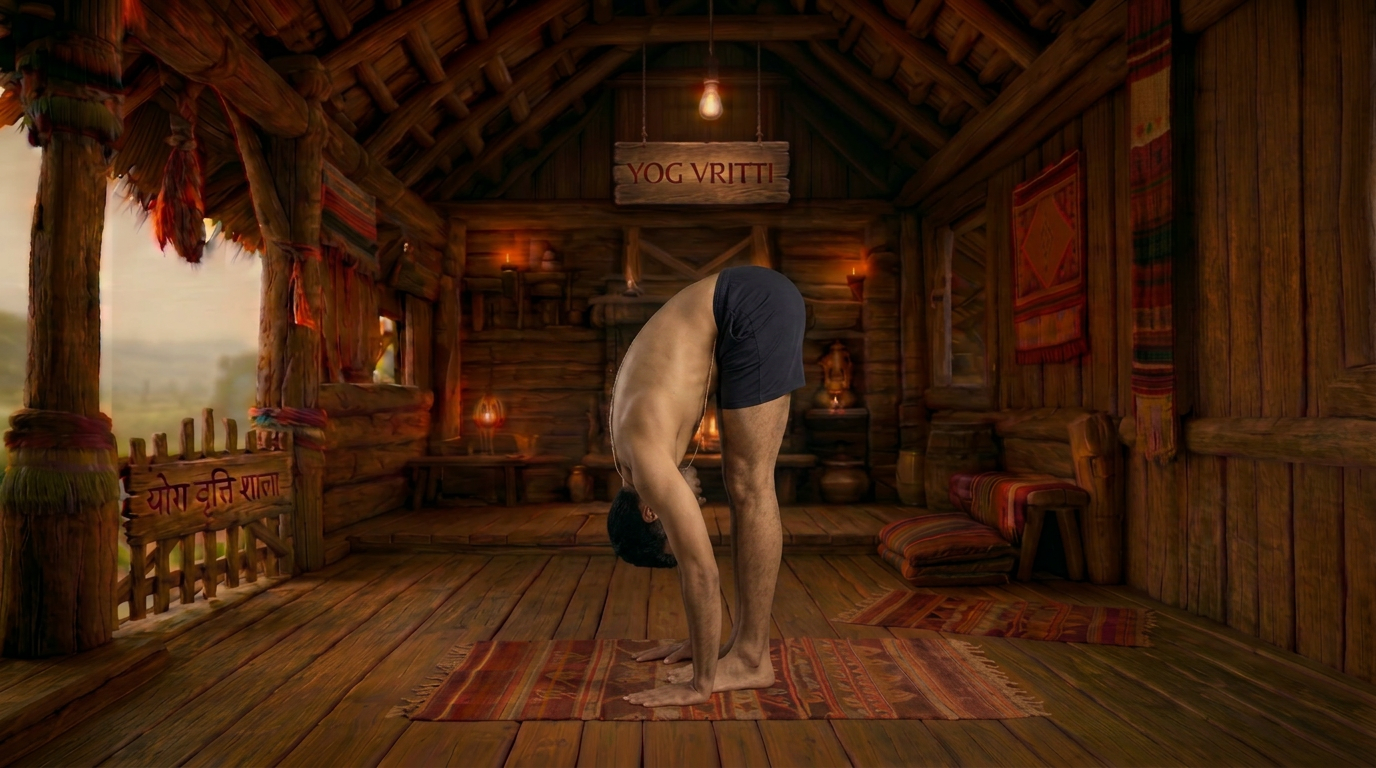
उत्तानासन (खड़े होकर आगे की ओर झुकना) से शुरू करें, पैर कूल्हे की चौड़ाई पर हों और हाथ ज़मीन पर या पैरों के बगल में ब्लॉक पर हों।
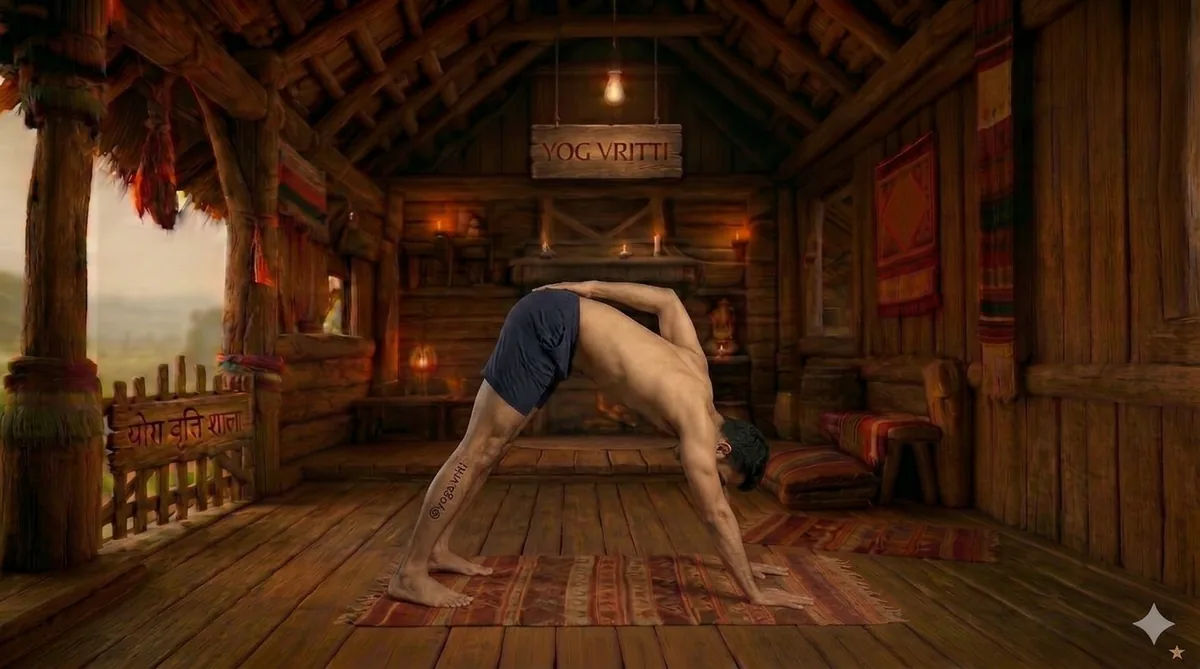
अपना वज़न थोड़ा दाहिने पैर पर डालें, दाहिने जांघ को कसकर पैर को पूरी तरह सीधा करें।
साँस अंदर लें, अपने बाएँ पैर को सीधा पीछे और ऊपर छत की ओर उठाएँ, इसे बाहरी रूप से घुमाते हुए (कूल्हे को खोलते हुए) रखें।
अपने कूल्हों को सामने की ओर सीधा और समान रखें; शुरुआत में बाएँ कूल्हे को बगल में खोलने से बचें। दाहिने पैर की एड़ी से मज़बूती से नीचे दबाएँ।
साँस बाहर छोड़ें, खड़े पैर पर आगे की ओर झुकें, अपने धड़ को दाहिनी जांघ के करीब लाएँ।
अपने उठे हुए बाएँ पैर की एड़ी से सक्रिय रूप से ऊपर की ओर फैलाएँ, इसे छत की ओर ऊँचाई पर पहुँचाएँ। अपने बाएँ ग्लूट को संलग्न करें।
संतुलन और समर्थन बनाए रखने के लिए अपने हाथों को ज़मीन या ब्लॉक पर दबाए रखें। आप गहरे मोड़ के लिए दाहिने हाथ को दाहिने टखने पर ला सकते हैं।
अपने कंधे के ब्लेड को पीठ के नीचे और कानों से दूर खींचें, गर्दन को लंबा रखें।
20-30 सेकंड तक रुकें, स्थिर दृष्टि (दृष्टि) और सहज साँस बनाए रखें।
छोड़ने के लिए, साँस बाहर छोड़ें, धीरे-धीरे बाएँ पैर को नीचे दाहिने पैर के पास लाएँ, उत्तानासन में लौट आएँ।
दूसरी तरफ दोहराएँ।
सहायक उपकरण
वैकल्पिक सहायता — आवश्यकतानुसार उपयोग करें
Yoga Block
Place blocks under the hands at any height to allow the spine to lengthen fully before attempting to reach the floor — prioritising posture over depth.
Wall
Place hands on the wall at hip height and walk back to create a right angle — a gentler version that still provides deep spinal decompression.
सामान्य गलतियाँ
शिक्षण संकेत
अभ्यास क्रम
अक्सर पूछे जाने वाले प्रश्न
ऊर्ध्व प्रसारित एक पादासन के बारे में सामान्य प्रश्न
ऊर्ध्व प्रसारित एक पादासन क्या है?
ऊर्ध्व प्रसारित एक पादासन, या स्टैंडिंग स्प्लिट्स, एक उन्नत संतुलन आगे की ओर झुकने वाला आसन है जो हैमस्ट्रिंग और हिप फ्लेक्सर को गहराई से फैलाता है। यह खड़े पैर और कोर में ताकत बनाता है जबकि एकाग्रता और स्थिरता विकसित करता है।
ऊर्ध्व प्रसारित एक पादासन के क्या फायदे हैं?
Deeply stretches hamstrings and hip flexors। Strengthens ankles and standing leg muscles। Improves balance, focus, and proprioception।
ऊर्ध्व प्रसारित एक पादासन किस स्तर के लिए है?
ऊर्ध्व प्रसारित एक पादासन एक मध्यम स्तर का आसन है। शुरुआती लोग किसी योग गुरु के मार्गदर्शन में अभ्यास करें।
ऊर्ध्व प्रसारित एक पादासन कौन न करे?
Severe hamstring injury or tear, Acute hip injury or pain, Sciatica (can aggravate) की स्थिति में यह आसन न करें।
ऊर्ध्व प्रसारित एक पादासन के लिए कौन से उपकरण चाहिए?
block, wall का उपयोग इस आसन को आसान बना सकता है।