 शुरुआतीkneeling
विविधताएँ (1)
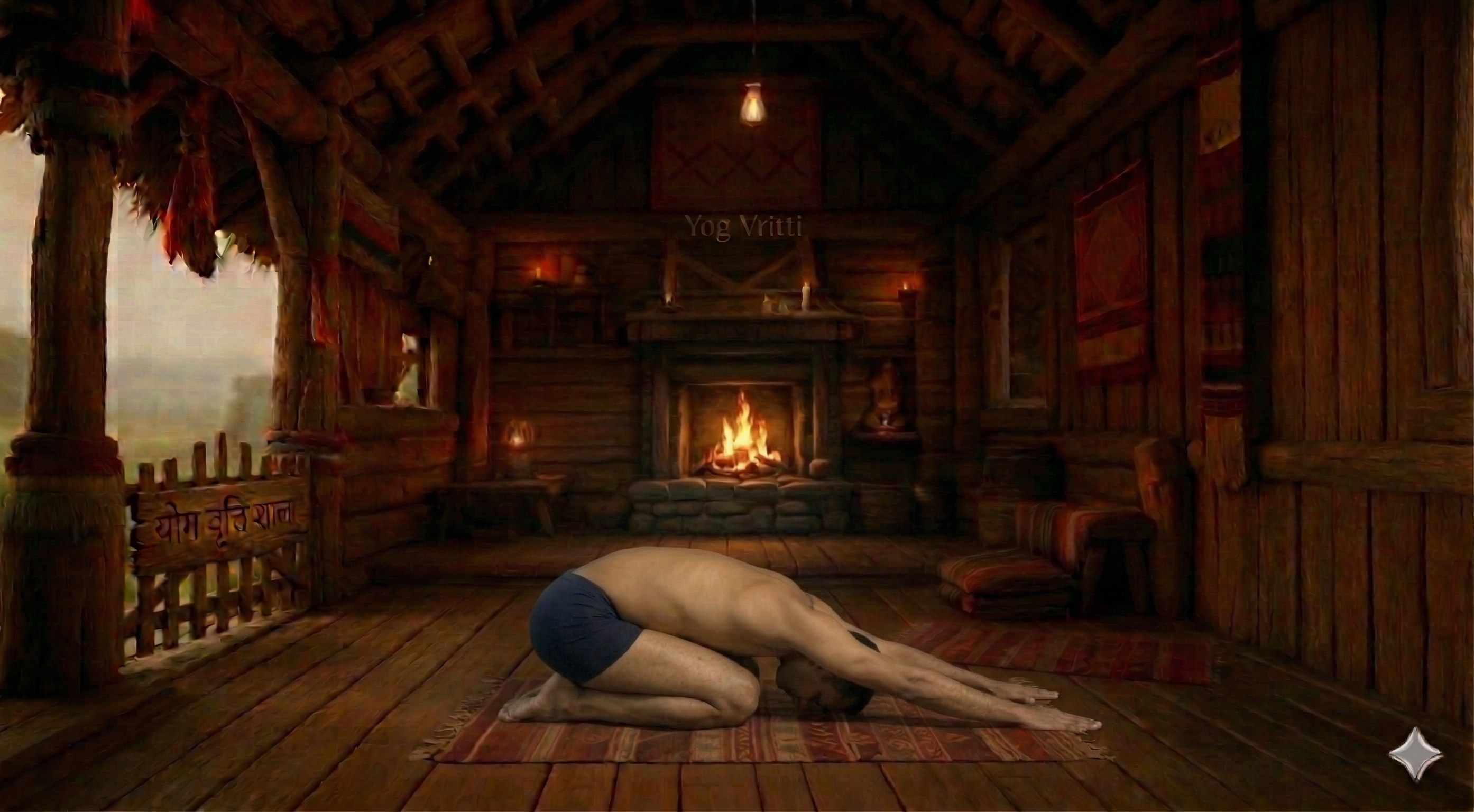
अधो मुख वीरासन
Extended Child's Pose
अधो मुख वीरासन बाहों के साथ एक कोमल आगे झुकने वाला आसन है जो रीढ़, कंधों और कूल्हों को फैलाता है। यह एक आरामदायक मुद्रा है जो तनाव और थकान को दूर करने में मदद कर सकती है।
फायदे
5Lower back muscles(lengthening)
While these muscles gently lengthen in the root pose, the extension of the arms in this variation introduces a more active and sustained traction along the entire spinal column. The reaching action encourages the erector spinae to release more profoundly, particularly in the thoracic and lumbar regions, fostering a greater sense of length and decompression throughout the vertebral segments. This active lengthening helps to unravel deeper patterns of spinal compression, enhancing spinal fluidity.
Buttock muscles(releasing)
The gluteal muscles, particularly the large gluteus maximus, form the bulk of your buttocks and are often tight from daily activities like walking, running, or prolonged sitting. In this pose, as the hips are deeply flexed and the pelvis is gently pressed towards the heels, these muscles experience a profound, passive release. This softening helps to unlock stiffness in the sacrum and hips, allowing for a more unhindered flow of apana vayu (downward-moving energy), enhancing a feeling of grounded stability and openness in the pelvic region.
Hip flexors(releasing)
While often associated with lengthening in other postures, here the hip flexors, situated at the front of your hip joint and deep within the abdomen, are in a shortened but deeply relaxed state. This non-strenuous position allows the deep psoas muscle, often a repository of emotional tension, to release its grip and soften. The absence of active engagement encourages a profound letting go in the pelvic bowl, inviting a sense of surrender and ease that can alleviate tightness radiating into the lower back.
- पूर्ण शारीरिक विश्लेषण →
सावधानियाँ
4Knee Injury
Deep flexion or rotation at the knee can strain ligaments, meniscus, or cartilage, especially in a compromised joint.
Bend the knees generously to protect the joint and keep the weight in the heels rather than the toes.
High Blood Pressure
Vigorous effort and inverted positions temporarily raise blood pressure in the head, increasing strain on blood vessels.
Keep the head above the heart by bending the knees deeply and resting forearms on thighs rather than reaching to the floor.
Pregnancy
Deep twists, abdominal compression, and lying flat on the back can restrict blood flow or cause discomfort as pregnancy progresses.
Widen the feet to hip-width or more; fold to a 45-degree angle rather than full depth to avoid abdominal compression.
Shoulder Injury
Overhead loading and extreme shoulder rotation can impinge the subacromial space and overload rotator cuff tendons.
Reduce the range of motion, avoid full arm extension, and use props to limit load on the shoulder joint.
विधि
चरण-दर-चरण निर्देश
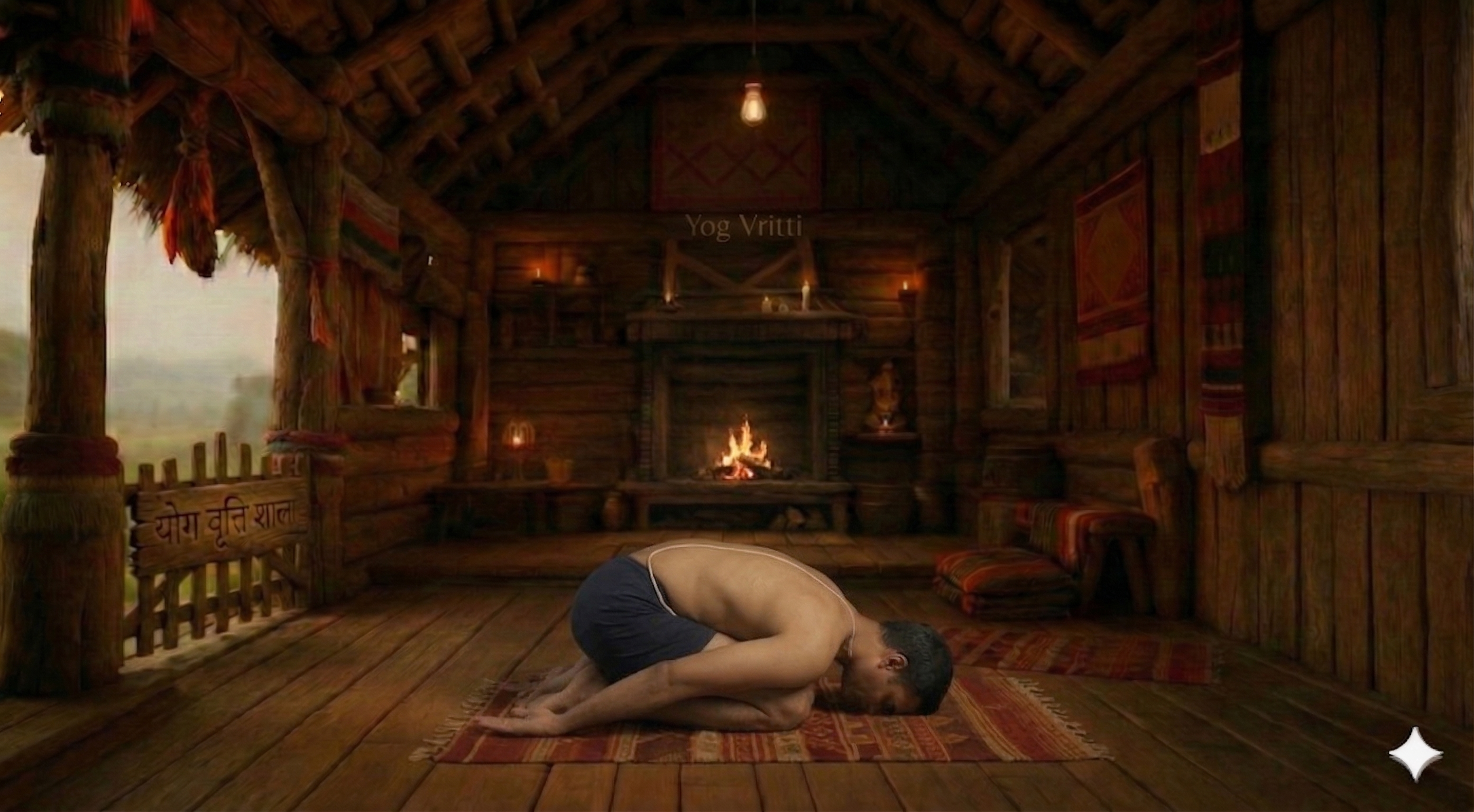
वज्रासन में बैठें। (Vajrasana mein baithe.)
श्वास अंदर लें, हाथों को ऊपर उठाएं। (Shwas andar lein, haathon ko upar uthayein.)
श्वास छोड़ते हुए, आगे झुकें और हाथों को ज़मीन पर कंधों की चौड़ाई से थोड़ा ज़्यादा फैलाएं। (Shwas chhodte hue, aage jhukein aur haathon ko zameen par kandhon ki chaudai se thoda zyada failayein.)
माथे को ज़मीन पर टिकाएं। (Mathe ko zameen par tikaayein.)
हाथों को आगे की ओर खींचें, उंगलियों को फैलाएं। (Haathon ko aage ki aur kheenchein, ungliyon ko failayein.)
कंधों को नीचे की ओर ज़मीन की तरफ़ धकेलें। (Kandhon ko neeche ki or zameen ki taraf dhakelein.)
रीढ़ की हड्डी को लंबा करने पर ध्यान दें। (Reerh ki haddi ko lamba karne par dhyaan dein.)
श्वास लें और छोड़ें, 30 सेकंड से 1 मिनट तक इस स्थिति में रहें। (Shwas lein aur chhodein, 30 second se 1 minute tak is sthiti mein rahein.)
श्वास अंदर लें, हाथों को वापस लाएं। (Shwas andar lein, haathon ko wapas laayein.)
श्वास छोड़ते हुए, वापस वज्रासन में आ जाएं। (Shwas chhodte hue, wapas Vajrasana mein aa jaayein.)
सहायक उपकरण
वैकल्पिक सहायता — आवश्यकतानुसार उपयोग करें
Folded Blanket
Place a folded blanket under the sitting bones to ease the forward tilt of the pelvis and reduce strain at the hamstring attachment.
सामान्य गलतियाँ
शिक्षण संकेत
अभ्यास क्रम
अक्सर पूछे जाने वाले प्रश्न
अधो मुख वीरासन के बारे में सामान्य प्रश्न
अधो मुख वीरासन क्या है?
अधो मुख वीरासन बाहों के साथ एक कोमल आगे झुकने वाला आसन है जो रीढ़, कंधों और कूल्हों को फैलाता है। यह एक आरामदायक मुद्रा है जो तनाव और थकान को दूर करने में मदद कर सकती है।
अधो मुख वीरासन के क्या फायदे हैं?
Stretches the spine, shoulders, and hips। Calms the brain and helps relieve stress। Reduces fatigue।
अधो मुख वीरासन किस स्तर के लिए है?
अधो मुख वीरासन एक शुरुआती स्तर का आसन है। यह सभी के लिए उपयुक्त है।
अधो मुख वीरासन कौन न करे?
Knee injuries, High blood pressure, Pregnancy (later stages) की स्थिति में यह आसन न करें।
अधो मुख वीरासन के लिए कौन से उपकरण चाहिए?
blanket का उपयोग इस आसन को आसान बना सकता है।