 शुरुआतीपीछे झुकाव
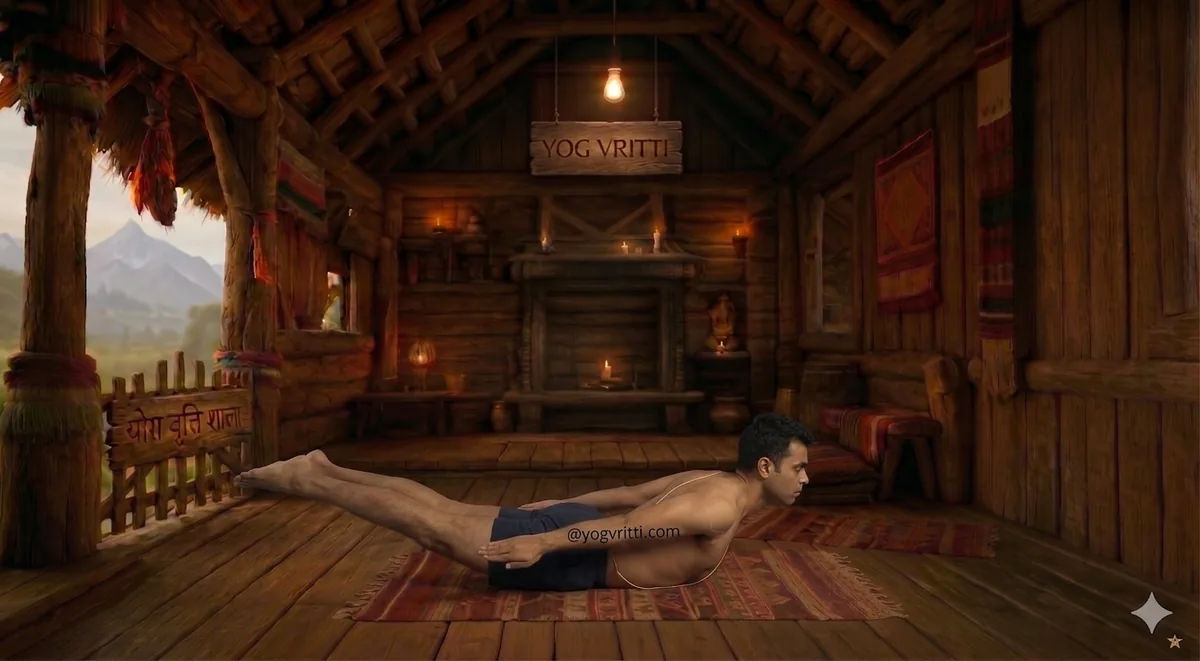
शलभासन भिन्नता पार्श्वयोः हस्त
Locust Pose Arms to Sides
शलभासन का यह रूपांतर पीठ की मांसपेशियों, ग्लूट्स और हैमस्ट्रिंग को मजबूत करता है और आसन में सुधार करता है। भुजाओं को बगल में रखने से छाती और कंधों को खोलने में मदद मिलती है।
फायदे
6Spinal Extensors(strengthening)
These deep muscles run along the entire length of your spine, from the sacrum to the skull. In this pose, they work intensely to lift your torso and head away from the floor, actively extending the vertebral column against gravity. This sustained isometric contraction builds endurance and strength in the spinal muscles, directly supporting the natural curves of your back and counteracting slouching. Yogically, strengthening this central axis helps to awaken and channel prana along the sushumna nadi, fostering a sense of inner uprightness and vitality.
Glutes(strengthening)
The large muscles of your buttocks are primary movers for hip extension, and they engage powerfully to lift your legs in Locust Pose. They work in concert with the hamstrings to elevate the lower limbs, providing significant lift from the pelvis. This activation not only builds strength in a crucial area for locomotion and stability but also grounds the lower body, creating a sense of rooted power and stability. Energetically, it helps to awaken the muladhara chakra, fostering a feeling of security and connection to the earth.
Hamstrings(strengthening)
Located on the back of your thighs, these muscles are essential partners to the glutes, working concentrically to extend the hip and lift the legs. Their active engagement creates length and lift in the lower body, contributing significantly to the overall shape and integrity of the pose. This strengthens a muscle group that often becomes weak or overstretched in daily life, helping to balance the strength of the quadriceps and improve knee and pelvic stability. It also helps to release apana vayu, promoting a grounded and stable feeling in the lower body.
- पूर्ण शारीरिक विश्लेषण →
सावधानियाँ
4Back Injury / Back Pain
Spinal flexion, extension, or rotation under load can compress vertebral discs or strain the paraspinal muscles.
Limit the depth of the backbend, engage the core actively before moving, and avoid any movement that creates pinching in the lumbar spine.
Neck Injury / Cervical Issues
Looking up, bearing head weight, or unsupported neck rotation can compress cervical vertebrae and irritate nerves.
Do not allow the head to drop back unsupported; keep the chin slightly tucked and look forward rather than up.
Headache / Migraine
Physical exertion, inversions, and strong breath work can intensify an existing headache or trigger a migraine.
Avoid inversions and strong pranayama; rest in a supported, restorative posture with a cool cloth on the forehead.
Pregnancy
Deep twists, abdominal compression, and lying flat on the back can restrict blood flow or cause discomfort as pregnancy progresses.
Widen the stance, avoid deep abdominal compression and twists, and consult a qualified prenatal yoga teacher.
विधि
चरण-दर-चरण निर्देश
पेट के बल लेटें, पैर सीधे और आपस में सटे हुए। (Lie on your stomach, legs straight and together.)
हाथों को शरीर के बगल में रखें, हथेलियां नीचे की ओर। (Place arms beside the body, palms facing down.)
श्वास लें, छाती, सिर, और पैरों को एक साथ ऊपर उठाएं। (Inhale, lift chest, head, and legs simultaneously.)
हाथों को शरीर के बगल में सीधा रखें, कंधों को पीछे खींचें। (Keep arms straight beside the body, draw shoulders back.)
दृष्टि को आगे रखें। (Keep your gaze forward.)
इस स्थिति में 3-5 श्वास तक रहें। (Stay in this position for 3-5 breaths.)
श्वास छोड़ें, धीरे-धीरे नीचे आएं। (Exhale, slowly lower down.)
विश्राम करें। (Relax.)
सहायक उपकरण
वैकल्पिक सहायता — आवश्यकतानुसार उपयोग करें
Folded Blanket
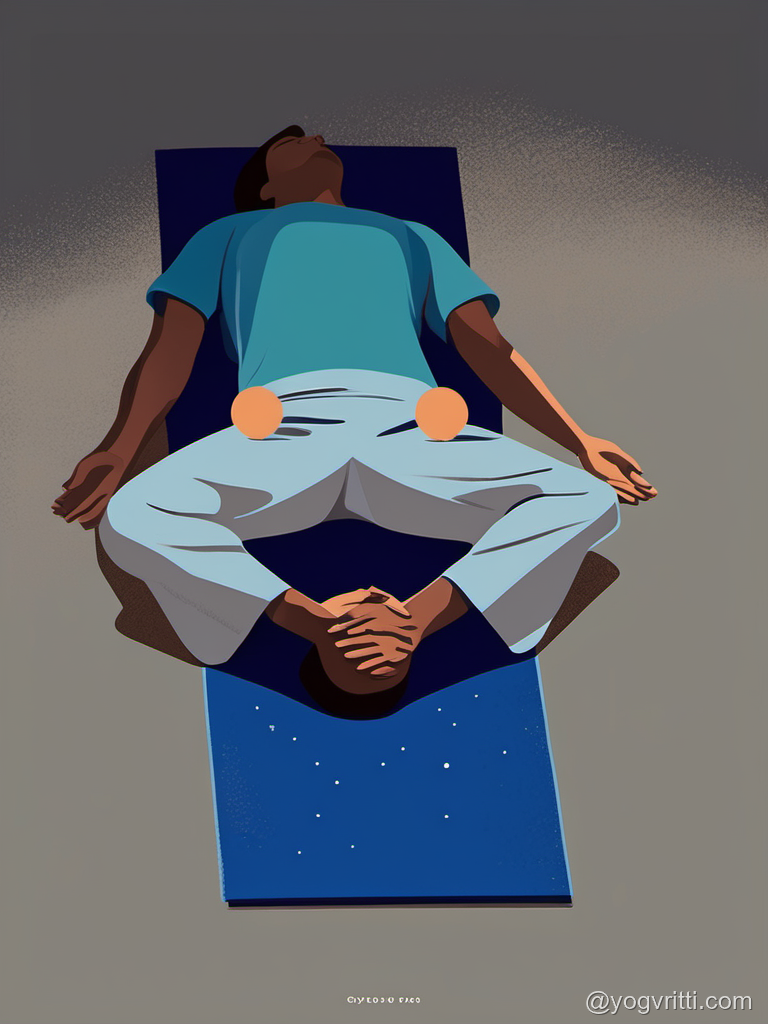
A rolled blanket under the thoracic spine opens the chest gently and supports the backbend, making it accessible as a restorative variation.
Bolster
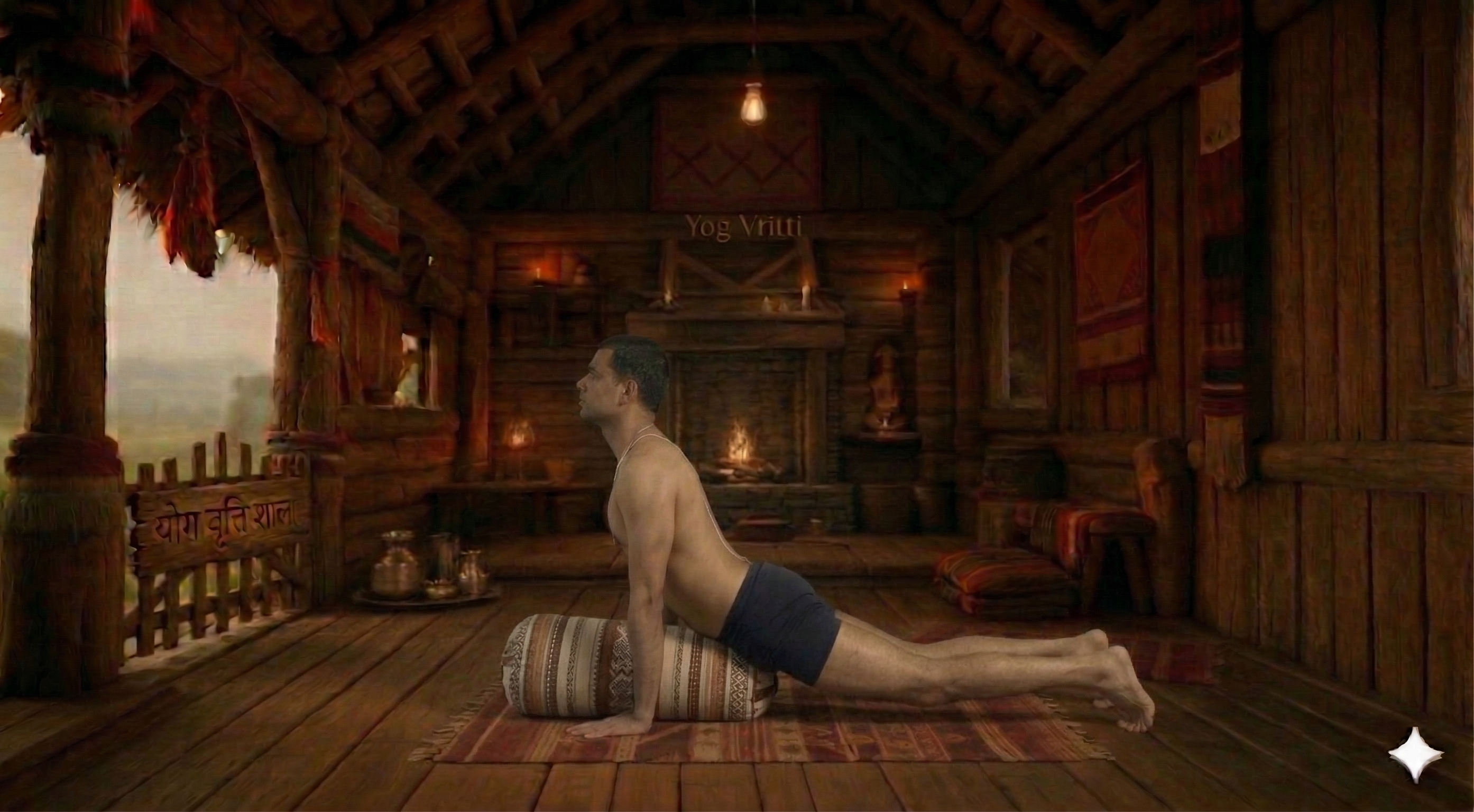
A bolster placed lengthwise along the spine creates a gentle, fully supported backbend — ideal for restorative practice and chest opening.
सामान्य गलतियाँ
शिक्षण संकेत
अभ्यास क्रम

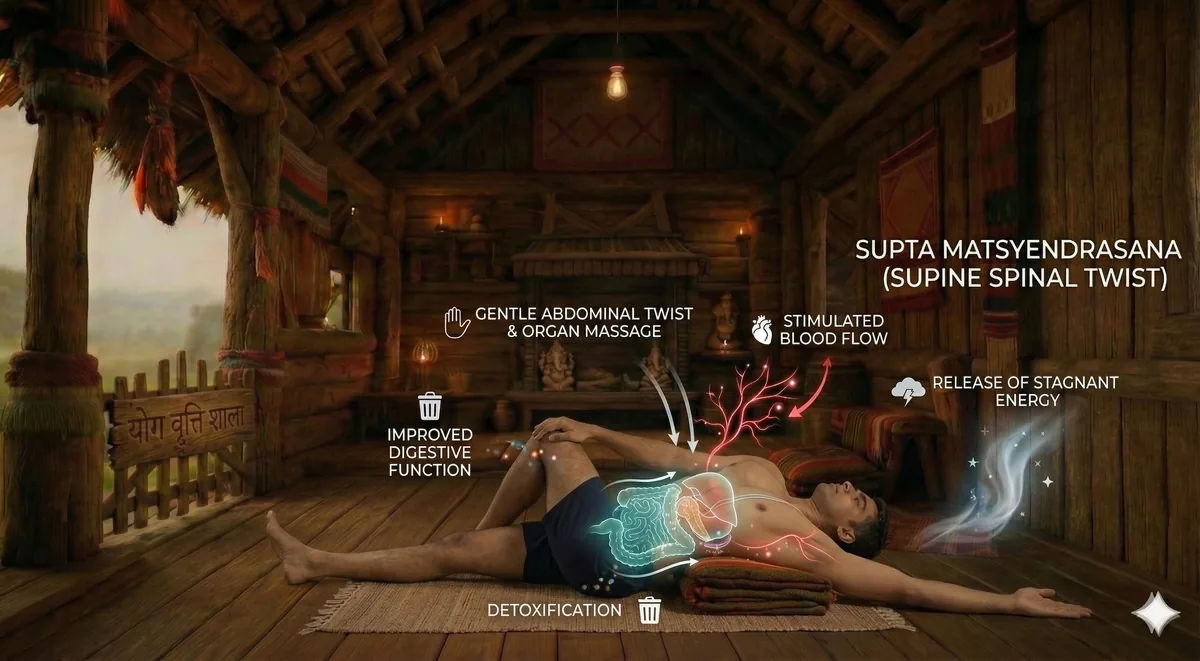
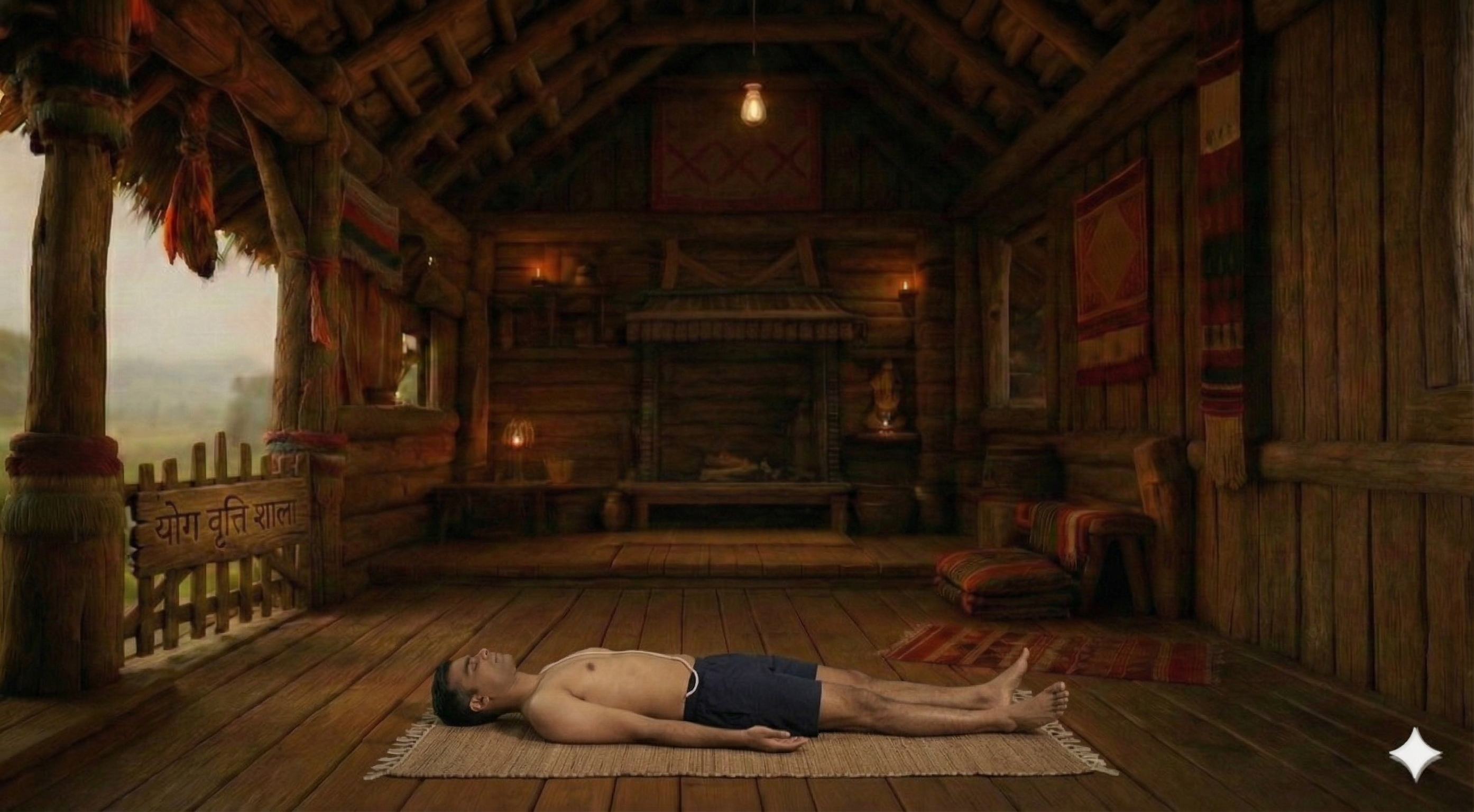
अक्सर पूछे जाने वाले प्रश्न
शलभासन भिन्नता पार्श्वयोः हस्त के बारे में सामान्य प्रश्न
शलभासन भिन्नता पार्श्वयोः हस्त क्या है?
शलभासन का यह रूपांतर पीठ की मांसपेशियों, ग्लूट्स और हैमस्ट्रिंग को मजबूत करता है और आसन में सुधार करता है। भुजाओं को बगल में रखने से छाती और कंधों को खोलने में मदद मिलती है।
शलभासन भिन्नता पार्श्वयोः हस्त के क्या फायदे हैं?
Strengthens back muscles। Strengthens glutes and hamstrings। Improves posture।
शलभासन भिन्नता पार्श्वयोः हस्त किस स्तर के लिए है?
शलभासन भिन्नता पार्श्वयोः हस्त एक शुरुआती स्तर का आसन है। यह सभी के लिए उपयुक्त है।
शलभासन भिन्नता पार्श्वयोः हस्त कौन न करे?
Back injury, Neck injury, Headache की स्थिति में यह आसन न करें।
शलभासन भिन्नता पार्श्वयोः हस्त के लिए कौन से उपकरण चाहिए?
blanket, bolster का उपयोग इस आसन को आसान बना सकता है।