रूपांतर

मोड़ · शुरुआती
सुप्त मत्स्येन्द्रासन I
Supine Spinal Twist I · Supta Matsyendrasana I (Supine Spinal Twist)
SuptaRecliningMatsyendraLord of FishAsanaPose
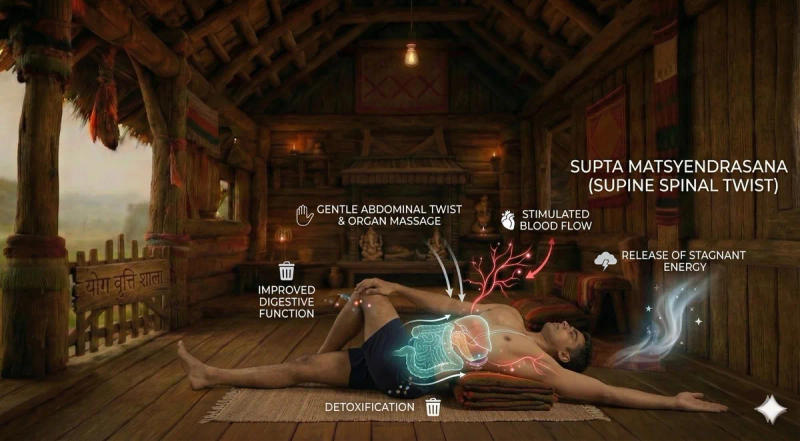
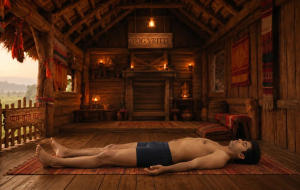
सुप्त मत्स्येन्द्रासन I, लेटी हुई रीढ़ की मोड़, एक गहरी चिकित्सीय लेटी हुई मोड़ है जो पूरी रीढ़ में तनाव को मुक्त करती है। पीठ के बल लेटकर, एक घुटना शरीर के पार खींचा जाता है जबकि विपरीत भुजा बाहर फैली होती है।
स्तर शुरुआतीप्रकार मोड़पक्ष एक ओर
अभ्यास की विधि
चटाई पर पीठ के बल सीधे लेट जाएँ और ज़रूरत पड़ने पर घुटनों को सहारा देने के लिए पास में कंबल रखें।
दोनों बाँहों को कंधों की सीध में बगल की ओर फैलाएँ और हथेलियों के पिछले भाग को फर्श पर टिकाएँ।
साँस छोड़ते हुए घुटनों को मोड़ें और जाँघों को छाती की ओर लाएँ, रीढ़ को फर्श पर सीधा रखें।
साँस छोड़ते हुए दोनों घुटनों को एक साथ दाईं ओर नीचे लाएँ, उन्हें फर्श या मुड़े हुए कंबल पर टिकाएँ।
बाएँ कंधे को फर्श पर टिकाए रखें और सिर को धीरे से बाईं ओर घुमाकर बाएँ हाथ की तरफ देखें।
शिक्षण संकेत
यह कहें
- Lengthen the spine on the inhalation, deepen the twist on the exhalation
- Initiate the rotation from the navel, then the chest, finally the head
- Keep both sitting bones grounded equally
- Maintain the length of the spine — do not collapse into the twist
- Use the breath to create space for the rotation
- Surrender the weight of the body to the props and the floor
इन पर ध्यान दें
- Forcing the twist from the shoulders instead of initiating from the abdomen
- Rounding the spine — maintain length before rotating
- Lifting one sitting bone off the floor
- Holding the breath during the rotation
- Twisting beyond a comfortable range — respect your body's limits
- Holding tension — allow complete release in the supported position
शरीर पर प्रभाव
मांसपेशियाँ देखने के लिए किसी भाग पर टैप करें3D anatomy adapted from Z-Anatomy, CC BY-SA 4.0
Hips & glutes
BothSupine Spinal Twist I both stretches and strengthens your hips and buttocks.
Muscles at work
- Gluteus MediusStretches⚑ Limits the pose
Stabilizes the pelvis and femur in one-legged standing poses and balances internal/external rotation.
Main action: abducts and internally rotates hip; stabilizes pelvis during walking and standing
- Gluteus MaximusContracts
Powers hip extension and external rotation in backbends and standing postures while supporting structural grounding.
Main action: extends and outwardly rotates the hip; assists to stabilize fully extended knee via the iliotibial band
- PiriformisContracts
Engages to stabilize the sacroiliac joint and control internal/external hip rotation in standing poses and hip openers like Pigeon Pose.
Main action: Lateral rotation, abduction, and stabilization of the thigh at the hip joint
⚑ Where you’ll feel it
Tightness in the gluteus medius is what usually stops you going deeper here. Ease off at the first strong stretch and keep breathing — don’t force the end range. Props that help: blanket.
- Releases tension throughout the entire spine
- Decompresses the vertebral discs
- Massages the digestive organs and aids elimination
- Opens the chest and shoulders
- Calms the nervous system and relieves stress
- Stretches the hips, glutes, and IT band
सावधानियाँ
Disc Herniation
Spinal flexion and rotation under load increase intradiscal pressure and can push herniated material toward spinal nerves.
बदलाव · Initiate the rotation from the upper thoracic spine; avoid forceful lumbar rotation.
Recent Surgery
Surgical wounds and healing tissues need time before being subjected to the mechanical stress of yoga postures.
बदलाव · Wait for full medical clearance from your surgeon; begin with gentle breath work and progress only as healing allows.
Sacroiliac Joint Pain
Uneven pelvic loading and twisting under load create shear forces at the sacroiliac joint, worsening instability.
बदलाव · Keep both sitting bones grounded and the pelvis level before initiating the twist.
Pregnancy
Deep twists, abdominal compression, and lying flat on the back can restrict blood flow or cause discomfort as pregnancy progresses.
बदलाव · Twist from the upper thoracic spine only, opening the chest rather than compressing the abdomen; use a chair for support.
Back Pain
बदलाव · Place a bolster between the knees or under the top knee.
Knee Injury
बदलाव · Place a bolster between the knees or under the top knee to support it.
Shoulder Injury
बदलाव · Keep arms closer to the body, do not force the shoulder to the floor.
Abdominal Surgery
बदलाव · Avoid until cleared by a doctor, then perform a very gentle twist with minimal range.
आसान रूप
- Sukshma · Gentle
Knees Supported Supta Matsyendrasana I
के लिए: beginner
Place a pillow or blanket under the knees to reduce the intensity of the twist and allow for greater relaxation in the lower back and hips. This makes the pose more accessible for those with limited spinal mobility.
ज़रूरत: pillow or blanket
कक्षा में
 सुप्त मत्स्येन्द्रासन Iयह आसन



त्वरित उत्तर
सुप्त मत्स्येन्द्रासन I क्या है?
सुप्त मत्स्येन्द्रासन I, लेटी हुई रीढ़ की मोड़, एक गहरी चिकित्सीय लेटी हुई मोड़ है जो पूरी रीढ़ में तनाव को मुक्त करती है। पीठ के बल लेटकर, एक घुटना शरीर के पार खींचा जाता है जबकि विपरीत भुजा बाहर फैली होती है।
सुप्त मत्स्येन्द्रासन I कैसे करें?
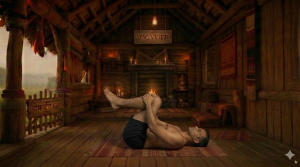
चटाई पर पीठ के बल सीधे लेट जाएँ और ज़रूरत पड़ने पर घुटनों को सहारा देने के लिए पास में कंबल रखें। दोनों बाँहों को कंधों की सीध में बगल की ओर फैलाएँ और हथेलियों के पिछले भाग को फर्श पर टिकाएँ। साँस छोड़ते हुए घुटनों को मोड़ें और जाँघों को छाती की ओर लाएँ, रीढ़ को फर्श पर सीधा रखें।
क्या शुरुआती लोग सुप्त मत्स्येन्द्रासन I कर सकते हैं?
हाँ, यह शुरुआती स्तर का आसन है।
- आसन प्रकार
- Twist, Restorative
- मुख्य भाग
- Spine, Core, Hips
- किसके लिए
- Beginners, Seniors, Desk Workers
- योग शैली
- Hatha, Iyengar, Yin, Restorative
- कब करें
- Cool Down, Restorative, Evening