मुक्त हस्त शीर्षासन
Free Hands Headstand
मुक्त हस्त शीर्षासन (ट्राइपॉड हैंडस्टैंड) सिर और दो हथेलियों पर संतुलित शीर्षासन है।
फायदे
4Deep Abdominal Muscles(strengthening)
These muscles, wrapping like a corset around your midsection, are the unsung heroes of Mukta Hasta Sirsasana. They engage deeply to create a stable base, preventing the lower back from arching excessively and providing a solid platform from which the legs can extend upwards. This deep engagement cultivates Mula Bandha and Uddiyana Bandha, drawing energy inward and upward, fostering a sense of rooted strength even in inversion.
Shoulder Stabilizers(strengthening)
The muscles surrounding your shoulder blades and shoulder joint work intensely to stabilize the upper body as you bear weight through the forearms and head. The Serratus Anterior, in particular, protracts and upwardly rotates the scapulae, preventing winging and creating a broad, stable platform. This strength translates into a feeling of lightness and lift, as if the arms are actively pushing the earth away, allowing the 'prana' to flow freely through the chest and arms rather than collapsing.
Arm and Forearm Muscles(strengthening)
Your triceps, on the back of your upper arms, are continuously active to extend and stabilize the elbows, while the biceps engage to support the integrity of the arm. The muscles of the forearms and wrists, including the flexors and extensors, work to maintain a flat, grounded palm, distributing the weight evenly. This constant, subtle engagement builds incredible isometric strength, creating a feeling of unwavering support and a channel for energetic flow from the earth through the arms.
- पूर्ण शारीरिक विश्लेषण →
सावधानियाँ
5Neck Injury / Cervical Issues
Looking up, bearing head weight, or unsupported neck rotation can compress cervical vertebrae and irritate nerves.
Avoid all weight-bearing on the head and neck; practise supported Setu Bandha or legs-up-the-wall instead.
Wrist Injury / Carpal Tunnel
Weight-bearing or extended wrist positions can compress the median nerve and aggravate inflamed tendons, worsening pain and causing numbness.
Practise a forearm inversion (Pincha Mayurasana) instead, or use a wall-supported headstand to remove wrist load entirely.
High Blood Pressure
Vigorous effort and inverted positions temporarily raise blood pressure in the head, increasing strain on blood vessels.
Avoid this inversion entirely or keep the head above heart level at all times; never hold the breath.
Glaucoma / Eye Pressure
Inverted and head-below-heart positions increase intraocular pressure, which can be harmful for those with elevated eye pressure.
Avoid this inversion entirely; practise Viparita Karani (legs-up-the-wall) with a bolster under the hips as an alternative.
विधि
चरण-दर-चरण निर्देश
घुटनों पर आएं।
हाथ जमीन पर, कंधे की चौड़ाई में — उंगलियां फैली।
सिर का ताज जमीन पर — हाथों से त्रिकोण बनाएं (ट्राइपॉड)।
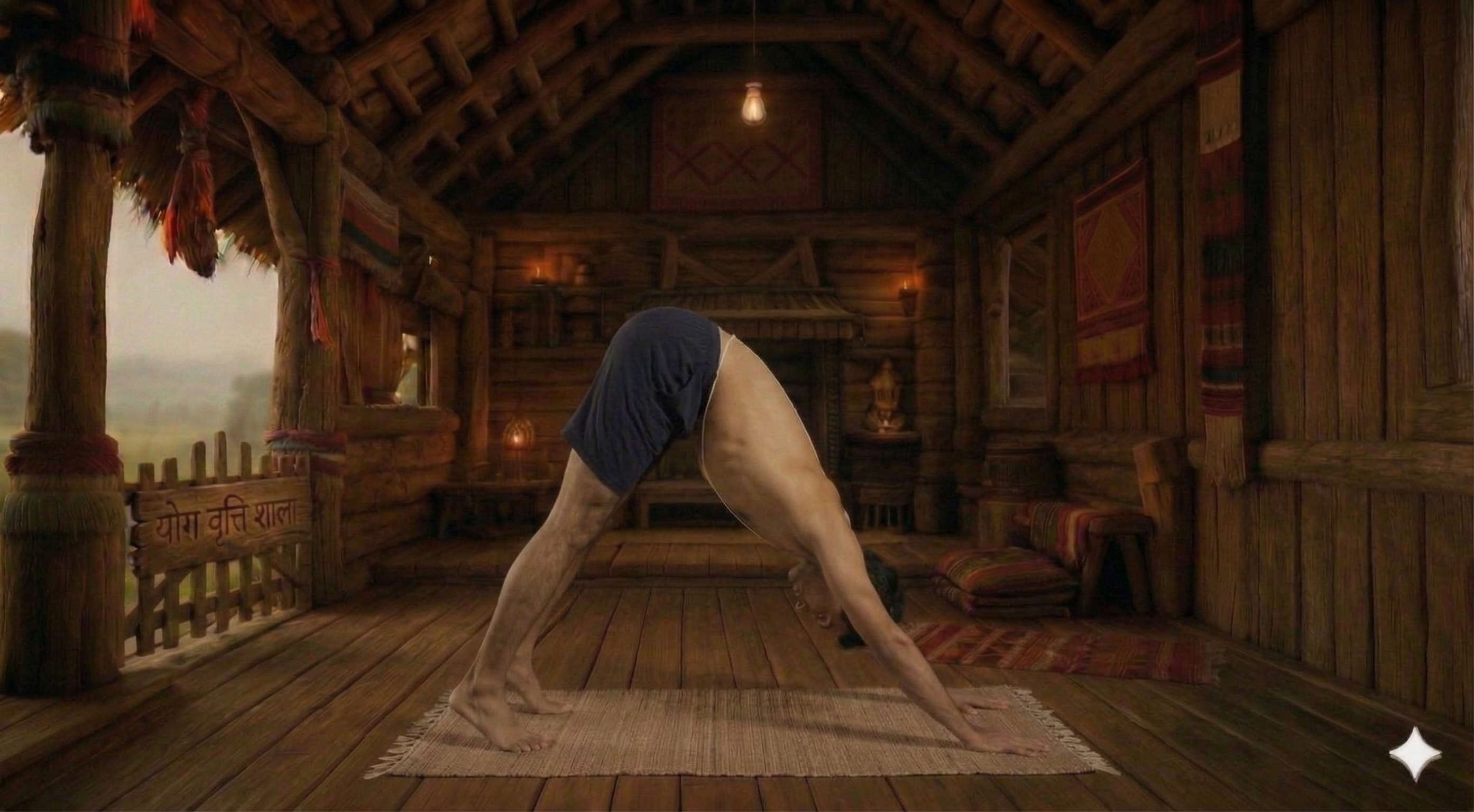
पैर के पंजे मोड़ें, कूल्हे ऊपर उठाएं।
धीरे-धीरे पैर चलाते हुए सिर के करीब लाएं।
कोर सक्रिय करें, एक पैर ऊपर उठाएं, फिर दूसरा।
पैर सीधे ऊपर — शरीर पूरी तरह उल्टा।
वजन तीन बिंदुओं पर: सिर और दोनों हथेलियां।
5-15 सांसें।
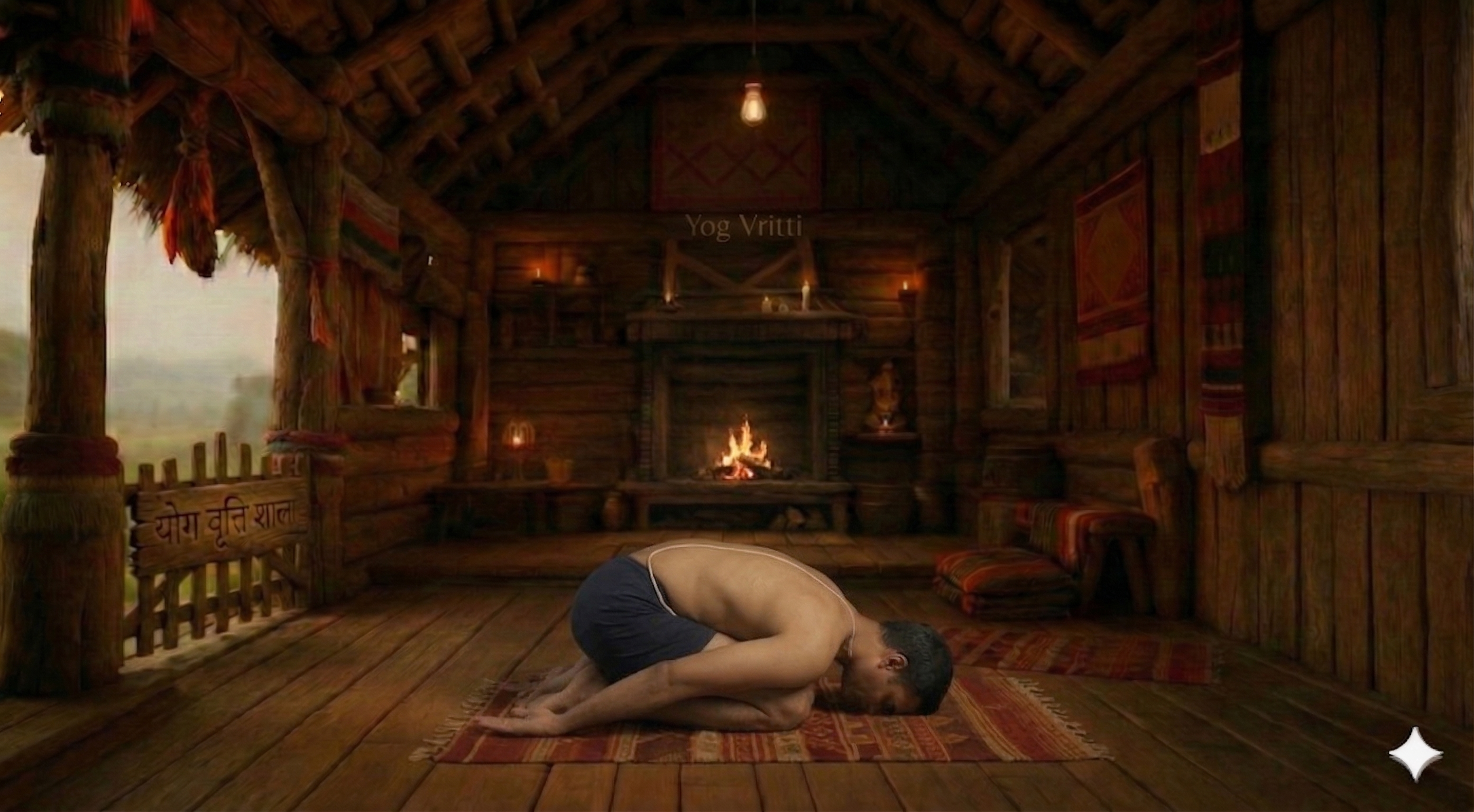
धीरे-धीरे पैर नीचे, बालासन में विश्राम।
सहायक उपकरण
वैकल्पिक सहायता — आवश्यकतानुसार उपयोग करें
Wall
Use the wall for support as you build the strength and confidence needed for the full unsupported inversion — kick up gently and walk the feet down slowly.
सामान्य गलतियाँ
शिक्षण संकेत
अभ्यास क्रम


अक्सर पूछे जाने वाले प्रश्न
मुक्त हस्त शीर्षासन के बारे में सामान्य प्रश्न
मुक्त हस्त शीर्षासन क्या है?
मुक्त हस्त शीर्षासन (ट्राइपॉड हैंडस्टैंड) सिर और दो हथेलियों पर संतुलित शीर्षासन है।
मुक्त हस्त शीर्षासन के क्या फायदे हैं?
Builds shoulder and arm strength। Core stabilization। Improves balance and focus।
मुक्त हस्त शीर्षासन किस स्तर के लिए है?
मुक्त हस्त शीर्षासन एक उन्नत स्तर का आसन है। शुरुआती लोग किसी योग गुरु के मार्गदर्शन में अभ्यास करें।
मुक्त हस्त शीर्षासन कौन न करे?
Neck injuries, Wrist injuries, High blood pressure की स्थिति में यह आसन न करें।
मुक्त हस्त शीर्षासन के लिए कौन से उपकरण चाहिए?
wall का उपयोग इस आसन को आसान बना सकता है।