 मध्यमखड़े होकर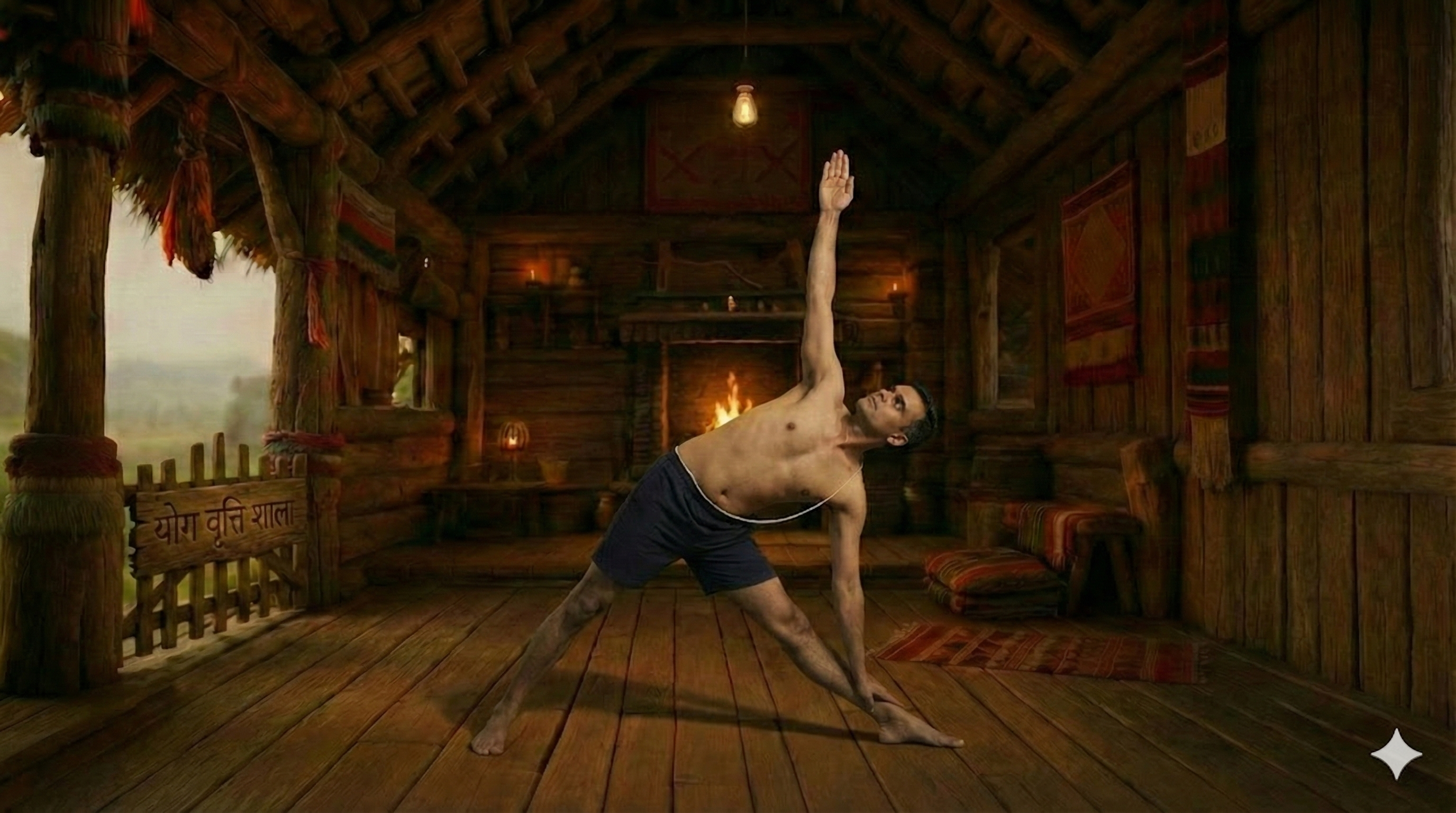


त्रिकोणासन हस्त मुद्रा
Triangle Pose with Hand Mudra
त्रिकोणासन हस्त मुद्रा त्रिकोणासन के लाभों को ज्ञान मुद्रा के शांत प्रभाव के साथ जोड़ती है। यह हैमस्ट्रिंग, तिरछे और रीढ़ को फैलाता है, जबकि मानसिक स्पष्टता और फोकस को बढ़ावा देता है।
फायदे
5Inner Thighs(lengthening)
The powerful muscles on the inside of your front thigh (adductors) are deeply engaged here, experiencing a sustained lengthening as you extend laterally, opening the often-tight groin region. This release of accumulated tension can significantly improve hip mobility and pelvic stability, which is crucial for balanced walking and standing. Energetically, this opening allows for a freer flow of apana vayu, promoting a sense of groundedness and release from the base of the pelvis, fostering ease in the lower body.
Hamstrings(lengthening)
The strong muscles running along the back of your front thigh (hamstrings) experience a profound, intelligent lengthening in Trikonasana, especially when the front leg is straight without locking the knee. This mindful extension gradually releases chronic tightness often stemming from prolonged sitting, contributing significantly to spinal health by reducing posterior pelvic tilt. From a yogic perspective, this unwinding helps to clear blockages in the energetic pathways of the leg, promoting a feeling of lightness and ease in the entire lower body, which is crucial for balanced standing.
Gluteus Medius & Minimus(stabilizing)
These crucial muscles on the outer side of your hips (gluteus medius and minimus) are actively engaged in both legs, working tirelessly to stabilize the pelvis and prevent the front hip from collapsing forward or backward. By rooting the outer edges of the feet and lifting through the inner arches, you activate these stabilizers, creating a firm foundation for the pose. This engagement cultivates a sense of unwavering stability and control in the hips, translating to a feeling of inner strength and confidence that radiates throughout the entire posture.
- पूर्ण शारीरिक विश्लेषण →
सावधानियाँ
4Low Blood Pressure
Rising quickly from low positions can cause a sudden drop in blood pressure, leading to dizziness or fainting.
Move slowly between positions, keep eyes open, and rest against a wall if dizziness arises.
Back Injury / Back Pain
Spinal flexion, extension, or rotation under load can compress vertebral discs or strain the paraspinal muscles.
Initiate the twist from the upper spine and ribs rather than forcing from the waist; keep both sitting bones grounded.
Headache / Migraine
Physical exertion, inversions, and strong breath work can intensify an existing headache or trigger a migraine.
Avoid inversions and strong pranayama; rest in a supported, restorative posture with a cool cloth on the forehead.
Neck Injury / Cervical Issues
Looking up, bearing head weight, or unsupported neck rotation can compress cervical vertebrae and irritate nerves.
Do not force the neck to turn further than the thoracic spine; let the gaze follow the rotation of the shoulders only.
विधि
चरण-दर-चरण निर्देश
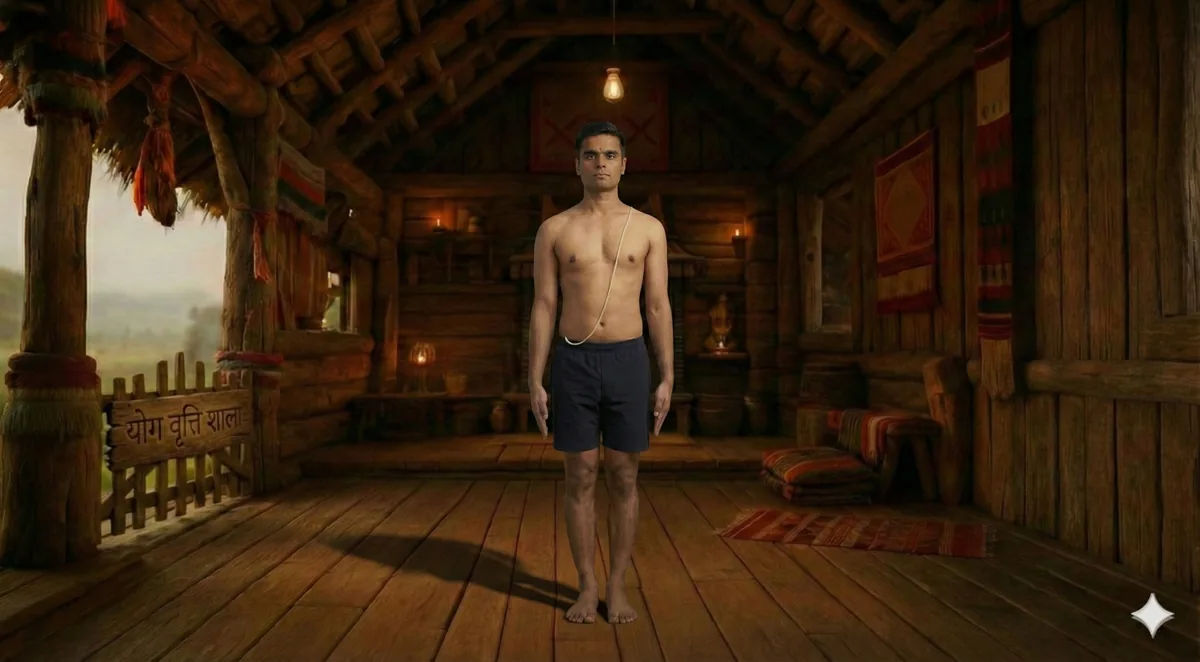
Tadasana में खड़े हो जाएँ।
पैरों को लगभग 3-4 फीट की दूरी पर फैलाएँ।
दाहिने पैर को 90 डिग्री बाहर की ओर घुमाएँ, बाएँ पैर को थोड़ा अंदर की ओर।
श्वास लें और भुजाओं को कंधे की ऊंचाई तक फैलाएँ।
श्वास छोड़ते हुए, दाहिने हाथ को दाहिने पैर की ओर नीचे ले जाएँ, हाथ को पिंडली, एड़ी या ज़मीन पर रखें।
बाएँ हाथ को ऊपर की ओर सीधा रखें।
बाएँ हाथ से ज्ञान मुद्रा बनाएँ (अंगूठे और तर्जनी को मिलाएं)।
अपनी दृष्टि को बाएँ हाथ की ओर रखें।
5-10 श्वासों तक इस स्थिति में रहें।
श्वास लेते हुए, वापस ऊपर आ जाएँ।
अब यही क्रिया बाएँ तरफ से दोहराएँ।
सामान्य गलतियाँ
शिक्षण संकेत
अभ्यास क्रम
अक्सर पूछे जाने वाले प्रश्न
त्रिकोणासन हस्त मुद्रा के बारे में सामान्य प्रश्न
त्रिकोणासन हस्त मुद्रा क्या है?
त्रिकोणासन हस्त मुद्रा त्रिकोणासन के लाभों को ज्ञान मुद्रा के शांत प्रभाव के साथ जोड़ती है। यह हैमस्ट्रिंग, तिरछे और रीढ़ को फैलाता है, जबकि मानसिक स्पष्टता और फोकस को बढ़ावा देता है।
त्रिकोणासन हस्त मुद्रा के क्या फायदे हैं?
Stretches hamstrings, obliques, and spine। Strengthens legs and core muscles। Improves digestion।
त्रिकोणासन हस्त मुद्रा किस स्तर के लिए है?
त्रिकोणासन हस्त मुद्रा एक मध्यम स्तर का आसन है। शुरुआती लोग किसी योग गुरु के मार्गदर्शन में अभ्यास करें।
त्रिकोणासन हस्त मुद्रा कौन न करे?
Low blood pressure, Back injuries, Headaches की स्थिति में यह आसन न करें।