 शुरुआतीखड़े होकर
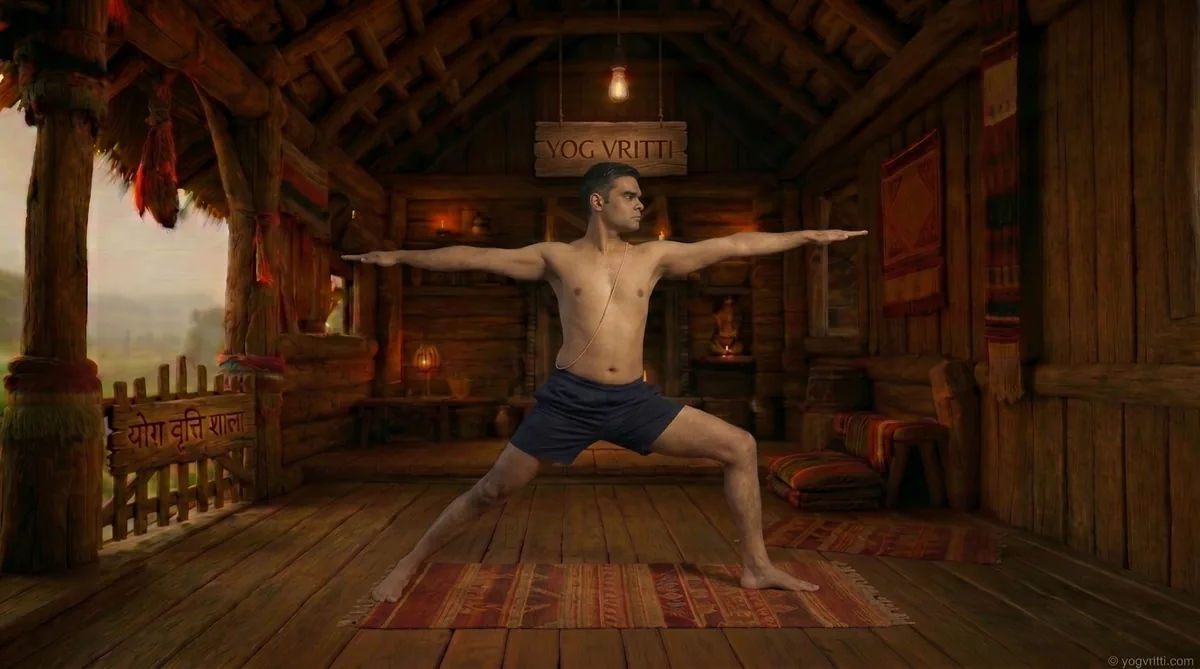
वीरभद्रासन II
Warrior II Pose
वीरभद्रासन II सबसे प्रसिद्ध खड़े आसनों में — पैर चौड़े, सामने का घुटना मुड़ा, बाहें फैली।
फायदे
5Quadriceps(strengthening)
The front thigh muscles, particularly the quadriceps of the front leg, are intensely engaged in this pose as they work eccentrically to stabilize the deeply bent knee. They bear a significant portion of the body's weight, creating sustained isometric strength that transforms the legs into unwavering pillars of support. This deep engagement builds physical resilience, fostering a profound sense of inner stability and a steady foundation for both body and mind.
Gluteus Medius and Minimus(stabilizing)
These muscles, located on the outer side of the front hip, are crucial for externally rotating the femur and preventing the front knee from collapsing inward, thus maintaining its precise alignment over the ankle. They actively stabilize the pelvis, ensuring a level foundation for the spine and upper body. This intelligent engagement cultivates awareness of the often-neglected lateral hip, fostering integrated strength and balance that translates into a feeling of grounded confidence in all movements.
Adductors(lengthening)
The inner thigh muscles of the back leg experience a significant and sustained lengthening as the legs spread wide and the hips open. Simultaneously, the adductors of the front leg engage subtly to draw the thigh toward the midline, preventing excessive outward rotation and contributing to knee stability. This dual action cultivates both flexibility and intelligent engagement in the hips, releasing stagnation in the pelvic region and allowing for a freer flow of apana vayu, bringing a sense of lightness and spaciousness.
- पूर्ण शारीरिक विश्लेषण →
सावधानियाँ
3Knee Injury
Deep flexion or rotation at the knee can strain ligaments, meniscus, or cartilage, especially in a compromised joint.
Do not allow the knee to travel beyond the ankle; keep weight evenly distributed and use a block under the hand for support.
Hip Injury
Deep hip flexion, external rotation, or weight-bearing can aggravate labral tears, impingement, or bursitis.
Do not force the hip into deep external rotation; keep the foot turned out only as far as is pain-free.
High Blood Pressure
Vigorous effort and inverted positions temporarily raise blood pressure in the head, increasing strain on blood vessels.
Keep arms below shoulder height, breathe steadily, and avoid vigorous transitions.
विधि
चरण-दर-चरण निर्देश
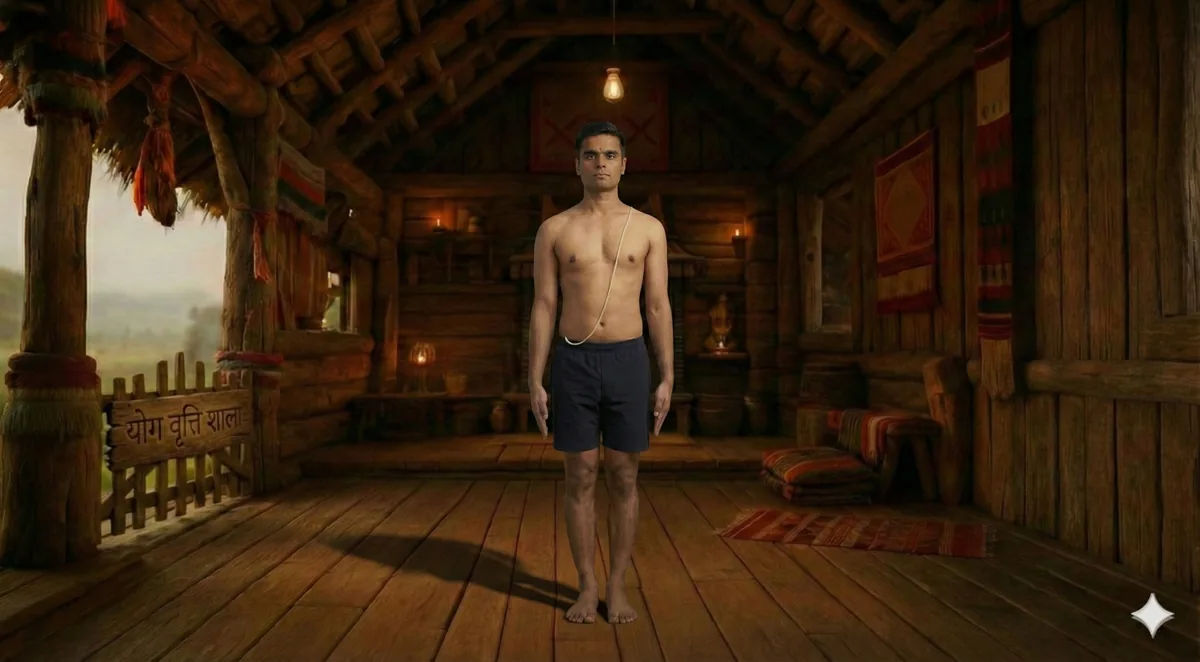
ताड़ासन से पैर चौड़े फैलाएं (4 फीट)।
दायां पंजा 90° बाहर मोड़ें।
बायां पंजा हल्का अंदर।
बाहें कंधों की ऊंचाई पर फैलाएं — T आकार।
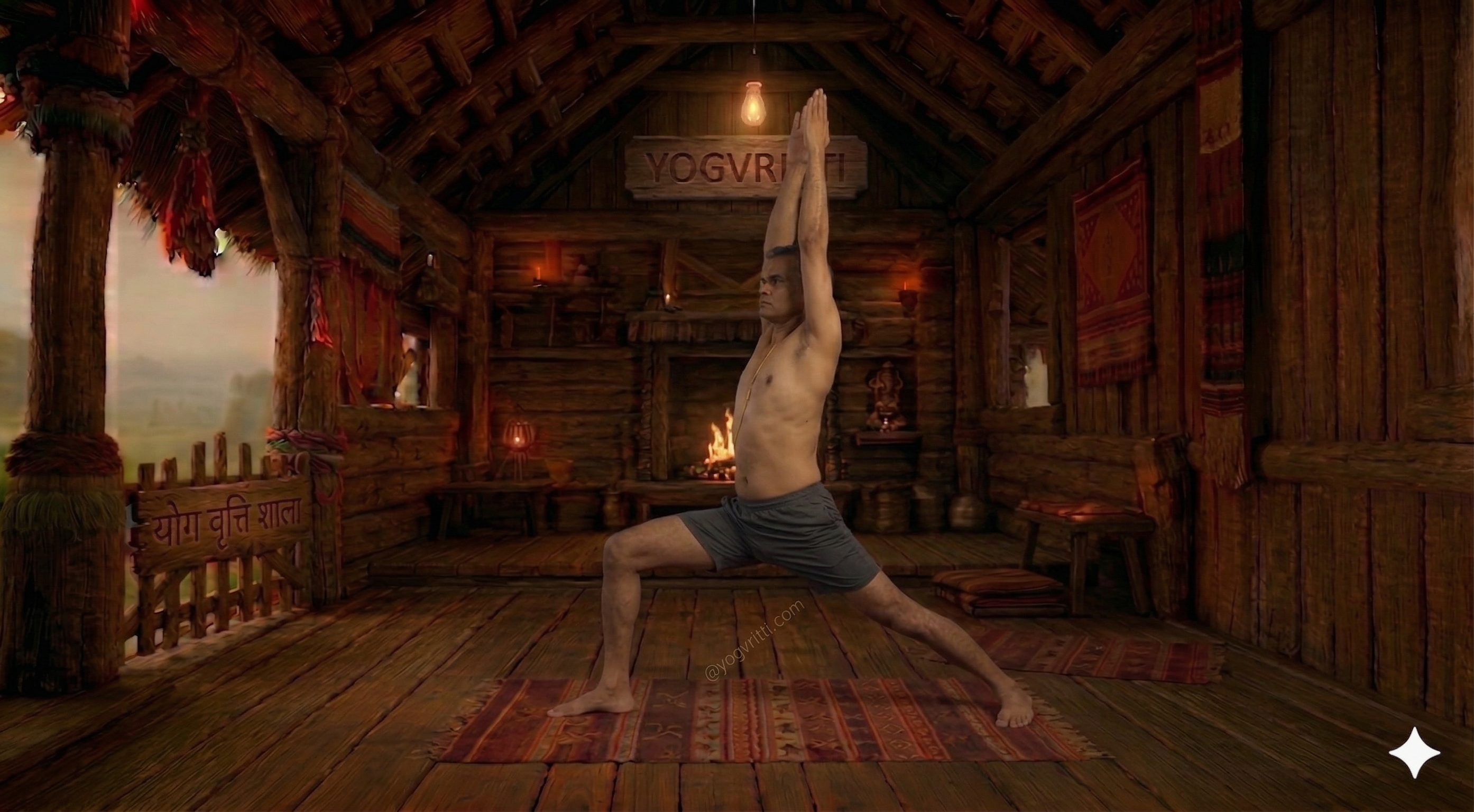
श्वास छोड़ें, दायां घुटना मोड़ें — 90°।
दायां घुटना दाएं टखने के ऊपर — आगे न जाए।
धड़ केंद्र में — किसी तरफ न झुके।
दृष्टि दाएं हाथ की उंगलियों पर।
5-8 सांसें।
सीधे हों, दूसरी तरफ दोहराएं।
सामान्य गलतियाँ
शिक्षण संकेत
अभ्यास क्रम
अक्सर पूछे जाने वाले प्रश्न
वीरभद्रासन II के बारे में सामान्य प्रश्न
वीरभद्रासन II क्या है?
वीरभद्रासन II सबसे प्रसिद्ध खड़े आसनों में — पैर चौड़े, सामने का घुटना मुड़ा, बाहें फैली।
वीरभद्रासन II के क्या फायदे हैं?
Builds leg strength and endurance। Opens hips। Strengthens shoulders।
वीरभद्रासन II किस स्तर के लिए है?
वीरभद्रासन II एक शुरुआती स्तर का आसन है। यह सभी के लिए उपयुक्त है।
वीरभद्रासन II कौन न करे?
Knee injuries — reduce depth, Hip injuries, High blood pressure — hold shorter की स्थिति में यह आसन न करें।