 शुरुआतीखड़े होकर
उत्थित प्रपद पादासन
Extended Tip-Toe Pose
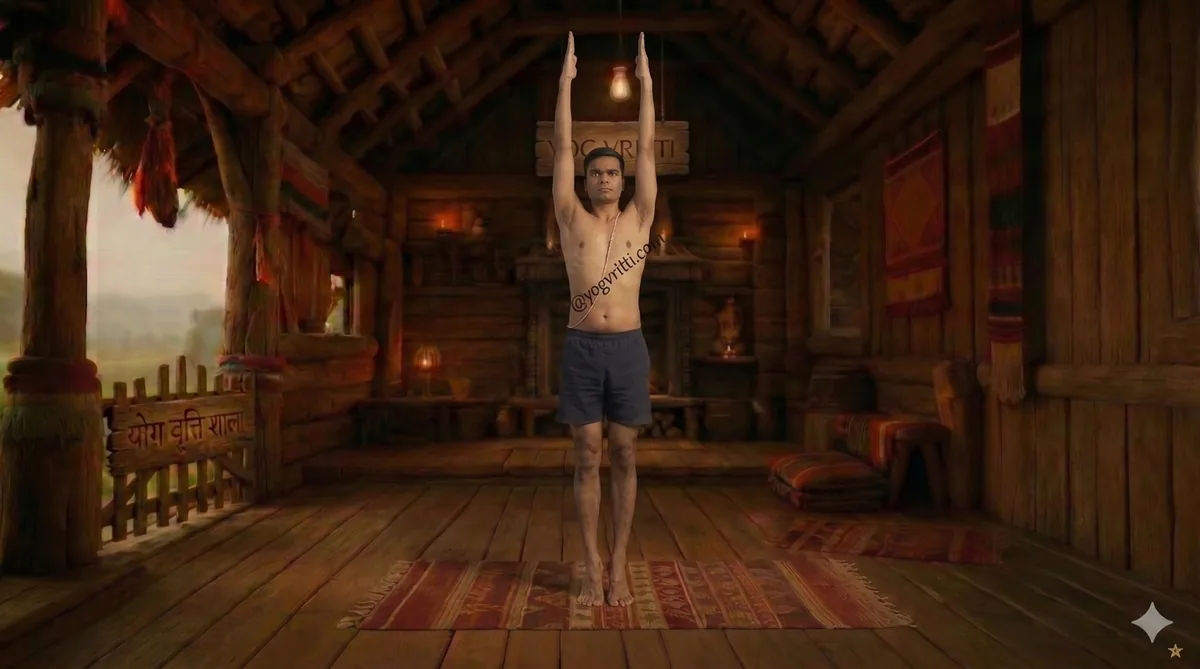
उत्थित प्रपद पादासन एक मूलभूत संतुलन मुद्रा है जो टखनों, पिंडलियों और कोर को मजबूत करती है। यह शुरुआती लोगों को स्थिरता और ध्यान खोजने के लिए सिखाता है, जिससे अधिक उन्नत खड़ी मुद्राओं के लिए एक मजबूत आधार बनता है।
फायदे
5Calves(strengthening)
These powerful muscles at the back of your lower leg are intensely engaged as you lift your heels high, working concentrically to elevate the body. The gastrocnemius, being a two-joint muscle, also plays a role in knee stability, while the soleus, deeper and always active, provides sustained endurance. This action builds incredible strength and stamina in the lower legs, which is crucial for dynamic movement and maintaining an upright posture throughout life. In yogic terms, this active engagement helps to pump stagnant energy upwards, invigorating the lower extremities.
Ankle Stabilizers(stabilizing)
The muscles surrounding your ankles, particularly on the outer (peroneals) and inner (tibialis posterior) sides, are constantly micro-adjusting to maintain your balance on the balls of your feet. These intrinsic and extrinsic muscles of the foot and ankle work synergistically to prevent excessive pronation or supination, keeping the ankle joint stable and aligned. This constant, subtle engagement cultivates heightened proprioception, allowing the body to intuitively sense and correct any deviation, fostering a deep connection to the earth beneath you and sharpening focus (dharana).
Quadriceps(stabilizing)
The large muscles at the front of your thighs are actively engaged to keep the knees straight and lifted, preventing them from collapsing or hyperextending. This isometric contraction stabilizes the knee joint, ensuring that the weight is distributed evenly and supporting the upward lift of the torso. Through this sustained engagement, the quadriceps contribute to a feeling of solid support from the hips down, allowing the energy to flow freely up the spine without any energetic leaks at the knees.
- पूर्ण शारीरिक विश्लेषण →
सावधानियाँ
4Ankle Injury
Unstable or injured ankle joints can be overstressed by weight-bearing, extreme dorsiflexion, or plantar flexion.
Place a folded blanket under the ankle to cushion it, or practise a seated version of the pose.
Knee Injury
Deep flexion or rotation at the knee can strain ligaments, meniscus, or cartilage, especially in a compromised joint.
Do not allow the knee to travel beyond the ankle; keep weight evenly distributed and use a block under the hand for support.
Vertigo / Dizziness
Rapid head movements and changes in head position can trigger dizziness and increase the risk of losing balance.
Keep both feet on the floor, fix the gaze on a single unmoving point at eye level, and stay near a wall.
Recent Surgery
Surgical wounds and healing tissues need time before being subjected to the mechanical stress of yoga postures.
Wait for full medical clearance from your surgeon; begin with gentle breath work and progress only as healing allows.
विधि
चरण-दर-चरण निर्देश
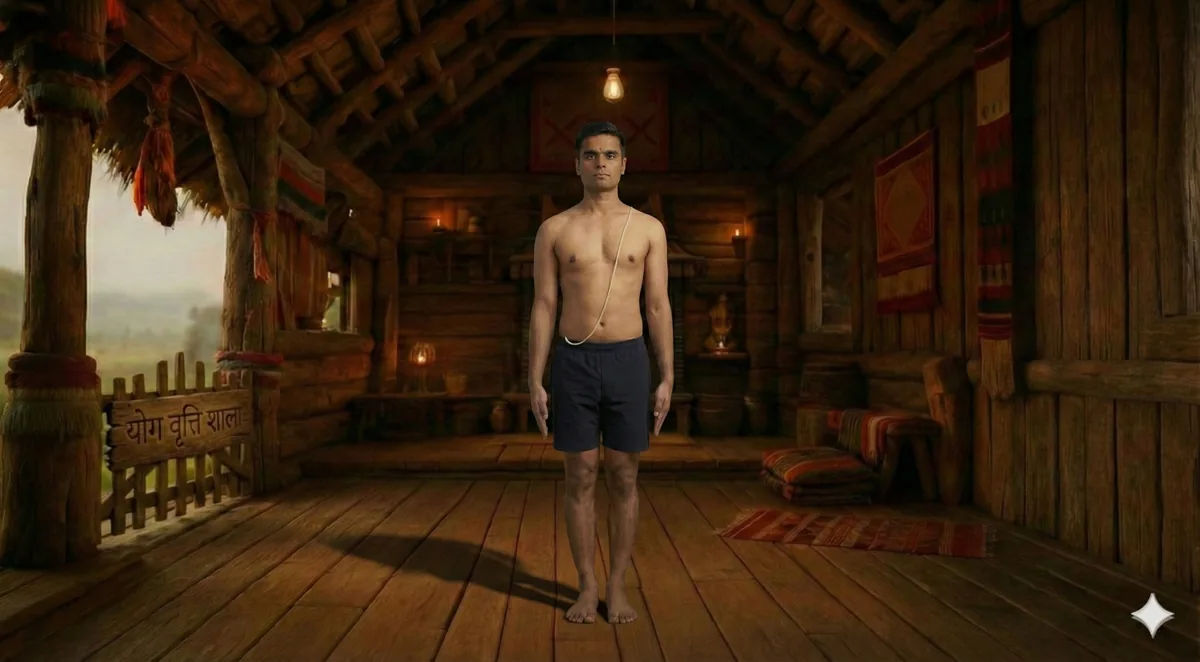
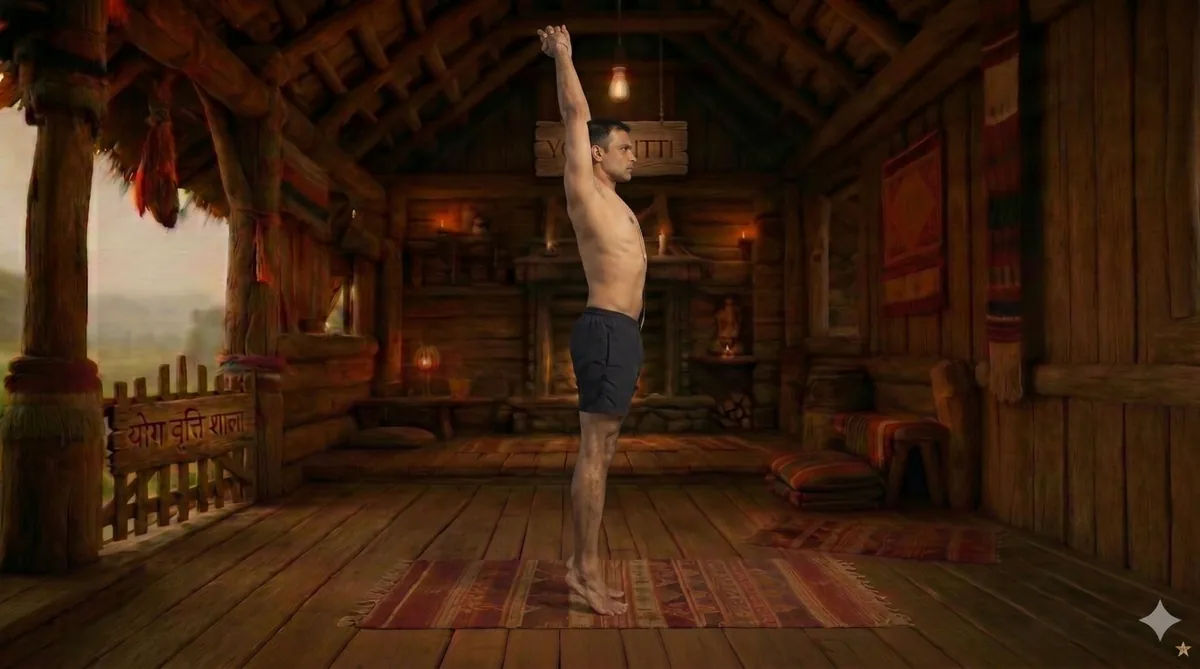
ताड़ासन में खड़े हो जाएं, पैरों को एक साथ और हाथों को शरीर के बगल में रखें।
श्वास अंदर लेते हुए, हाथों को कंधों की ऊंचाई तक सामने की ओर फैलाएं, हथेलियाँ नीचे की ओर।
श्वास बाहर निकालते हुए, धीरे-धीरे अपनी एड़ियों को फर्श से ऊपर उठाएं, अपनी उंगलियों पर संतुलन बनाएं।
सुनिश्चित करें कि आपके पैर की उंगलियां और पैर के गद्दे समान रूप से वजन उठाएं।
दृष्टि को सामने एक स्थिर बिंदु पर केंद्रित करें ताकि संतुलन बनाए रख सकें।
घुटनों को मजबूत रखें और जांघों को ऊपर की ओर खींचें।
पेट को अंदर खींचें और रीढ़ को लंबा करें।
शरीर को सीधा और स्थिर रखें, आगे या पीछे न झुकें।
कुछ श्वासों के लिए रुकें, संतुलन और स्थिरता बनाए रखें।
श्वास बाहर निकालते हुए, धीरे-धीरे एड़ियों को फर्श पर वापस लाएं।
सहायक उपकरण
वैकल्पिक सहायता — आवश्यकतानुसार उपयोग करें
Wall
Practise near the wall so one fingertip can lightly touch it, giving the nervous system a safety anchor while building proprioceptive confidence.
सामान्य गलतियाँ
शिक्षण संकेत
अभ्यास क्रम
अक्सर पूछे जाने वाले प्रश्न
उत्थित प्रपद पादासन के बारे में सामान्य प्रश्न
उत्थित प्रपद पादासन क्या है?
उत्थित प्रपद पादासन एक मूलभूत संतुलन मुद्रा है जो टखनों, पिंडलियों और कोर को मजबूत करती है। यह शुरुआती लोगों को स्थिरता और ध्यान खोजने के लिए सिखाता है, जिससे अधिक उन्नत खड़ी मुद्राओं के लिए एक मजबूत आधार बनता है।
उत्थित प्रपद पादासन के क्या फायदे हैं?
Strengthens ankles and calves। Improves balance and focus। Tones leg muscles।
उत्थित प्रपद पादासन किस स्तर के लिए है?
उत्थित प्रपद पादासन एक शुरुआती स्तर का आसन है। यह सभी के लिए उपयुक्त है।
उत्थित प्रपद पादासन कौन न करे?
Ankle injury, Knee injury, Vertigo की स्थिति में यह आसन न करें।
उत्थित प्रपद पादासन के लिए कौन से उपकरण चाहिए?
wall का उपयोग इस आसन को आसान बना सकता है।