 शुरुआतीखड़े होकर
विविधताएँ (1)
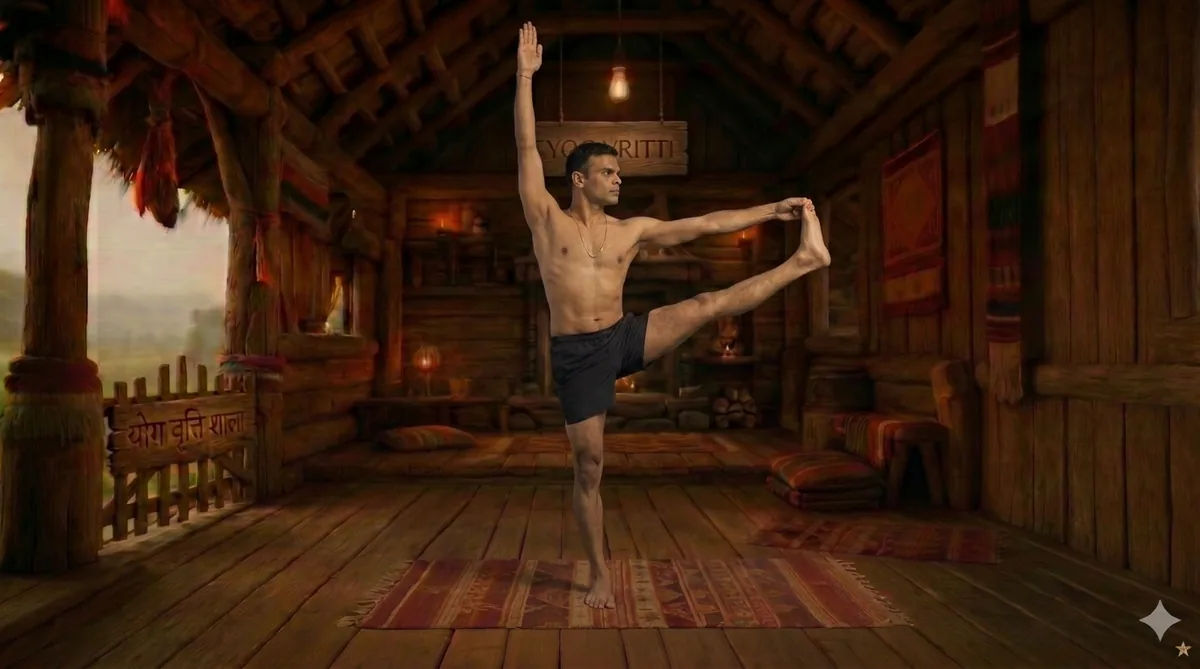
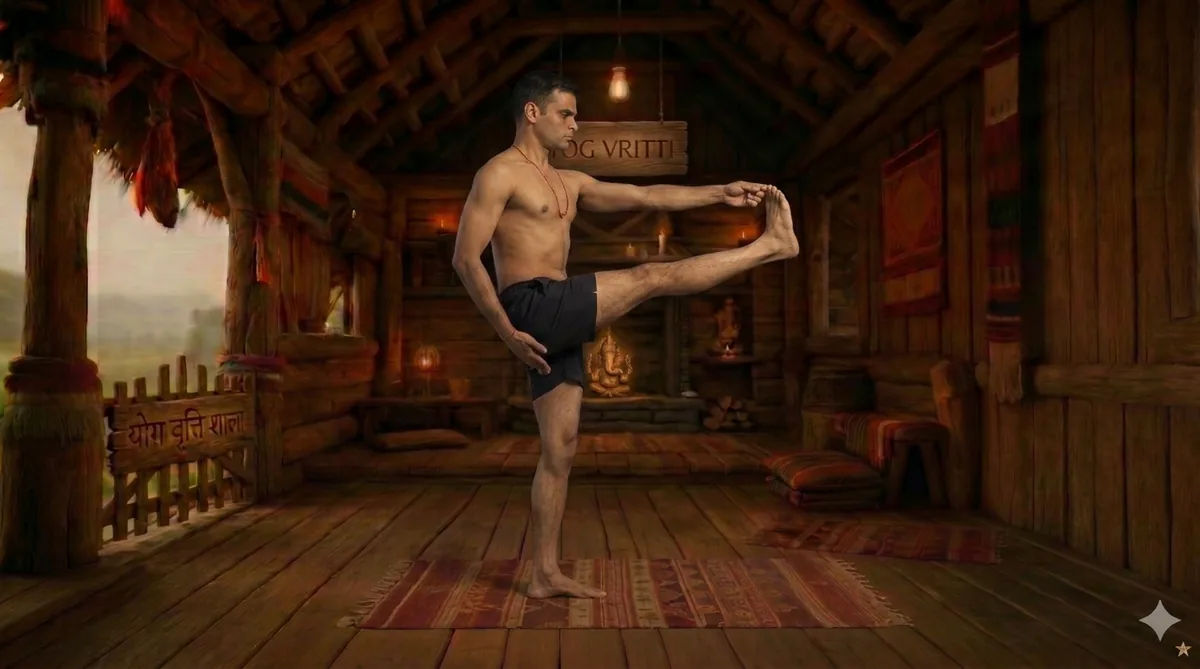
पादाङ्गुष्ठासन
Big Toe Pose
पादाङ्गुष्ठासन एक खड़ी हुई आगे की ओर झुकने वाली मुद्रा है जो हैमस्ट्रिंग, काफ़्स और रीढ़ की हड्डी को खींचती है। यह पैरों और पेट की मांसपेशियों को भी मजबूत करती है, जबकि मस्तिष्क को शांत करती है और तनाव से राहत दिलाती है।
फायदे
5Hamstrings(lengthening)
The prominent muscles along the back of your thighs (hamstrings) receive a deep, sustained lengthening in this pose. As you hinge from the hips, these powerful muscles are asked to release and extend, counteracting the common tightness from prolonged sitting and activity. This progressive release allows for greater mobility in the hip joint and reduces the chronic pull on the pelvis and lower back, fostering a sense of freedom and openness in the posterior body.
Calves(lengthening)
The muscles at the back of your lower legs (calves) are significantly lengthened as you fold forward and keep the legs straight. This stretch extends from the heel up towards the knee, addressing tightness that can restrict ankle mobility and affect gait. By encouraging these muscles to soften, we improve circulation in the lower legs and release energetic stagnation, contributing to a feeling of lightness and improved grounding through the feet.
Quadriceps(activating)
The muscles at the front of your thighs (quadriceps) are actively engaged and subtly lengthened, particularly the rectus femoris, as you straighten the legs and lift the kneecaps. This engagement provides stability to the knee joint and helps to 'lock' the legs, creating a firm foundation for the forward fold. Energetically, this activation draws awareness into the legs, cultivating a sense of strength and steadiness (sthira) that anchors the pose.
- पूर्ण शारीरिक विश्लेषण →
सावधानियाँ
4Back Injury / Back Pain
Spinal flexion, extension, or rotation under load can compress vertebral discs or strain the paraspinal muscles.
Bend both knees generously, hinge from the hips rather than rounding the spine, and rest hands on blocks or thighs.
High Blood Pressure
Vigorous effort and inverted positions temporarily raise blood pressure in the head, increasing strain on blood vessels.
Keep the head above the heart by bending the knees deeply and resting forearms on thighs rather than reaching to the floor.
Glaucoma / Eye Pressure
Inverted and head-below-heart positions increase intraocular pressure, which can be harmful for those with elevated eye pressure.
Practise with hands on blocks and knees bent so the head remains above heart level.
Headache / Migraine
Physical exertion, inversions, and strong breath work can intensify an existing headache or trigger a migraine.
Support the forehead on a block or bolster so the head is not hanging freely.
विधि
चरण-दर-चरण निर्देश
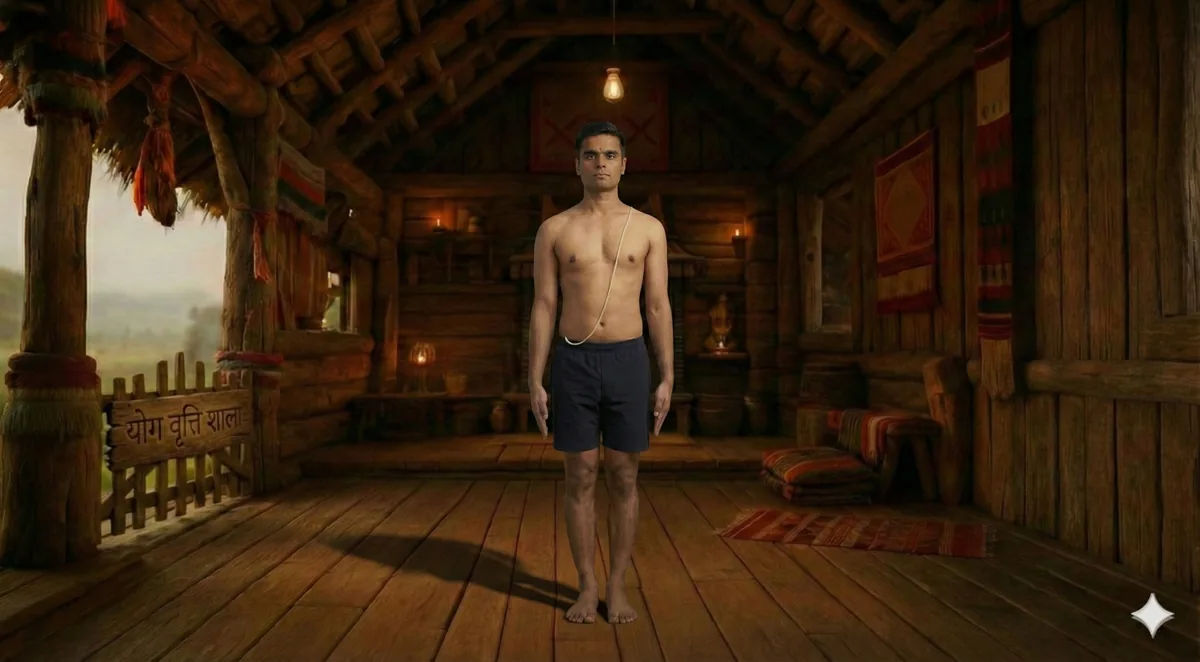
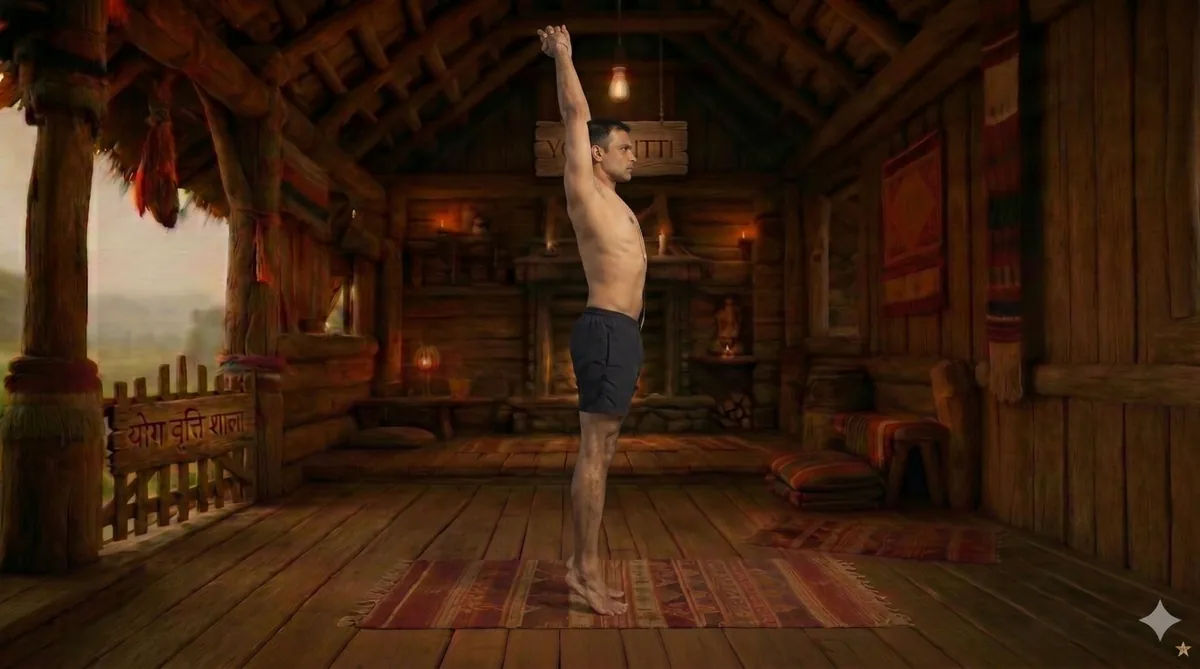
Tadasana में खड़े हो जाएं, पैर आपस में मिलाएं।
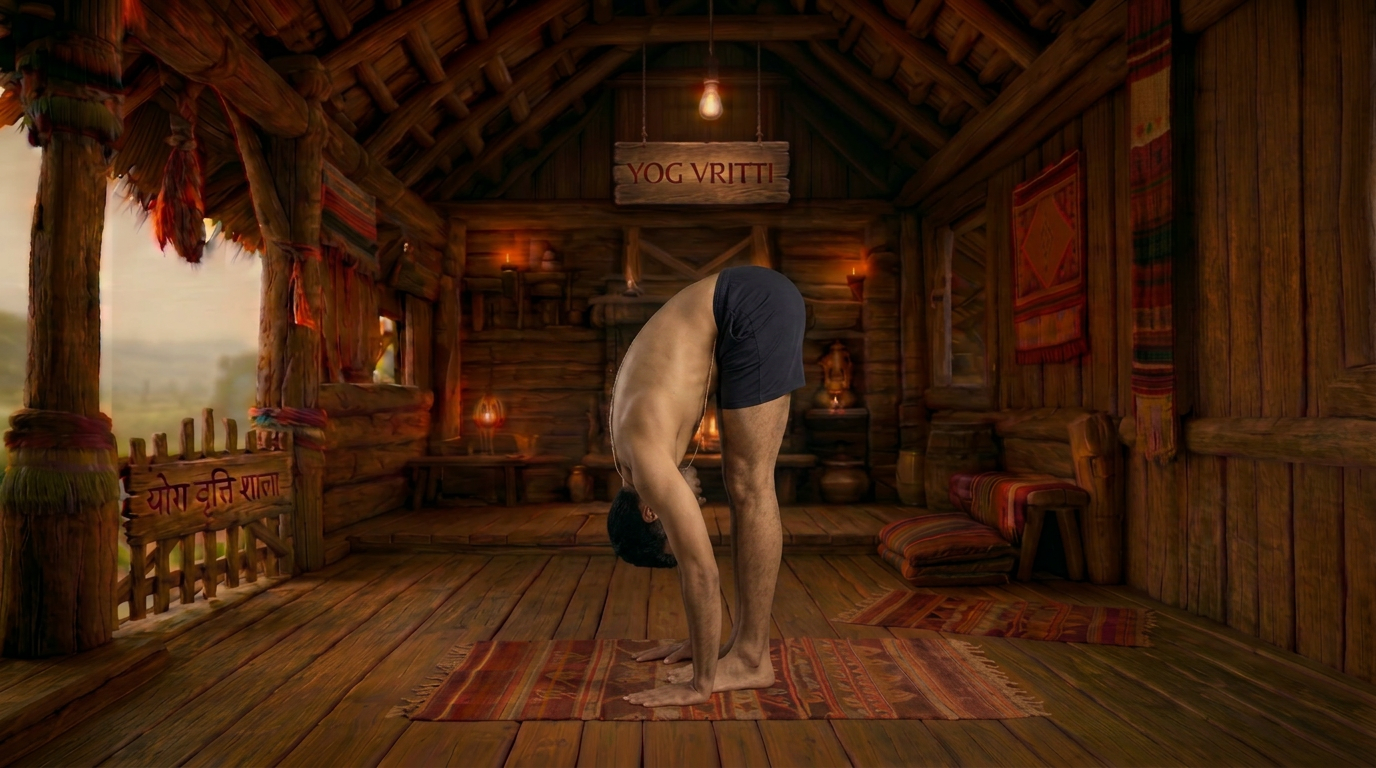
श्वास अंदर लें, और श्वास छोड़ते हुए कूल्हों से आगे झुकें।
अपनी उंगलियों और अंगूठे से अपने बड़े पैर के अंगूठे को पकड़ें।
श्वास अंदर लें, अपनी पीठ को सीधा करें, और अपनी छाती को आगे बढ़ाएं।
श्वास छोड़ते हुए, अपनी कोहनियों को मोड़ें और अपने सिर को अपने घुटनों की ओर खींचें।
अपनी पीठ को लंबा रखें और अपने पेट को अंदर खींचें।
30-60 सेकंड के लिए इस स्थिति में रहें, सामान्य रूप से श्वास लें।
श्वास अंदर लेते हुए, धीरे-धीरे ऊपर आएं।
श्वास छोड़ते हुए, अपने हाथों को छोड़ दें और Tadasana में वापस आ जाएं।
सामान्य गलतियाँ
शिक्षण संकेत
अभ्यास क्रम
अक्सर पूछे जाने वाले प्रश्न
पादाङ्गुष्ठासन के बारे में सामान्य प्रश्न
पादाङ्गुष्ठासन क्या है?
पादाङ्गुष्ठासन एक खड़ी हुई आगे की ओर झुकने वाली मुद्रा है जो हैमस्ट्रिंग, काफ़्स और रीढ़ की हड्डी को खींचती है। यह पैरों और पेट की मांसपेशियों को भी मजबूत करती है, जबकि मस्तिष्क को शांत करती है और तनाव से राहत दिलाती है।
पादाङ्गुष्ठासन के क्या फायदे हैं?
Stretches the hamstrings, calves, and spine। Strengthens the legs and abdominal muscles। Calms the brain and relieves stress।
पादाङ्गुष्ठासन किस स्तर के लिए है?
पादाङ्गुष्ठासन एक शुरुआती स्तर का आसन है। यह सभी के लिए उपयुक्त है।
पादाङ्गुष्ठासन कौन न करे?
Back pain, High blood pressure, Glaucoma की स्थिति में यह आसन न करें।