विविधताएँ (1)
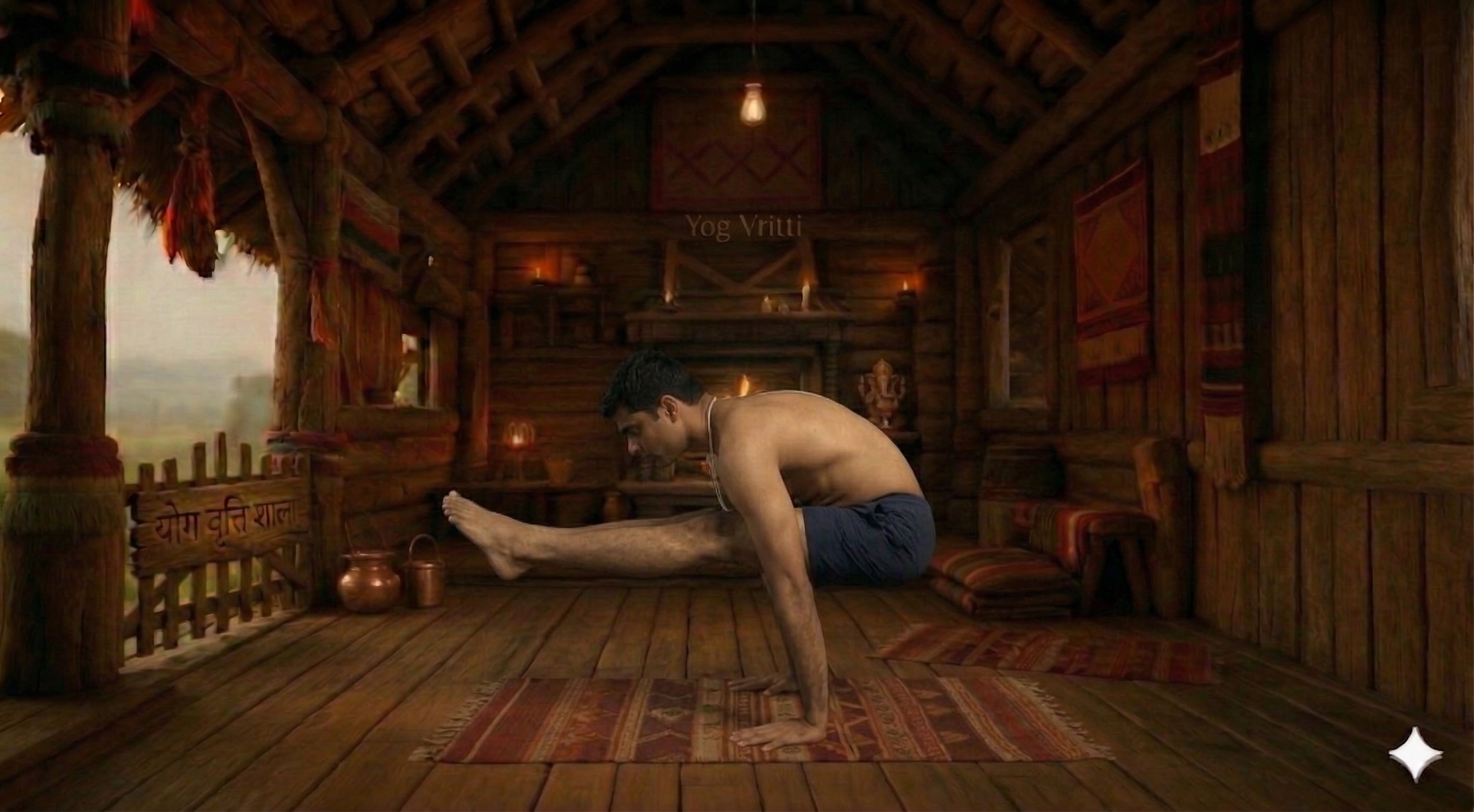
तित्तिभासन B
Firefly Pose B
तित्तिभासन B — फायरफ्लाई से पैर सिर के ऊपर ले जाने का ट्रांज़िशन।
फायदे
3Hamstrings(lengthening | controlling)
While still requiring length to extend the legs, the hamstrings in Tittibhasana B take on an additional role of active control. As the legs lift overhead, they are engaged to maintain straightness against gravity, acting as a crucial counterweight and requiring a refined isometric strength to support the new inverted position. This is a more dynamic lengthening and stabilization compared to the static extension in Firefly.
Inner Thigh Muscles(adducting | stabilizing | lifting)
In Firefly, these muscles primarily hug the legs to the arms for stability. In Tittibhasana B, their adduction remains vital to keep the legs together, but their function expands significantly to support the active *elevation* and *stabilization* of the legs as they rise overhead. They work intensely to maintain the integrity of the lower body as a compact, controlled unit against the forces of gravity in this inverted plane.
Deep Abdominal Core(strengthening | stabilizing | initiating movement)
The deep abdominal core, particularly the transversus abdominis, shifts from primarily stabilizing the lumbar spine in Firefly to becoming the absolute powerhouse for initiating and sustaining the leg lift in Tittibhasana B. Its engagement intensifies dramatically, acting as the central engine to powerfully flex the trunk and pelvis, drawing the legs overhead and establishing the new, more inverted balance point.
- पूर्ण शारीरिक विश्लेषण →
सावधानियाँ
3Wrist Injury / Carpal Tunnel
Weight-bearing or extended wrist positions can compress the median nerve and aggravate inflamed tendons, worsening pain and causing numbness.
Use fists on the floor, switch to a forearm variation, or place a wedge/folded blanket under the wrists to reduce extension angle.
Shoulder Injury
Overhead loading and extreme shoulder rotation can impinge the subacromial space and overload rotator cuff tendons.
Lower the height of the pose (Knees-Chest-Chin instead of Chaturanga, or forearm plank instead of full plank) to reduce shoulder load.
Back Injury / Back Pain
Spinal flexion, extension, or rotation under load can compress vertebral discs or strain the paraspinal muscles.
Bend the knees to protect the lumbar spine, engage the core throughout, and stop if pain sharpens.
विधि
चरण-दर-चरण निर्देश
तित्तिभासन (फायरफ्लाई) में आएं।
पैर सीधे, बाहें सीधी।
अब पैर ऊपर उठाएं — सिर के ऊपर।
पैर पीछे ले जाएं — कूल्हे ऊपर।
बकासन/कुर्मासन ट्रांज़िशन।
3-5 सांसें।
वापस तित्तिभासन।
नीचे।
9-10. विश्राम।
सामान्य गलतियाँ
शिक्षण संकेत
अभ्यास क्रम

अक्सर पूछे जाने वाले प्रश्न
तित्तिभासन B के बारे में सामान्य प्रश्न
तित्तिभासन B क्या है?
तित्तिभासन B — फायरफ्लाई से पैर सिर के ऊपर ले जाने का ट्रांज़िशन।
तित्तिभासन B के क्या फायदे हैं?
Advanced arm balance transition। Tests full body control। Ashtanga Second Series।
तित्तिभासन B किस स्तर के लिए है?
तित्तिभासन B एक उन्नत स्तर का आसन है। शुरुआती लोग किसी योग गुरु के मार्गदर्शन में अभ्यास करें।
तित्तिभासन B कौन न करे?
Wrist injuries, Shoulder injuries, Lower back injuries की स्थिति में यह आसन न करें।