 शुरुआतीखड़े होकर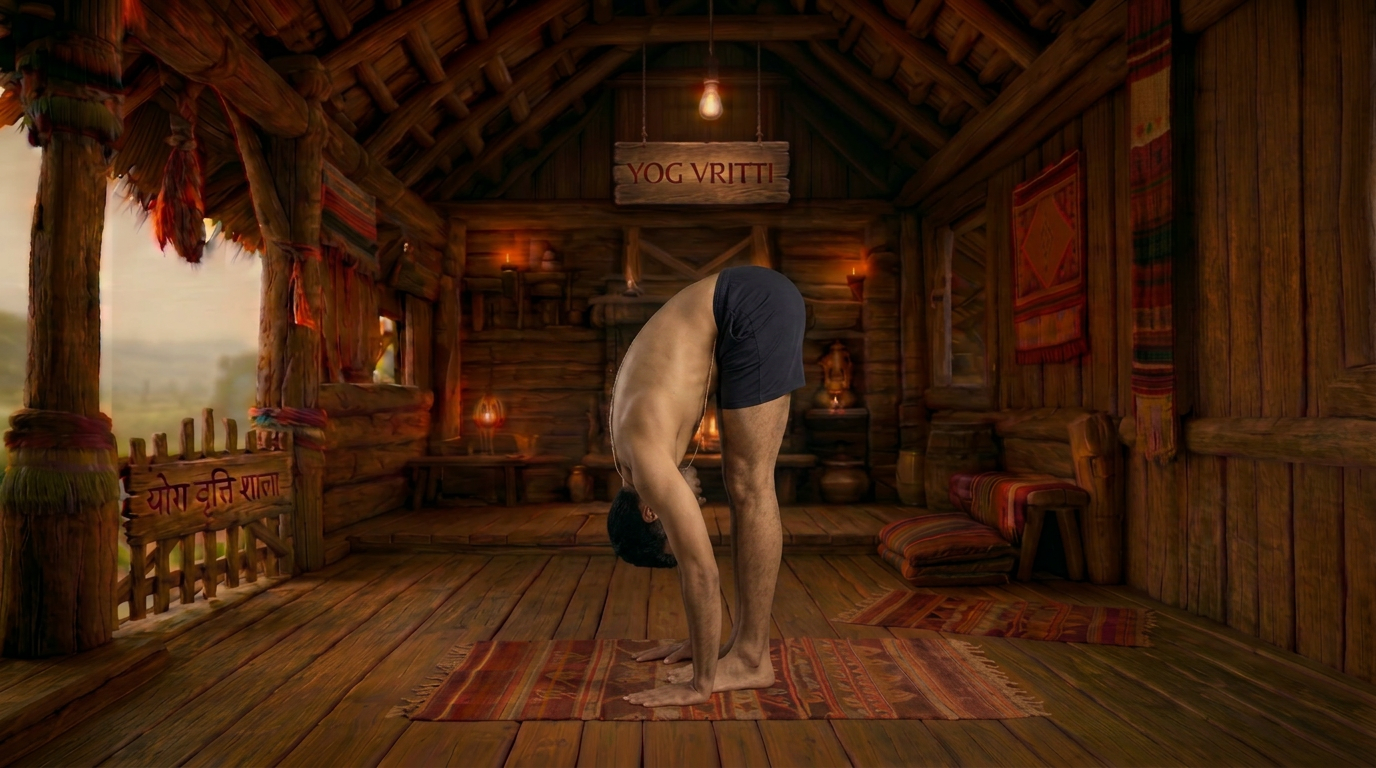


उत्तानासन (दीवार)
Standing Forward Bend at Wall
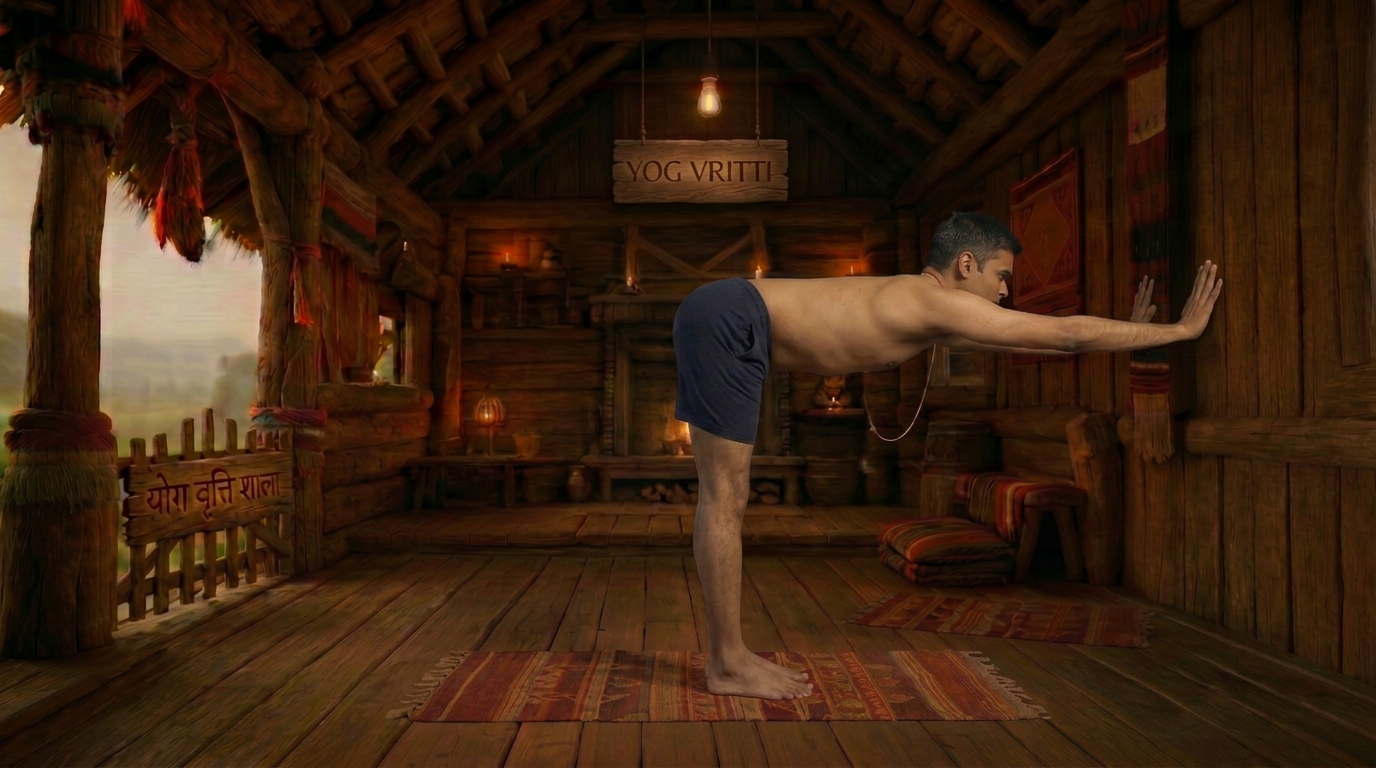
दीवार पर उत्तानासन खड़े आगे के मोड़ के दौरान सहारे और संरेखण प्रतिक्रिया प्रदान करने के लिए पीछे की दीवार का उपयोग करता है।
फायदे
5Hamstrings(lengthening)
With the hips fixed firmly against the wall, the hamstrings are directly challenged to lengthen without the pelvis being able to compensate by tilting posteriorly or the spine rounding. This unwavering anchor demands a pure stretch, educating the body to release tension along the entire posterior thigh. The wall ensures that the primary focus remains on cultivating length in these powerful muscles, fostering a deeper and more honest engagement.
Erector Spinae(activating | stabilizing)
Unlike a free-standing Uttanasana where these muscles might passively lengthen into a rounded shape, the wall variation actively recruits the Erector Spinae to maintain the natural curves of the spine. They are engaged to resist the pull of gravity and prevent excessive lumbar flexion, promoting an elongated and integrated spinal column. This conscious activation teaches the spine to extend upwards even as the torso folds forward, cultivating a sense of spaciousness and intelligent engagement.
Calves(lengthening)
The muscles at the back of your lower legs (gastrocnemius and soleus, your calves) also receive a deep stretch, particularly if the heels are firmly grounded. This targeted action improves ankle flexibility and releases the often-overlooked tension stored from standing, walking, and even wearing restrictive footwear. Energetically, releasing tightness in the calves supports the upward flow of energy, prana vayu, preventing stagnation in the lower limbs and promoting a feeling of lightness and lift from the earth. Improved calf flexibility also subtly contributes to the overall length of the posterior chain.
- पूर्ण शारीरिक विश्लेषण →
सावधानियाँ
3Back Injury / Back Pain
Spinal flexion, extension, or rotation under load can compress vertebral discs or strain the paraspinal muscles.
Bend both knees generously, hinge from the hips rather than rounding the spine, and rest hands on blocks or thighs.
Hamstring Injury
Aggressive stretching of a torn or strained hamstring can reinjure muscle fibres — the attachment near the sitting bone is especially vulnerable.
Bend the knees significantly to remove tension from the hamstrings; fold only as far as the spine stays long.
Vertigo / Dizziness
Rapid head movements and changes in head position can trigger dizziness and increase the risk of losing balance.
Bend the knees and lower slowly; pause before returning to upright to allow the inner ear to adjust.
विधि
चरण-दर-चरण निर्देश
दीवार के सामने लगभग एक पैर की दूरी पर खड़े हों।
अपने पैरों को हिप-चौड़ाई से अलग रखें।
श्वास लें, और श्वास छोड़ते हुए, अपनी कूल्हों से आगे झुकें, अपनी रीढ़ की हड्डी को सीधा रखें।
अपने हाथों को दीवार पर रखें, अपनी बाहों को कंधों की चौड़ाई से अलग रखें।
अपने हाथों को दीवार पर तब तक नीचे स्लाइड करें जब तक आपको अपनी हैमस्ट्रिंग में खिंचाव महसूस न हो।
अपनी रीढ़ की हड्डी को सीधा रखने की कोशिश करें, और अपने सिर को ढीला छोड़ दें।
गहरी और समान रूप से श्वास लें।
अपने पैरों को सीधा रखें, लेकिन अपने घुटनों को लॉक न करें।
5-10 श्वास के लिए इसी स्थिति में रहें।
श्वास लेते हुए, धीरे-धीरे सीधे खड़े हो जाएं।
सहायक उपकरण
वैकल्पिक सहायता — आवश्यकतानुसार उपयोग करें
Wall
Place hands on the wall at hip height and walk back to create a right angle — a gentler version that still provides deep spinal decompression.
सामान्य गलतियाँ
शिक्षण संकेत
अभ्यास क्रम
अक्सर पूछे जाने वाले प्रश्न
उत्तानासन (दीवार) के बारे में सामान्य प्रश्न
उत्तानासन (दीवार) क्या है?
दीवार पर उत्तानासन खड़े आगे के मोड़ के दौरान सहारे और संरेखण प्रतिक्रिया प्रदान करने के लिए पीछे की दीवार का उपयोग करता है।
उत्तानासन (दीवार) के क्या फायदे हैं?
Teaches proper hip hinge mechanics। Stretches hamstrings with wall support। Prevents lower back rounding।
उत्तानासन (दीवार) किस स्तर के लिए है?
उत्तानासन (दीवार) एक शुरुआती स्तर का आसन है। यह सभी के लिए उपयुक्त है।
उत्तानासन (दीवार) कौन न करे?
Acute lower back injury, Severe hamstring tear, Vertigo की स्थिति में यह आसन न करें।
उत्तानासन (दीवार) के लिए कौन से उपकरण चाहिए?
wall का उपयोग इस आसन को आसान बना सकता है।