वीरभद्रासन II (दीवार पर)
Warrior II at Wall
दीवार पर वीरभद्रासन II सही संरेखण सिखाने और बनाए रखने के लिए पीछे की दीवार का उपयोग करता है।
फायदे
5Quadriceps femoris (front leg)(strengthening)
The large muscles on the front of your leading thigh (quadriceps femoris) work powerfully here, holding the deep bend in the knee. They are in a sustained isometric contraction, building incredible endurance and strength, particularly the vastus medialis which stabilizes the kneecap. This deep engagement brings a fiery energy (Agni) to the legs, burning through inertia and building inner resolve. Regular practice strengthens these muscles, improving knee stability and power for everyday movements.
Gluteus medius & minimus (front leg)(stabilizing)
On the outer side of your front hip, the medium and small glute muscles (gluteus medius and minimus) are crucial for stabilizing the pelvis and preventing the front knee from collapsing inward. They ensure the hip is externally rotated and abducted, creating space and protecting the sacroiliac joint. This activation brings a sense of intelligent support to the hip joint, allowing for a steady foundation from which the upper body can rise. Developing strength here is vital for healthy gait and preventing hip and knee issues.
Adductor magnus (back leg)(lengthening)
The large adductor muscle on the inner thigh of your straight back leg (adductor magnus) experiences a deep, sustained lengthening as the hips open and the front knee bends. While primarily an adductor, its posterior fibers also extend the hip, and here it’s being asked to release. This release helps to broaden the pelvic floor and create space in the inner groin, allowing for a freer flow of apana vayu and a greater sense of stability in the pelvis. Improved flexibility in this area enhances hip mobility and reduces inner thigh tension.
- पूर्ण शारीरिक विश्लेषण →
सावधानियाँ
3Knee Injury
Deep flexion or rotation at the knee can strain ligaments, meniscus, or cartilage, especially in a compromised joint.
Do not allow the knee to travel beyond the ankle; keep weight evenly distributed and use a block under the hand for support.
Hip Injury
Deep hip flexion, external rotation, or weight-bearing can aggravate labral tears, impingement, or bursitis.
Do not force the hip into deep external rotation; keep the foot turned out only as far as is pain-free.
High Blood Pressure
Vigorous effort and inverted positions temporarily raise blood pressure in the head, increasing strain on blood vessels.
Keep arms below shoulder height, breathe steadily, and avoid vigorous transitions.
विधि
चरण-दर-चरण निर्देश
दीवार के पास ताड़ासन में खड़े हो जाएं। Stand in Tadasana near the wall.
अपने पैरों को लगभग 4 फीट की दूरी पर फैलाएं। Step your feet about 4 feet apart.
अपने दाहिने पैर को 90 डिग्री बाहर की ओर घुमाएं और अपने बाएं पैर को थोड़ा अंदर की ओर रखें। Turn your right foot out 90 degrees and your left foot slightly in.
अपने दाहिने घुटने को मोड़ें, इसे अपनी दाहिनी एड़ी के ऊपर रखें। Bend your right knee, keeping it over your right ankle.
अपनी रीढ़ को सीधा रखें और अपनी pelvis को square रखें। Keep your spine straight and your pelvis squared.
अपनी भुजाओं को कंधों की ऊंचाई तक फैलाएं, अपनी हथेलियों को नीचे की ओर रखें। Extend your arms out to the sides at shoulder height, palms facing down.
अपनी दृष्टि को अपनी दाहिनी उंगलियों पर रखें। Gaze over your right fingertips.
दीवार का उपयोग support के लिए करें यदि आपको alignment बनाए रखने में कठिनाई हो रही है। Use the wall for support if you are having difficulty maintaining alignment.
अपनी श्वास पर ध्यान केंद्रित करें, धीरे और समान रूप से श्वास लें। Focus on your breath, breathing slowly and evenly.
कुछ देर तक इस स्थिति में रहें, फिर दूसरी तरफ से दोहराएं। Hold the pose for several breaths, then repeat on the other side.
सहायक उपकरण
वैकल्पिक सहायता — आवश्यकतानुसार उपयोग करें
Wall
Practise near the wall so one fingertip can lightly touch it, giving the nervous system a safety anchor while building proprioceptive confidence.
सामान्य गलतियाँ
शिक्षण संकेत
अभ्यास क्रम
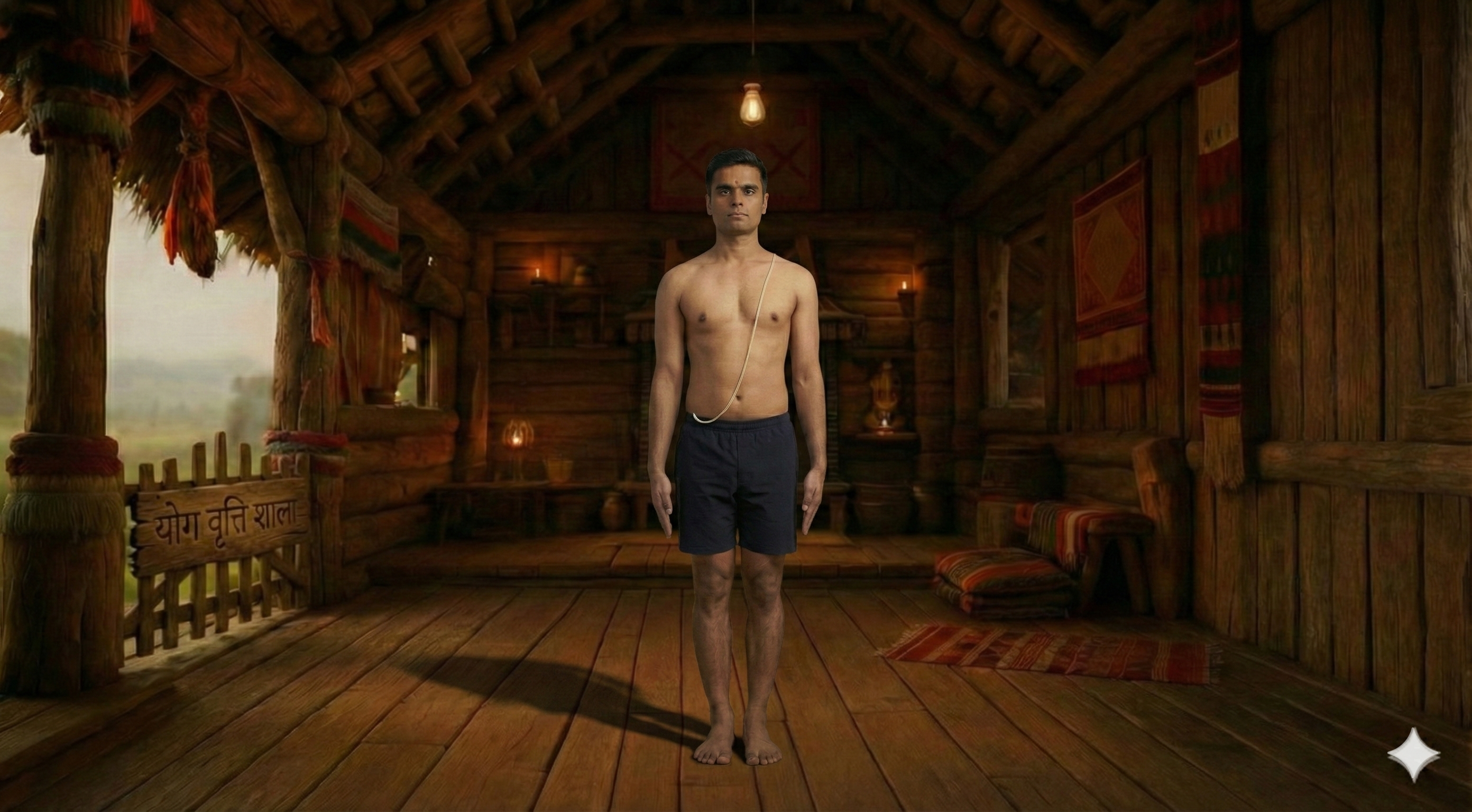

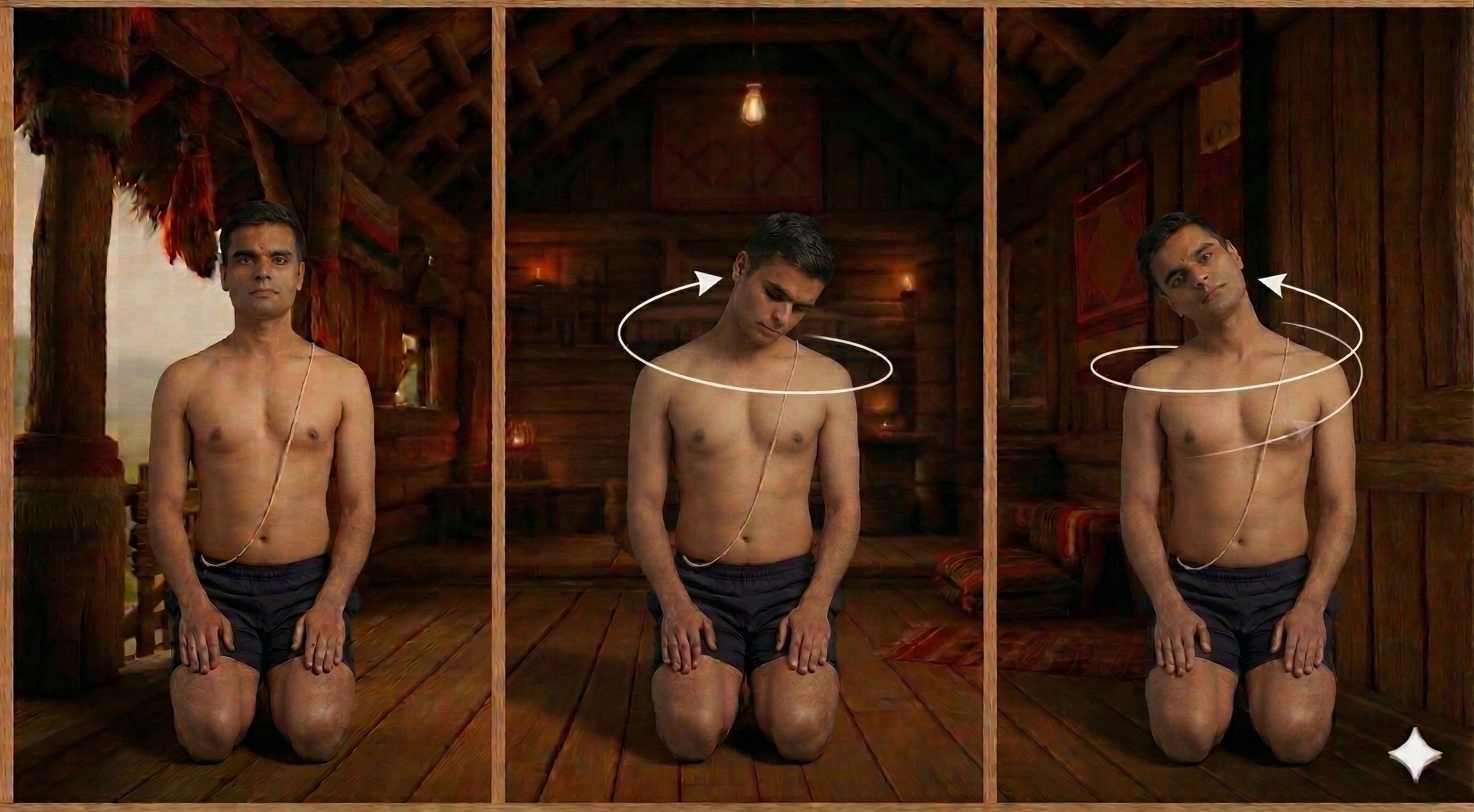

अक्सर पूछे जाने वाले प्रश्न
वीरभद्रासन II (दीवार पर) के बारे में सामान्य प्रश्न
वीरभद्रासन II (दीवार पर) क्या है?
दीवार पर वीरभद्रासन II सही संरेखण सिखाने और बनाए रखने के लिए पीछे की दीवार का उपयोग करता है।
वीरभद्रासन II (दीवार पर) के क्या फायदे हैं?
Teaches correct Warrior II alignment। Builds leg strength and endurance। Prevents common alignment mistakes।
वीरभद्रासन II (दीवार पर) किस स्तर के लिए है?
वीरभद्रासन II (दीवार पर) एक शुरुआती स्तर का आसन है। यह सभी के लिए उपयुक्त है।
वीरभद्रासन II (दीवार पर) कौन न करे?
Acute knee injury, Severe hip pain, High blood pressure (hold briefly) की स्थिति में यह आसन न करें।
वीरभद्रासन II (दीवार पर) के लिए कौन से उपकरण चाहिए?
wall का उपयोग इस आसन को आसान बना सकता है।