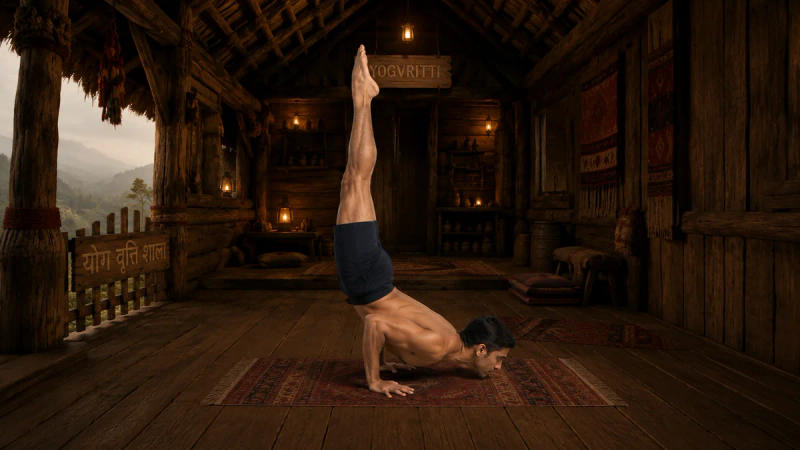
रूपांतर
उल्टा · उन्नत
अधो मुख वृक्षासन
Handstand
AdhoDownwardMukhaFaceVrksaTreeAsanaPose
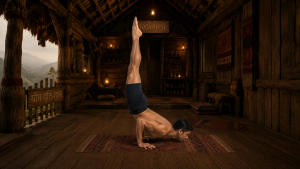
अधो मुख वृक्षासन एक उन्नत उलटा आसन है जो शक्ति, संतुलन और आत्मविश्वास का निर्माण करता है। यह कंधों, बाहों और कोर को मजबूत करता है जबकि मस्तिष्क में परिसंचरण में सुधार करता है।
स्तर उन्नतप्रकार उल्टापक्ष दोनों ओर
अभ्यास की विधि
- 1
कलाइयों और कंधों को गरम करें, और अधो मुख श्वानासन में शुरू करें, हाथ कंधों की चौड़ाई पर, दीवार से लगभग एक फुट दूर।
- 2
एक घुटना मोड़ें और दूसरी टाँग से दीवार की ओर ऊपर उछलें।
- 3
दूसरी टाँग को ऊपर पहली के साथ लाएँ, पैरों को सहारे के लिए दीवार पर हल्के से दबाते हुए।
- 4
शरीर को सीधा करें, पसलियों को अंदर खींचते हुए और पेट को सक्रिय करते हुए।
- 5
कंधों को कानों से दूर और गर्दन को लंबा रखें, कलाइयों से कंधों, कूल्हों और पैरों तक एक रेखा में।
शिक्षण संकेत
यह कहें
- Engage the core to maintain stability
- Press firmly through the foundation — hands, forearms, or head
- Keep the body in one straight line from base to feet
- Breathe steadily — do not hold the breath
- Come down slowly and with control
- Fix the gaze on a steady point (drishti) for balance
इन पर ध्यान दें
- Kicking up with momentum instead of controlled engagement
- Collapsing into the shoulders — push the floor away
- Holding the breath — maintain steady breathing
- Looking around the room — keep the gaze steady
- Coming down too quickly — lower with control
- Looking around the room — keep the gaze fixed
शरीर पर प्रभाव
मांसपेशियाँ देखने के लिए किसी भाग पर टैप करें3D anatomy adapted from Z-Anatomy, CC BY-SA 4.0
Chest
BothHandstand both stretches and strengthens your chest.
Muscles at work
- Serratus AnteriorContracts
Crucial for stabilizing the shoulder blades against the ribcage in chaturanga dandasana and arm balances.
Main action: stabilizes and protracts (abducts) scapula; prevents winging of scapula
- Internal IntercostalsStretches
Engages during active exhalations, deep twists, and pranayama practices to stabilize the rib cage and control breath.
Main action: Depresses the ribs during forced exhalation
- Pectoralis MajorStretches
Stabilizes the upper body in push-up and arm balance postures like chaturanga dandasana.
Main action: adducts and internally rotates arm; flexes arm from extended position
- Pectoralis MinorStretches
Acts as an accessory muscle of breath and assists in stabilizing and depressing the shoulder girdle.
Main action: draws scapula downward and forward; lifts ribcage in respiration
- Serratus Posterior InferiorStretches
Engages during deep exhalations and twists to help stabilize the lower ribcage and lumbar spine.
Main action: Depresses the lower ribs and assists in expiration
- SubclaviusStretches
Stabilizes the clavicle and shoulder girdle during weight-bearing arm balances and chest-opening asanas.
Main action: Depresses the clavicle and anchors it against the sternoclavicular joint
- Transversus ThoracisStretches
Engages during deep, controlled exhalations and pranayama practices that emphasize breath retention on the exhale.
Main action: Depresses the ribs slightly to assist in forced exhalation
- Strengthens arms, shoulders, and core
- Improves balance and coordination
- Calms the brain and relieves stress
- Increases blood flow to the brain
- Builds confidence
सावधानियाँ
High Blood Pressure
Vigorous effort and inverted positions temporarily raise blood pressure in the head, increasing strain on blood vessels.
बदलाव · Hold no longer than five breaths, breathe continuously, and come out at the first sign of pressure in the head.
Glaucoma / Eye Pressure
Inverted and head-below-heart positions increase intraocular pressure, which can be harmful for those with elevated eye pressure.
बदलाव · Keep the head above the heart; avoid Down Dog and practice a standing forward fold with head elevated instead.
Heart Conditions
Vigorous effort and inverted positions increase cardiac demand and blood pressure; extra caution is essential with heart disease.
बदलाव · Keep the effort brief and low, breathe continuously, and avoid any vigorous jumping or strong holds.
Wrist Injury / Carpal Tunnel
Weight-bearing or extended wrist positions can compress the median nerve and aggravate inflamed tendons, worsening pain and causing numbness.
बदलाव · Use fists on the floor, switch to a forearm variation, or place a wedge/folded blanket under the wrists to reduce extension angle.
Pregnancy
Deep twists, abdominal compression, and lying flat on the back can restrict blood flow or cause discomfort as pregnancy progresses.
बदलाव · Widen the stance, avoid deep abdominal compression and twists, and consult a qualified prenatal yoga teacher.
Neck Pain
बदलाव · Avoid if severe; otherwise, practice against a wall and focus on shoulder engagement, not neck strain.
Vertigo
बदलाव · Avoid completely or practice with extreme caution against a wall with a spotter.
Low Blood Pressure
बदलाव · Approach slowly and carefully, with a spotter, and come down slowly.
कक्षा में

त्वरित उत्तर
अधो मुख वृक्षासन क्या है?
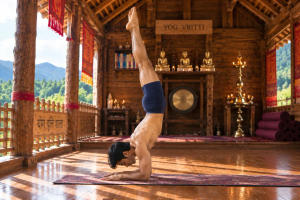
अधो मुख वृक्षासन एक उन्नत उलटा आसन है जो शक्ति, संतुलन और आत्मविश्वास का निर्माण करता है। यह कंधों, बाहों और कोर को मजबूत करता है जबकि मस्तिष्क में परिसंचरण में सुधार करता है।
अधो मुख वृक्षासन कैसे करें?
कलाइयों और कंधों को गरम करें, और अधो मुख श्वानासन में शुरू करें, हाथ कंधों की चौड़ाई पर, दीवार से लगभग एक फुट दूर। एक घुटना मोड़ें और दूसरी टाँग से दीवार की ओर ऊपर उछलें। दूसरी टाँग को ऊपर पहली के साथ लाएँ, पैरों को सहारे के लिए दीवार पर हल्के से दबाते हुए। शरीर को सीधा करें, पसलियों को अंदर खींचते हुए और पेट को सक्रिय करते हुए। पूरी विधि 9 चरणों में ऊपर दी गई है।
क्या शुरुआती लोग अधो मुख वृक्षासन कर सकते हैं?
यह उन्नत स्तर का आसन है। शुरुआती लोग पहले आसान आसनों से तैयारी करें।
- आसन प्रकार
- Inversion, Arm Balance, Balance
- मुख्य भाग
- Upper Body, Core, Full Body
- किसके लिए
- Athletes
- योग शैली
- Iyengar, Vinyasa, Ashtanga, Power
- कब करें
- Peak Pose, Morning