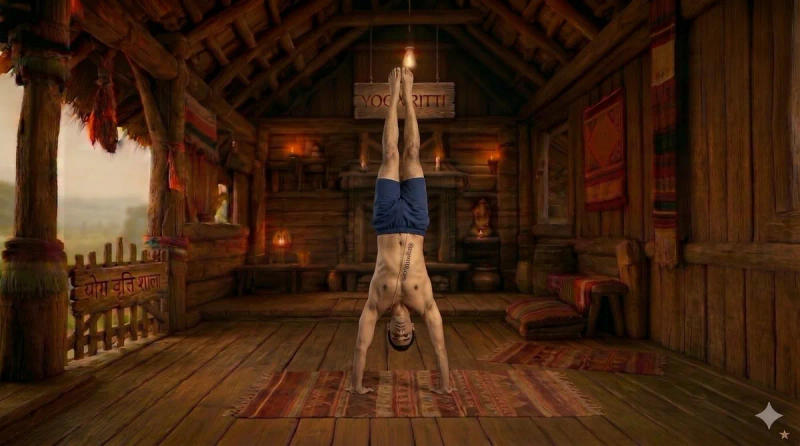
रूपांतर
उल्टा · उन्नत
अधो मुख वृक्षासन II
Handstand II · Adho Mukha Vrksasana II
AdhoDownwardMukhaFaceVrksaTreeAsanaPose
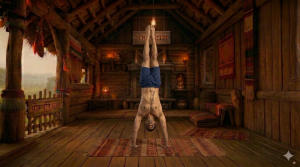
अधो मुख वृक्षासन II हैंडस्टैंड की एक विविधता है जिसमें उलटे होकर पैर स्ट्रैडल स्प्लिट में फैलाए जाते हैं।
स्तर उन्नतप्रकार उल्टापक्ष दोनों ओर
अभ्यास की विधि
- 1
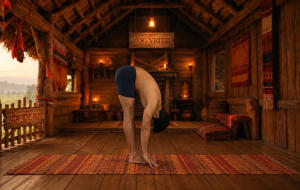
कलाइयों और कंधों को गरम करें, फिर दीवार की ओर मुँह करके, एक बाँह की दूरी पर, ताड़ासन में खड़े हों।
- 2
आगे झुकें और हथेलियों को कंधों की चौड़ाई पर फर्श पर रखें, उँगलियाँ चौड़ी फैली हुई और मध्यमा उँगलियाँ आगे की ओर।
- 3
एक पैर को पीछे रखें और दूसरे घुटने को थोड़ा मोड़ें।
- 4
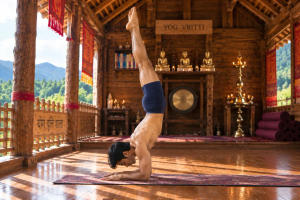
साँस छोड़ते हुए ज़ोर से ऊपर उछलें, दोनों टाँगों को सिर के ऊपर लाते हुए, एड़ियाँ दीवार पर टिकी रहें।
- 5
शरीर को पूरी तरह उलटा करें, सिर नीचे और पैर ऊपर।
शिक्षण संकेत
यह कहें
- Engage the core to maintain stability
- Press firmly through the foundation — hands, forearms, or head
- Keep the body in one straight line from base to feet
- Breathe steadily — do not hold the breath
- Come down slowly and with control
इन पर ध्यान दें
- Kicking up with momentum instead of controlled engagement
- Collapsing into the shoulders — push the floor away
- Holding the breath — maintain steady breathing
- Looking around the room — keep the gaze steady
- Coming down too quickly — lower with control
शरीर पर प्रभाव
मांसपेशियाँ देखने के लिए किसी भाग पर टैप करें3D anatomy adapted from Z-Anatomy, CC BY-SA 4.0
Upper back
BothHandstand II both stretches and strengthens your upper back.
Muscles at work
- Latissimus DorsiStretches⚑ Limits the pose
Draws the chest forward and opens the heart center in backbends and upward-facing dog.
Main action: extends the arm from a flexed position, internally rotates, and adducts the arm
- TrapeziusContracts
Supports shoulder girdle stability, neck alignment, and arm balances like tolasana.
Main action: elevates, depresses, retracts, and rotates the scapula
⚑ Where you’ll feel it
Tightness in the latissimus dorsi is what usually stops you going deeper here. Ease off at the first strong stretch and keep breathing — don’t force the end range. Props that help: wall.
- Builds shoulder and arm strength
- Core stabilization in inversion
- Opens inner thighs while inverted
- Develops confidence in inversions
सावधानियाँ
Wrist Injury / Carpal Tunnel
Weight-bearing or extended wrist positions can compress the median nerve and aggravate inflamed tendons, worsening pain and causing numbness.
बदलाव · Use fists on the floor, switch to a forearm variation, or place a wedge/folded blanket under the wrists to reduce extension angle.
Shoulder Injury
Overhead loading and extreme shoulder rotation can impinge the subacromial space and overload rotator cuff tendons.
बदलाव · Lower the height of the pose (Knees-Chest-Chin instead of Chaturanga, or forearm plank instead of full plank) to reduce shoulder load.
Neck Injury / Cervical Issues
Looking up, bearing head weight, or unsupported neck rotation can compress cervical vertebrae and irritate nerves.
बदलाव · Keep the head in a neutral position aligned with the spine; avoid deep neck extension, flexion, or unsupported rotation.
High Blood Pressure
Vigorous effort and inverted positions temporarily raise blood pressure in the head, increasing strain on blood vessels.
बदलाव · Hold no longer than five breaths, breathe continuously, and come out at the first sign of pressure in the head.
Pregnancy
Deep twists, abdominal compression, and lying flat on the back can restrict blood flow or cause discomfort as pregnancy progresses.
बदलाव · Widen the stance, avoid deep abdominal compression and twists, and consult a qualified prenatal yoga teacher.
Glaucoma / Eye Pressure
Inverted and head-below-heart positions increase intraocular pressure, which can be harmful for those with elevated eye pressure.
बदलाव · Keep the head above the heart; avoid Down Dog and practice a standing forward fold with head elevated instead.
Wrist Injury
बदलाव · Use forearm stand (Pincha Mayurasana) instead.
कक्षा में

त्वरित उत्तर
अधो मुख वृक्षासन II क्या है?
अधो मुख वृक्षासन II हैंडस्टैंड की एक विविधता है जिसमें उलटे होकर पैर स्ट्रैडल स्प्लिट में फैलाए जाते हैं।
अधो मुख वृक्षासन II कैसे करें?
कलाइयों और कंधों को गरम करें, फिर दीवार की ओर मुँह करके, एक बाँह की दूरी पर, ताड़ासन में खड़े हों। आगे झुकें और हथेलियों को कंधों की चौड़ाई पर फर्श पर रखें, उँगलियाँ चौड़ी फैली हुई और मध्यमा उँगलियाँ आगे की ओर। एक पैर को पीछे रखें और दूसरे घुटने को थोड़ा मोड़ें। साँस छोड़ते हुए ज़ोर से ऊपर उछलें, दोनों टाँगों को सिर के ऊपर लाते हुए, एड़ियाँ दीवार पर टिकी रहें।
क्या शुरुआती लोग अधो मुख वृक्षासन II कर सकते हैं?
यह उन्नत स्तर का आसन है। शुरुआती लोग पहले आसान आसनों से तैयारी करें।
- आसन प्रकार
- Inversion, Arm Balance
- मुख्य भाग
- Upper Body, Core
- योग शैली
- Ashtanga, Power, Vinyasa
- कब करें
- Peak Pose