 शुरुआतीखड़े होकर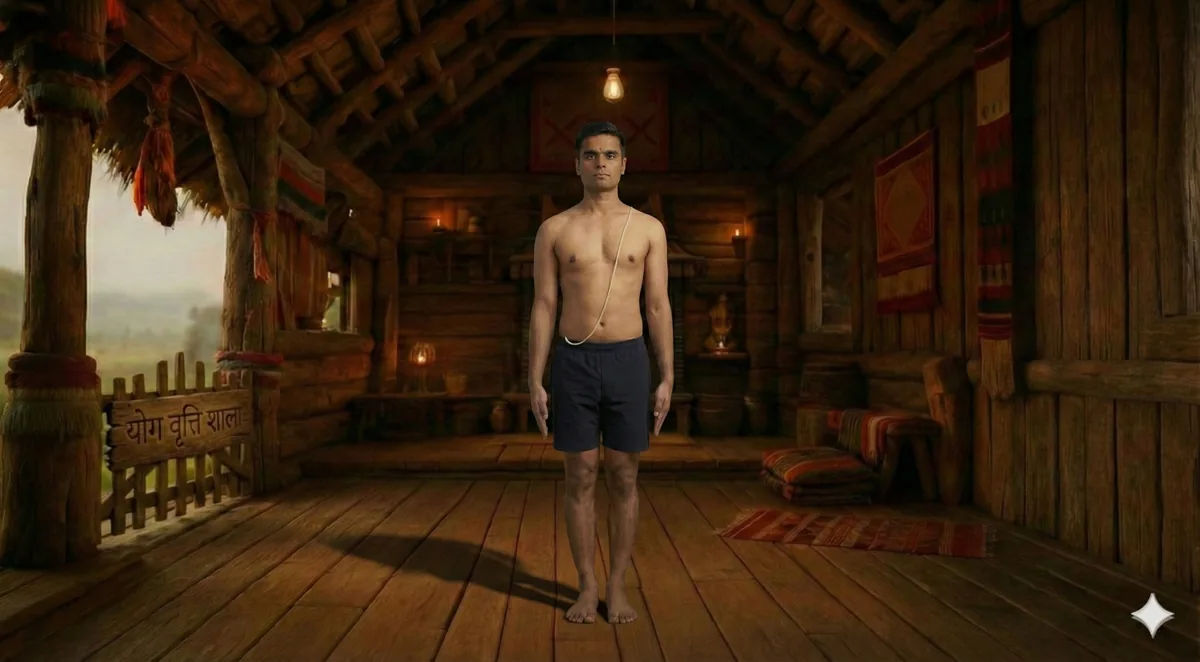
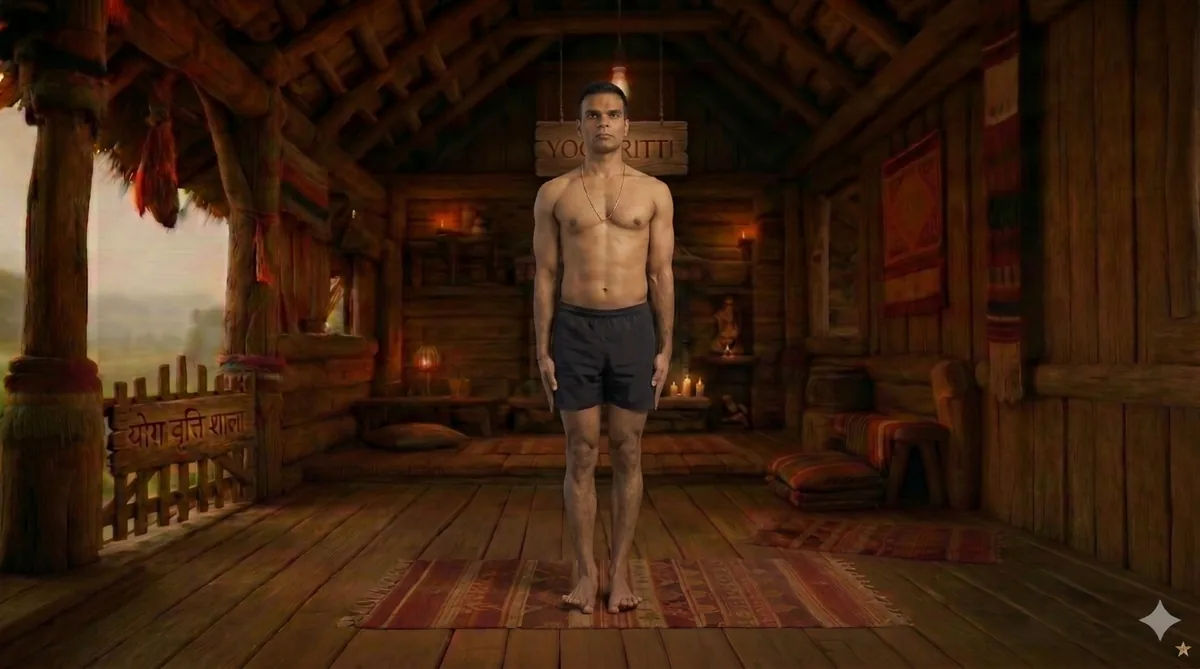
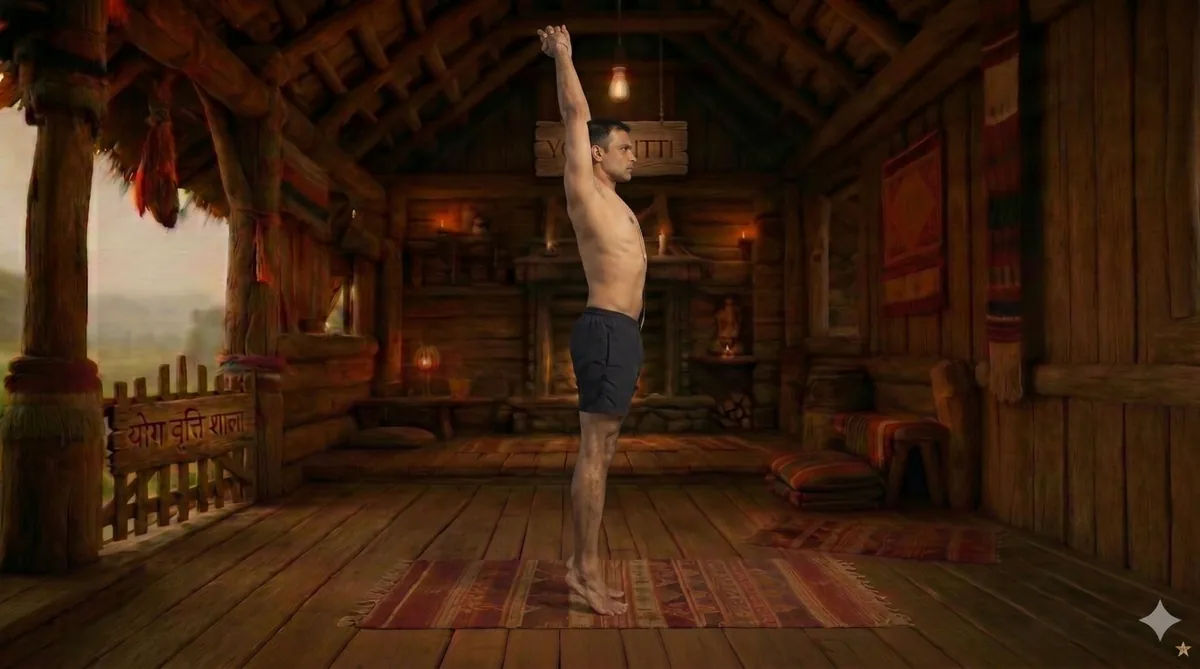


ताड़ासन उंगलियों को सिर के पीछे बांधकर
Mountain Pose Fingers Behind Head
ताड़ासन उंगलियों को सिर के पीछे बांधकर आसन में सुधार करता है और छाती और कंधों को खोलता है। यह ऊपरी पीठ को फैलाता है और गहरी सांस लेने को बढ़ावा देता है।
फायदे
6Intrinsic Foot Muscles(activating)
These small, deep muscles within your feet are the unsung heroes of your foundation, responsible for maintaining the arches and providing dynamic stability. In Tadasana, we actively lift the arches without gripping the toes, engaging these muscles to create a resilient, spring-like support for the entire body. This activation cultivates a profound sense of rootedness and helps to awaken the lower chakras, connecting you deeply to the earth's energy. Over time, strengthening these muscles can alleviate common foot complaints like plantar fasciitis and improve overall balance.
Quadriceps(strengthening)
While the Quadriceps continue their fundamental role in stabilizing the knees and grounding the femurs into the hip sockets, in this variation, their engagement subtly intensifies to counterbalance the upward and outward expansion of the upper body. They provide an anchoring force, preventing the lower body from becoming passive as the focus shifts to the chest and shoulders. This grounded strength allows the upper spine to lengthen without compromising the pelvis.
Erector Spinae(strengthening & lengthening)
The Erector Spinae, particularly in the thoracic region, engage in a sophisticated dance of lengthening and active support here. While they always maintain spinal integrity in Tadasana, the interlaced hands behind the head provide a gentle traction, inviting these muscles to extend more fully and evenly along the upper spine. This active lengthening helps to decompress the vertebrae, counteracting any tendency for the upper back to slump or round forward.
- पूर्ण शारीरिक विश्लेषण →
सावधानियाँ
4Neck Injury / Cervical Issues
Looking up, bearing head weight, or unsupported neck rotation can compress cervical vertebrae and irritate nerves.
Keep the head in a neutral position aligned with the spine; avoid deep neck extension, flexion, or unsupported rotation.
Shoulder Injury
Overhead loading and extreme shoulder rotation can impinge the subacromial space and overload rotator cuff tendons.
Keep the arm below shoulder height, avoid full overhead extension, and use a block to reduce reach.
Headache / Migraine
Physical exertion, inversions, and strong breath work can intensify an existing headache or trigger a migraine.
Keep effort minimal, breathe slowly, and skip any vigorous transitions.
Low Blood Pressure
Rising quickly from low positions can cause a sudden drop in blood pressure, leading to dizziness or fainting.
Rise slowly from seated or lying positions, pause in a mid-level shape before fully standing, and use a wall for support.
विधि
चरण-दर-चरण निर्देश
Tadasana में खड़े हो जाएं, पैर मिलाकर और हाथ शरीर के बगल में रखें।
श्वास अंदर लें और अपनी उंगलियों को सिर के पीछे बांधें, हाथों को गर्दन के आधार पर रखें।
कोहनियों को बाहर की ओर फैलाएं, छाती को खोलें।
रीढ़ की हड्डी को सीधा रखें, पेट को अंदर की ओर खींचें।
ठोड़ी को थोड़ा नीचे करें, दृष्टि को सामने की ओर रखें।
श्वास सामान्य रूप से लेते रहें।
इस स्थिति में 20-30 सेकंड तक बने रहें।
श्वास छोड़ें और हाथों को छोड़ दें।
Tadasana में वापस आ जाएं।
सामान्य गलतियाँ
शिक्षण संकेत
अभ्यास क्रम
अक्सर पूछे जाने वाले प्रश्न
ताड़ासन उंगलियों को सिर के पीछे बांधकर के बारे में सामान्य प्रश्न
ताड़ासन उंगलियों को सिर के पीछे बांधकर क्या है?
ताड़ासन उंगलियों को सिर के पीछे बांधकर आसन में सुधार करता है और छाती और कंधों को खोलता है। यह ऊपरी पीठ को फैलाता है और गहरी सांस लेने को बढ़ावा देता है।
ताड़ासन उंगलियों को सिर के पीछे बांधकर के क्या फायदे हैं?
Improves posture। Opens chest and shoulders। Stretches upper back।
ताड़ासन उंगलियों को सिर के पीछे बांधकर किस स्तर के लिए है?
ताड़ासन उंगलियों को सिर के पीछे बांधकर एक शुरुआती स्तर का आसन है। यह सभी के लिए उपयुक्त है।
ताड़ासन उंगलियों को सिर के पीछे बांधकर कौन न करे?
Neck pain, Shoulder injury, Headache की स्थिति में यह आसन न करें।