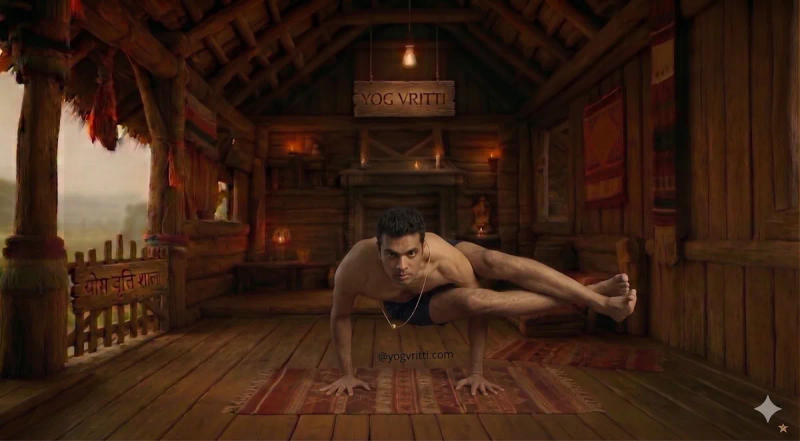
रूपांतर

बैठकर · उन्नत
अष्टवक्रासन
Eight-Angle Pose · Astavakrasana
AshtaEightVakraCrooked / TwistedAsanaPose
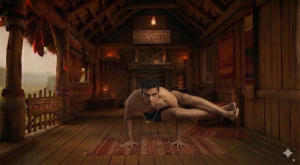
अष्टवक्रासन एक आर्म बैलेंस है जिसमें पैर एक हाथ के चारों ओर लपेटकर बगल में फैलाए जाते हैं।
स्तर उन्नतप्रकार बैठकरपक्ष एक ओर
अभ्यास की विधि
- 1
कलाइयों और कूल्हों को गरम करें, फिर दंडासन में बैठें।
- 2
दायाँ पैर मोड़ें और दाएँ कंधे को दाएँ घुटने के नीचे फँसाएँ, जांघ को ऊपरी बाँह पर टिकाएँ।
- 3
दोनों हथेलियों को कूल्हों के बगल में फर्श पर रखें।
- 4
बाएँ टखने को दाएँ के ऊपर क्रॉस करके टखनों को बाँधें।
- 5
साँस लेते हुए पेट को सक्रिय करें।
शिक्षण संकेत
यह कहें
- Sit on the front edge of your sitting bones
- Lengthen the spine upward on each inhalation
- Keep the chest lifted and shoulders relaxed
- Ground down through the sitting bones
- Maintain an elongated spine — avoid rounding the back
इन पर ध्यान दें
- Rounding the lower back — sit on a folded blanket if needed
- Forcing the knees down — let gravity work naturally
- Collapsing the chest and slouching forward
- Tensing the neck and jaw
- Rushing into the pose without proper alignment first
शरीर पर प्रभाव
मांसपेशियाँ देखने के लिए किसी भाग पर टैप करें3D anatomy adapted from Z-Anatomy, CC BY-SA 4.0
Quadriceps
StrengthenedEight-Angle Pose strengthens the front of your thighs.
Muscles at work
- Articularis GenusContracts
It assists in tracking the patella smoothly during deep knee flexion and extension in standing poses.
Main action: Pulls the suprapatellar bursa superiorly during knee extension to prevent impingement
- QuadricepsContracts
Crucial for extending the knees, lifting the kneecap, and stabilizing standing and balancing poses.
Main action: extends the knee; rectus femoris also flexes the hip
- VastiiContracts
The vastii muscles engage strongly to stabilize and straighten the knees in standing poses like Warrior I and Triangle pose.
Main action: Extension of the leg at the knee joint
- Builds arm and core strength
- Develops twist in arm balance
- Improves wrist strength
- Builds confidence in arm balances
- Named after sage — rich tradition
सावधानियाँ
Wrist Injury / Carpal Tunnel
Weight-bearing or extended wrist positions can compress the median nerve and aggravate inflamed tendons, worsening pain and causing numbness.
बदलाव · Use fists on the floor, switch to a forearm variation, or place a wedge/folded blanket under the wrists to reduce extension angle.
Shoulder Injury
Overhead loading and extreme shoulder rotation can impinge the subacromial space and overload rotator cuff tendons.
बदलाव · Lower the height of the pose (Knees-Chest-Chin instead of Chaturanga, or forearm plank instead of full plank) to reduce shoulder load.
Back Injury / Back Pain
Spinal flexion, extension, or rotation under load can compress vertebral discs or strain the paraspinal muscles.
बदलाव · Bend the knees to protect the lumbar spine, engage the core throughout, and stop if pain sharpens.
Pregnancy
Deep twists, abdominal compression, and lying flat on the back can restrict blood flow or cause discomfort as pregnancy progresses.
बदलाव · Widen the stance, avoid deep abdominal compression and twists, and consult a qualified prenatal yoga teacher.
Wrist Injury
बदलाव · Practice Kakasana (Crow) first to build wrist strength.
कक्षा में
त्वरित उत्तर
अष्टवक्रासन क्या है?
अष्टवक्रासन एक आर्म बैलेंस है जिसमें पैर एक हाथ के चारों ओर लपेटकर बगल में फैलाए जाते हैं।
अष्टवक्रासन कैसे करें?
कलाइयों और कूल्हों को गरम करें, फिर दंडासन में बैठें। दायाँ पैर मोड़ें और दाएँ कंधे को दाएँ घुटने के नीचे फँसाएँ, जांघ को ऊपरी बाँह पर टिकाएँ। दोनों हथेलियों को कूल्हों के बगल में फर्श पर रखें। बाएँ टखने को दाएँ के ऊपर क्रॉस करके टखनों को बाँधें। पूरी विधि 9 चरणों में ऊपर दी गई है।
क्या शुरुआती लोग अष्टवक्रासन कर सकते हैं?
यह उन्नत स्तर का आसन है। शुरुआती लोग पहले आसान आसनों से तैयारी करें।
- आसन प्रकार
- Arm Balance, Twist
- मुख्य भाग
- Upper Body, Core
- योग शैली
- Ashtanga, Vinyasa, Power
- कब करें
- Peak Pose