रूपांतर
उल्टा · उन्नत
एक पाद शीर्षासन
One-Legged Headstand · Eka Pada Sirsasana
EkaOnePadaLegSirsaHeadAsanaPose
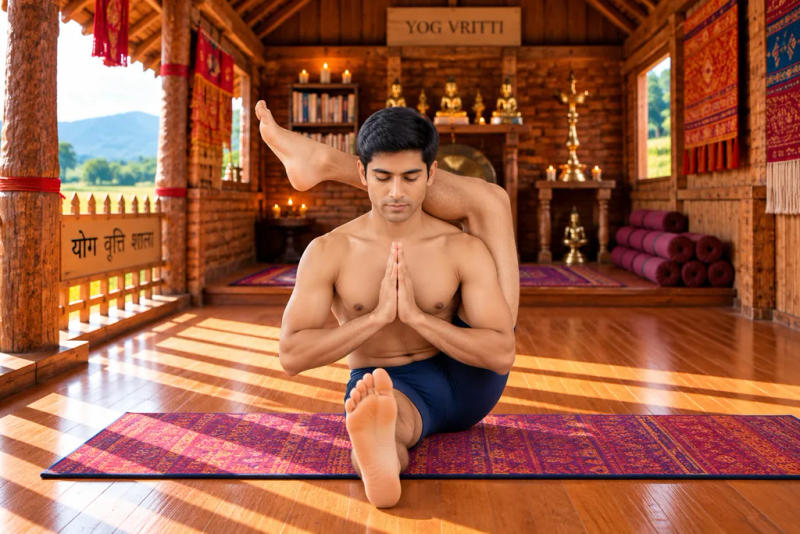
एक पाद शीर्षासन में शीर्षासन से एक पैर नीचे लाया जाता है जबकि दूसरा ऊपर रहता है।
स्तर उन्नतप्रकार उल्टापक्ष एक ओर
अभ्यास की विधि
- 1
दीवार के पास सालम्ब शीर्षासन में आएँ, शरीर पूरी तरह उलटा और टाँगें सीधी ऊपर।
- 2
पेट को मज़बूती से सक्रिय करें और गर्दन को स्थिर रखें।
- 3
साँस छोड़ते हुए दाईं टाँग को सीधा रखते हुए धीरे-धीरे फर्श की ओर नीचे लाएँ।
- 4
बाईं टाँग को लंबवत रखें, घुटने कसे हुए और दोनों टाँगों के पंजे एक रेखा में।
- 5
दाईं टाँग को जितना आरामदायक हो नीचे लाएँ, पैंतालीस या नब्बे डिग्री तक, या अनुभवी हों तो फर्श तक।
शिक्षण संकेत
यह कहें
- Engage the core to maintain stability
- Press firmly through the foundation — hands, forearms, or head
- Keep the body in one straight line from base to feet
- Breathe steadily — do not hold the breath
- Come down slowly and with control
इन पर ध्यान दें
- Kicking up with momentum instead of controlled engagement
- Collapsing into the shoulders — push the floor away
- Holding the breath — maintain steady breathing
- Looking around the room — keep the gaze steady
- Coming down too quickly — lower with control
शरीर पर प्रभाव
- Core strength in inversion
- Hip flexor engagement
- Balance refinement
- Builds headstand confidence
सावधानियाँ
Neck Injury / Cervical Issues
Looking up, bearing head weight, or unsupported neck rotation can compress cervical vertebrae and irritate nerves.
बदलाव · Avoid all weight-bearing on the head and neck; practise supported Setu Bandha or legs-up-the-wall instead.
Shoulder Injury
Overhead loading and extreme shoulder rotation can impinge the subacromial space and overload rotator cuff tendons.
बदलाव · Avoid weight-bearing inversions entirely; practise supported Setu Bandha or Viparita Karani as an alternative.
High Blood Pressure
Vigorous effort and inverted positions temporarily raise blood pressure in the head, increasing strain on blood vessels.
बदलाव · Avoid this inversion entirely or keep the head above heart level at all times; never hold the breath.
Glaucoma / Eye Pressure
Inverted and head-below-heart positions increase intraocular pressure, which can be harmful for those with elevated eye pressure.
बदलाव · Avoid this inversion entirely; practise Viparita Karani (legs-up-the-wall) with a bolster under the hips as an alternative.
Neck Pain
बदलाव · Do not attempt — practice Dolphin Pose instead.
कक्षा में
त्वरित उत्तर
एक पाद शीर्षासन क्या है?
एक पाद शीर्षासन में शीर्षासन से एक पैर नीचे लाया जाता है जबकि दूसरा ऊपर रहता है।
एक पाद शीर्षासन कैसे करें?
दीवार के पास सालम्ब शीर्षासन में आएँ, शरीर पूरी तरह उलटा और टाँगें सीधी ऊपर। पेट को मज़बूती से सक्रिय करें और गर्दन को स्थिर रखें। साँस छोड़ते हुए दाईं टाँग को सीधा रखते हुए धीरे-धीरे फर्श की ओर नीचे लाएँ। बाईं टाँग को लंबवत रखें, घुटने कसे हुए और दोनों टाँगों के पंजे एक रेखा में। पूरी विधि 9 चरणों में ऊपर दी गई है।
क्या शुरुआती लोग एक पाद शीर्षासन कर सकते हैं?
यह उन्नत स्तर का आसन है। शुरुआती लोग पहले आसान आसनों से तैयारी करें।
- आसन प्रकार
- Inversion
- मुख्य भाग
- Core, Upper Body
- योग शैली
- Iyengar, Ashtanga
- कब करें
- Peak Pose