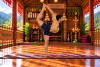

पीछे झुकाव · उन्नत
नटराजासन पृष्ठवंश
Lord of the Dance Standing Backbend · Natarajasana Standing Backbend
NataDancerRajaKing (Shiva)AsanaPose
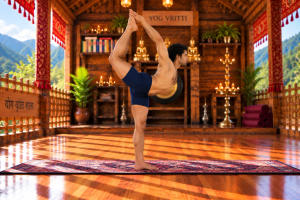
नटराजासन बैकबेंड उन्नत डांसर पोज़ है जिसमें दोनों हाथ पीछे के पैर को पकड़ते हैं।
स्तर उन्नतप्रकार पीछे झुकावपक्ष एक ओर
अभ्यास की विधि
- 1
दीवार के पास ताड़ासन में खड़े हों; ज़रूरत हो तो पास में स्ट्रैप रखें।
- 2
वज़न बाएँ पैर पर लाएँ और बायाँ पैर मज़बूत रखें।
- 3
दायाँ घुटना मोड़ें और दाएँ पैर को अपने पीछे ऊपर उठाएँ।
- 4
दाएँ हाथ को पीछे ले जाकर दाएँ पैर को भीतर से पकड़ें, या उसके चारों ओर बँधा स्ट्रैप पकड़ें।
- 5
बाएँ हाथ को भी पीछे लाएँ ताकि दोनों हाथ पैर को पकड़ें।
शिक्षण संकेत
यह कहें
- Initiate the backbend from the thoracic spine, not the lumbar
- Lift the sternum toward the ceiling
- Keep the gluteal muscles engaged to protect the lower back
- Broaden across the collarbones
- Maintain length in the back of the neck — do not drop the head back
- Fix the gaze on a steady point (drishti) for balance
इन पर ध्यान दें
- Compressing the lumbar spine — focus on thoracic extension
- Dropping the head back without control — keep the neck long
- Splaying the knees wider than the hips
- Pushing too deep too soon — build intensity gradually
- Forgetting to breathe or breathing shallowly
- Looking around the room — keep the gaze fixed
शरीर पर प्रभाव
मांसपेशियाँ देखने के लिए किसी भाग पर टैप करें3D anatomy adapted from Z-Anatomy, CC BY-SA 4.0
Quadriceps
BothLord of the Dance Standing Backbend both stretches and strengthens the front of your thighs.
Muscles at work
- QuadricepsContractsStretches⚑ Limits the pose
Crucial for extending the knees, lifting the kneecap, and stabilizing standing and balancing poses.
Main action: extends the knee; rectus femoris also flexes the hip
⚑ Where you’ll feel it
Tightness in the quadriceps is what usually stops you going deeper here. Ease off at the first strong stretch and keep breathing — don’t force the end range. Props that help: strap.
- Deep spinal backbend
- Opens chest and shoulders
- Strengthens standing leg
- Develops grace and balance
सावधानियाँ
Shoulder Injury
Overhead loading and extreme shoulder rotation can impinge the subacromial space and overload rotator cuff tendons.
बदलाव · Draw the shoulder blades together without externally rotating aggressively; place hands on blocks to reduce range.
Back Injury / Back Pain
Spinal flexion, extension, or rotation under load can compress vertebral discs or strain the paraspinal muscles.
बदलाव · Limit the depth of the backbend, engage the core actively before moving, and avoid any movement that creates pinching in the lumbar spine.
Knee Injury
Deep flexion or rotation at the knee can strain ligaments, meniscus, or cartilage, especially in a compromised joint.
बदलाव · Never push into pain; use a folded blanket under or between the knees and reduce the depth of the bend.
Balance Disorders
Impaired proprioception increases the risk of falls during standing and balancing poses.
बदलाव · Practise next to a wall or chair for support; keep both feet on the ground wherever possible.
कक्षा में
- Natarajasana Standing Backbendनटराजासन पृष्ठवंशयह आसन

त्वरित उत्तर
नटराजासन पृष्ठवंश क्या है?
नटराजासन बैकबेंड उन्नत डांसर पोज़ है जिसमें दोनों हाथ पीछे के पैर को पकड़ते हैं।
नटराजासन पृष्ठवंश कैसे करें?
दीवार के पास ताड़ासन में खड़े हों; ज़रूरत हो तो पास में स्ट्रैप रखें। वज़न बाएँ पैर पर लाएँ और बायाँ पैर मज़बूत रखें। दायाँ घुटना मोड़ें और दाएँ पैर को अपने पीछे ऊपर उठाएँ। दाएँ हाथ को पीछे ले जाकर दाएँ पैर को भीतर से पकड़ें, या उसके चारों ओर बँधा स्ट्रैप पकड़ें। पूरी विधि 9 चरणों में ऊपर दी गई है।
क्या शुरुआती लोग नटराजासन पृष्ठवंश कर सकते हैं?
यह उन्नत स्तर का आसन है। शुरुआती लोग पहले आसान आसनों से तैयारी करें।
- आसन प्रकार
- Backbend, Balance
- मुख्य भाग
- Spine, Chest, Lower Body
- योग शैली
- Iyengar, Ashtanga, Vinyasa
- कब करें
- Peak Pose