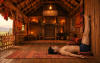


पीठ के बल · मध्यम
विपरीत करणी मुद्रा
Legs Up the Wall Mudra · Viparita Karani Mudra
ViparitaInvertedKaraniAction / Doing
विपरीत करणी मुद्रा सौम्य सपोर्टेड इनवर्जन है — कूल्हे ऊपर, पैर शिथिल, लंबे समय तक।
स्तर मध्यमप्रकार पीठ के बलपक्ष दोनों ओर
अभ्यास की विधि
- 1
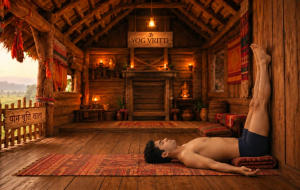
पीठ के बल लेटें, बाँहें शरीर के बगल में रखें, और अधिक सहारे के लिए चाहें तो कूल्हों के नीचे बोल्स्टर रखें।
- 2
घुटने मोड़ें, पैरों को नीचे दबाएँ, और साँस छोड़ते हुए पैरों तथा कूल्हों को ऊपर उठाएँ।
- 3
दोनों हाथों से कूल्हों को सहारा दें, कोहनियाँ फर्श पर और लगभग कंधों की चौड़ाई पर रखें।
- 4
पैरों को पूरी तरह लंबवत रखने के बजाय थोड़ा पीछे की ओर झुकने दें, ताकि शरीर फर्श से लगभग पैंतालीस डिग्री या उससे कम का कोण बनाए।
- 5
पैरों को ढीला छोड़ें, या सुविधा हो तो एड़ियों को हल्के से दीवार पर टिकाएँ, और गर्दन तथा चेहरे को कोमल रखें।
शिक्षण संकेत
यह कहें
- Press the back of the head gently into the floor
- Keep the lower back in its natural curve
- Relax the shoulders away from the ears
- Soften the facial muscles and jaw
- Breathe deeply into the belly
- Surrender the weight of the body to the props and the floor
इन पर ध्यान दें
- Lifting the shoulders toward the ears — keep them relaxed
- Flattening the natural curve of the lower back
- Tensing the facial muscles and jaw
- Holding the breath
- Forcing the legs into position rather than using props for support
- Holding tension — allow complete release in the supported position
शरीर पर प्रभाव
मांसपेशियाँ देखने के लिए किसी भाग पर टैप करें3D anatomy adapted from Z-Anatomy, CC BY-SA 4.0
Spine
BothLegs Up the Wall Mudra both stretches and strengthens the muscles along your spine.
Muscles at work
- Erector SpinaeContractsStretches
Acts as prime mover in backbends and straightens the spine in upright postures like tadasana.
Main action: extends, laterally flexes, and assists in rotation of the vertebral column
- Deep relaxation
- Reverses blood flow gently
- Reduces fatigue and swelling in legs
- Calms the nervous system
- Therapeutic for insomnia
सावधानियाँ
Neck Injury / Cervical Issues
Looking up, bearing head weight, or unsupported neck rotation can compress cervical vertebrae and irritate nerves.
बदलाव · Avoid all weight-bearing on the head and neck; practise supported Setu Bandha or legs-up-the-wall instead.
Menstruation
Some traditions advise against strong inversions and intense abdominal work during menstruation, as it may disrupt the natural downward energy flow.
बदलाव · Skip this inversion and practise Viparita Karani or Supta Baddha Konasana as a restorative alternative.
Glaucoma / Eye Pressure
Inverted and head-below-heart positions increase intraocular pressure, which can be harmful for those with elevated eye pressure.
बदलाव · Avoid this inversion entirely; practise Viparita Karani (legs-up-the-wall) with a bolster under the hips as an alternative.
Neck Pain
बदलाव · Use Legs-Up-The-Wall (Viparita Karani) instead — no shoulder pressure.
कक्षा में
- Viparita Karani Mudraविपरीत करणी मुद्रायह आसन

त्वरित उत्तर
विपरीत करणी मुद्रा क्या है?
विपरीत करणी मुद्रा सौम्य सपोर्टेड इनवर्जन है — कूल्हे ऊपर, पैर शिथिल, लंबे समय तक।
विपरीत करणी मुद्रा कैसे करें?
पीठ के बल लेटें, बाँहें शरीर के बगल में रखें, और अधिक सहारे के लिए चाहें तो कूल्हों के नीचे बोल्स्टर रखें। घुटने मोड़ें, पैरों को नीचे दबाएँ, और साँस छोड़ते हुए पैरों तथा कूल्हों को ऊपर उठाएँ। दोनों हाथों से कूल्हों को सहारा दें, कोहनियाँ फर्श पर और लगभग कंधों की चौड़ाई पर रखें।
क्या शुरुआती लोग विपरीत करणी मुद्रा कर सकते हैं?
यह मध्यम स्तर का आसन है। शुरुआती लोग पहले आसान आसनों से तैयारी करें।
- आसन प्रकार
- Inversion, Restorative
- मुख्य भाग
- Full Body
- किसके लिए
- Beginners, Seniors
- योग शैली
- Hatha, Restorative, Yin
- कब करें
- Restorative, Evening, Cool Down