 Beginnersupine
Double Knees-to-Chest Pose
Dwi Pada Supta Pawanmuktasana · द्विपाद सुप्त पवनमुक्तासन
Also known as: Supine Wind Release Both Legs
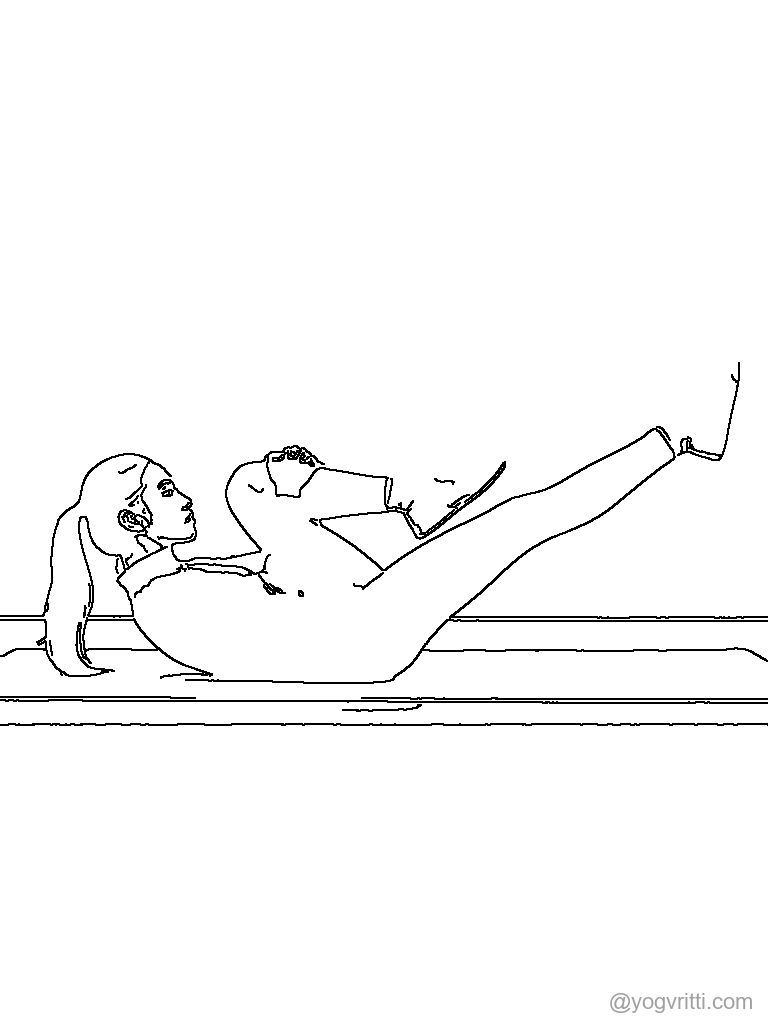
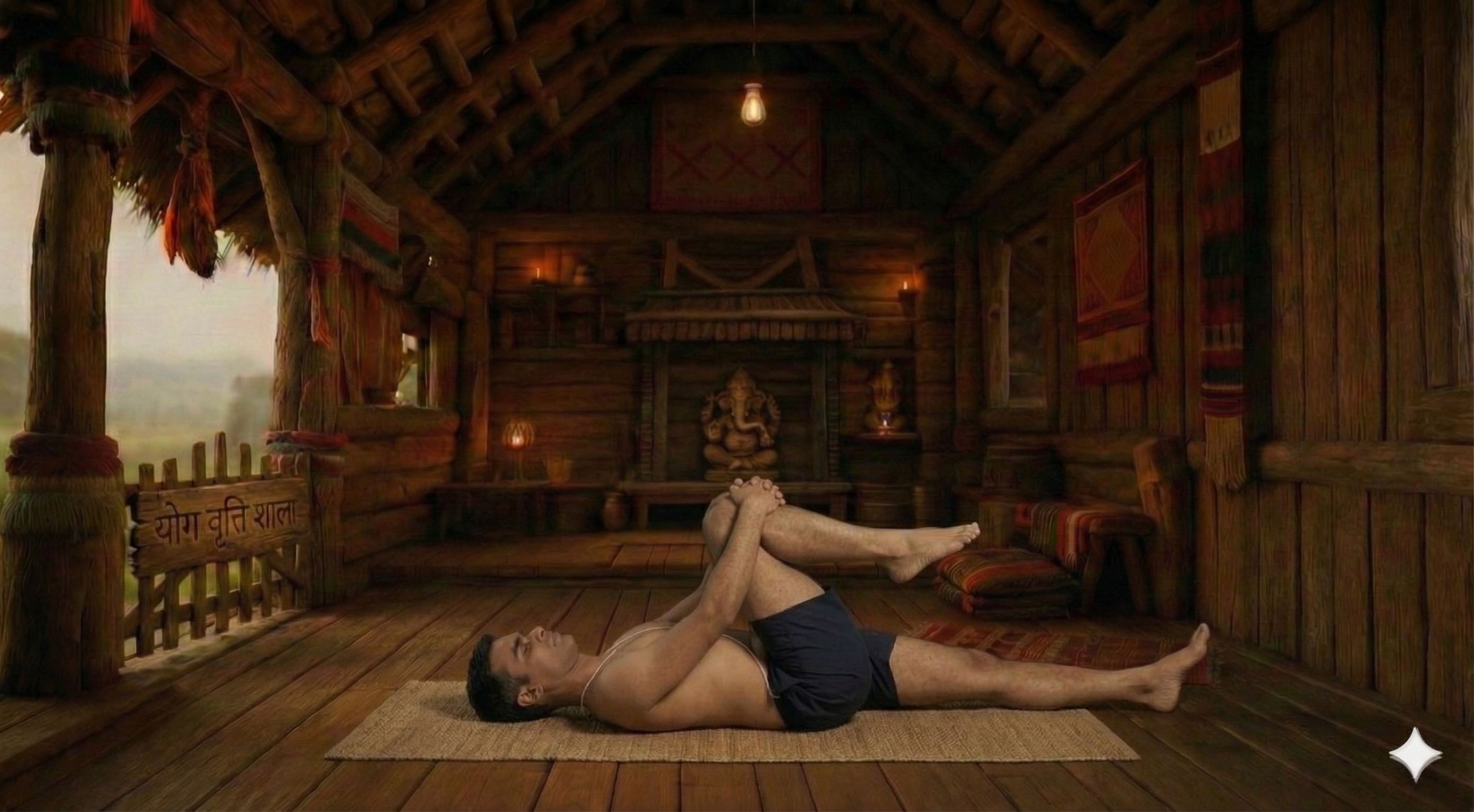
Double Knees-to-Chest Pose, also called Supine Wind Release Both Legs is a classical yoga posture. Its Sanskrit name Dwi Pada Supta Pawanmuktasana translates word-for-word as: Dwi (Two) · Pada (Legs) · Supta (Reclining) · Pavana (Wind). In this posture, the body releases into the support of the floor, allowing gravity to assist. The posture works to release the lower back, stretch the hip flexors and activate the glutes. Aids digestion and relieves gas. Stretches the glutes and hip flexors. It is particularly valued for alleviating back discomfort. Suitable for beginners and regular practitioners alike, it is a calming cool-down, particularly beneficial for beginners and seniors. Practitioners with abdominal surgery and hernia should approach with care or consult a qualified teacher.
Anatomy Involved
Benefits
Glutes(releasing)
The muscles of your buttocks are gently compressed against the floor and shortened in this pose, rather than stretched. This compression encourages a release of habitual tension often held from prolonged sitting or standing, allowing for improved circulation and relaxation in the deep hip rotators. From a yogic perspective, this action helps to release stagnant energy in the pelvic region, promoting a feeling of unburdening and ease in the lower body. Regular practice can alleviate tightness that contributes to lower back pain.
Hamstrings(lengthening)
While not a primary hamstring stretch, the gentle flexion of the hips allows the long muscles at the back of your thighs to subtly lengthen and release. This passive elongation is not forced, but rather an unwinding of chronic tightness, particularly beneficial for those with habitually tight hamstrings that pull on the pelvis. This patient release helps to free up the posterior kinetic chain, enhancing the flow of prana through the legs and contributing to a feeling of lightness and openness in the lower extremities. Over time, this improves overall flexibility and reduces strain on the lower back.
Hip Flexors(releasing)
These powerful muscles at the front of your hips are allowed to shorten and relax in this deep hip flexion, counteracting the chronic lengthening they experience in many standing poses or from prolonged extension. By bringing the knees to the chest, the hip flexors are put into a position of ease, encouraging them to let go of deep-seated tension. This release is crucial for freeing the pelvis and lower spine, allowing apana vayu to flow unhindered and creating a sense of deep grounding and stability in the core.
- Full anatomical benefits — muscles, joints, organs →
Avoid If
Recent Surgery
Surgical wounds and healing tissues need time before being subjected to the mechanical stress of yoga postures.
Wait for full medical clearance from your surgeon; begin with gentle breath work and progress only as healing allows.
Pregnancy
Deep twists, abdominal compression, and lying flat on the back can restrict blood flow or cause discomfort as pregnancy progresses.
After the first trimester, avoid lying flat on the back; elevate the torso on a bolster or lie on the left side instead.
Hernia
Strong abdominal compression and breath-holding under strain increase intra-abdominal pressure and can worsen a hernia.
Avoid any posture that causes pressure or bulging in the abdomen; work with a qualified teacher and your healthcare provider.
Common Mistakes to Avoid
Teaching Cues
For yoga teachers — verbal cues to guide students
6 cues
Teaching Cues
For yoga teachers — verbal cues to guide students
- 1Press the back of the head gently into the floor
- 2Keep the lower back in its natural curve
- 3Relax the shoulders away from the ears
- 4Soften the facial muscles and jaw
- 5Breathe deeply into the belly
- 6Surrender the weight of the body to the props and the floor
Pose Details
Helps With
Pose Type
Body Focus
Focus Areas
Best For
Yoga Styles
When to Practice
Position
Modify If You Have
pregnancy
Do single leg version (Eka Pada) instead of both legs.
back pain
Rock gently side to side to massage the lower back.
Target Areas
Practice Flow

How to Practice
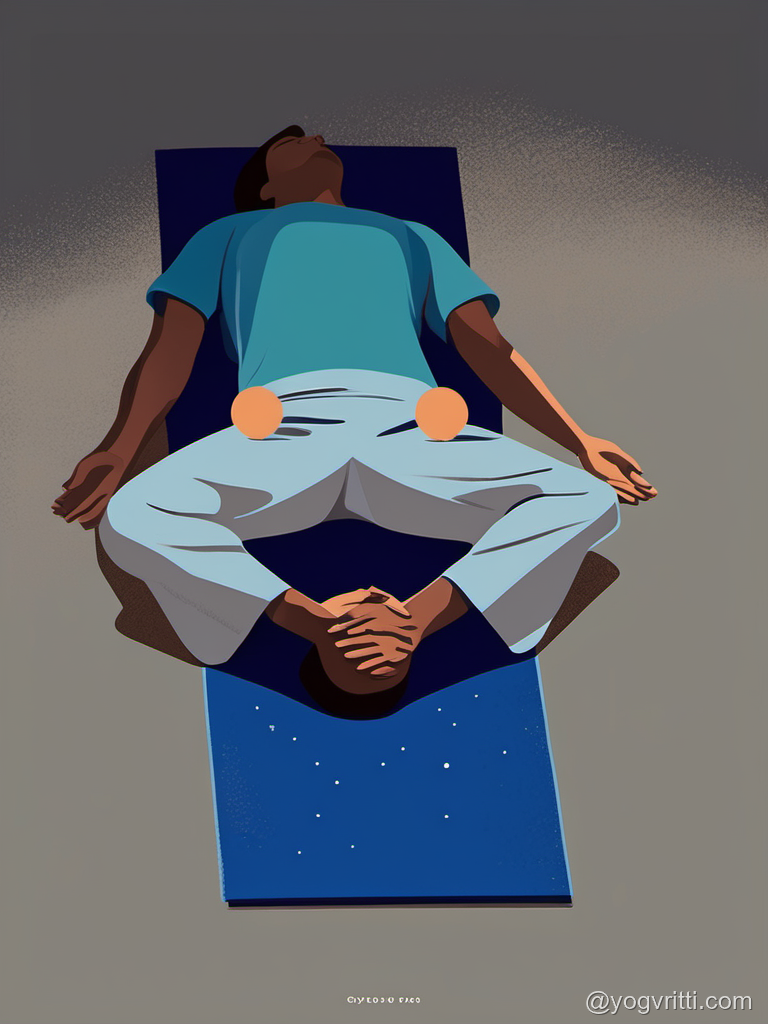
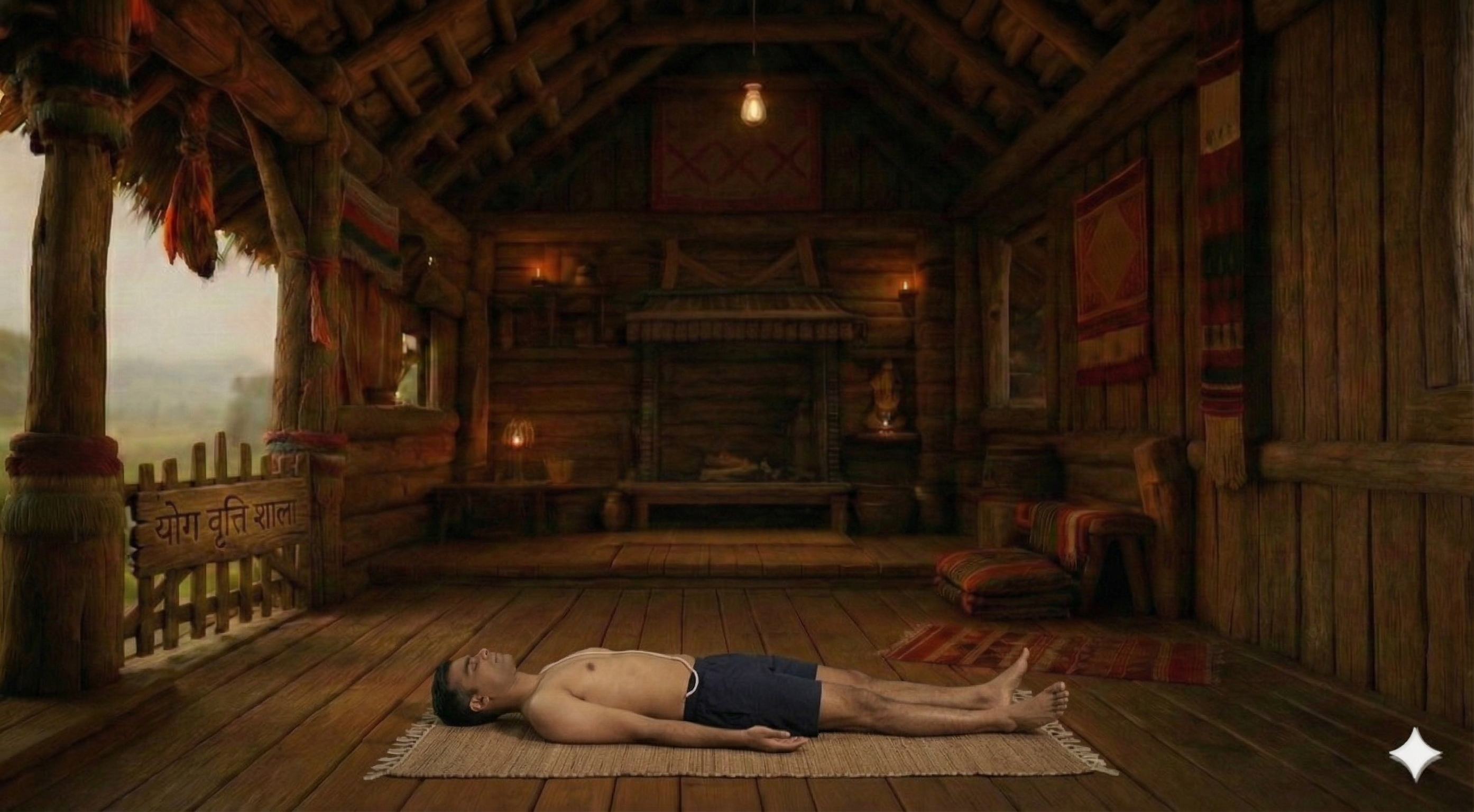
1. Lie on the back (supine position).
2. Arms alongside the body, palms down.
3. Inhale.
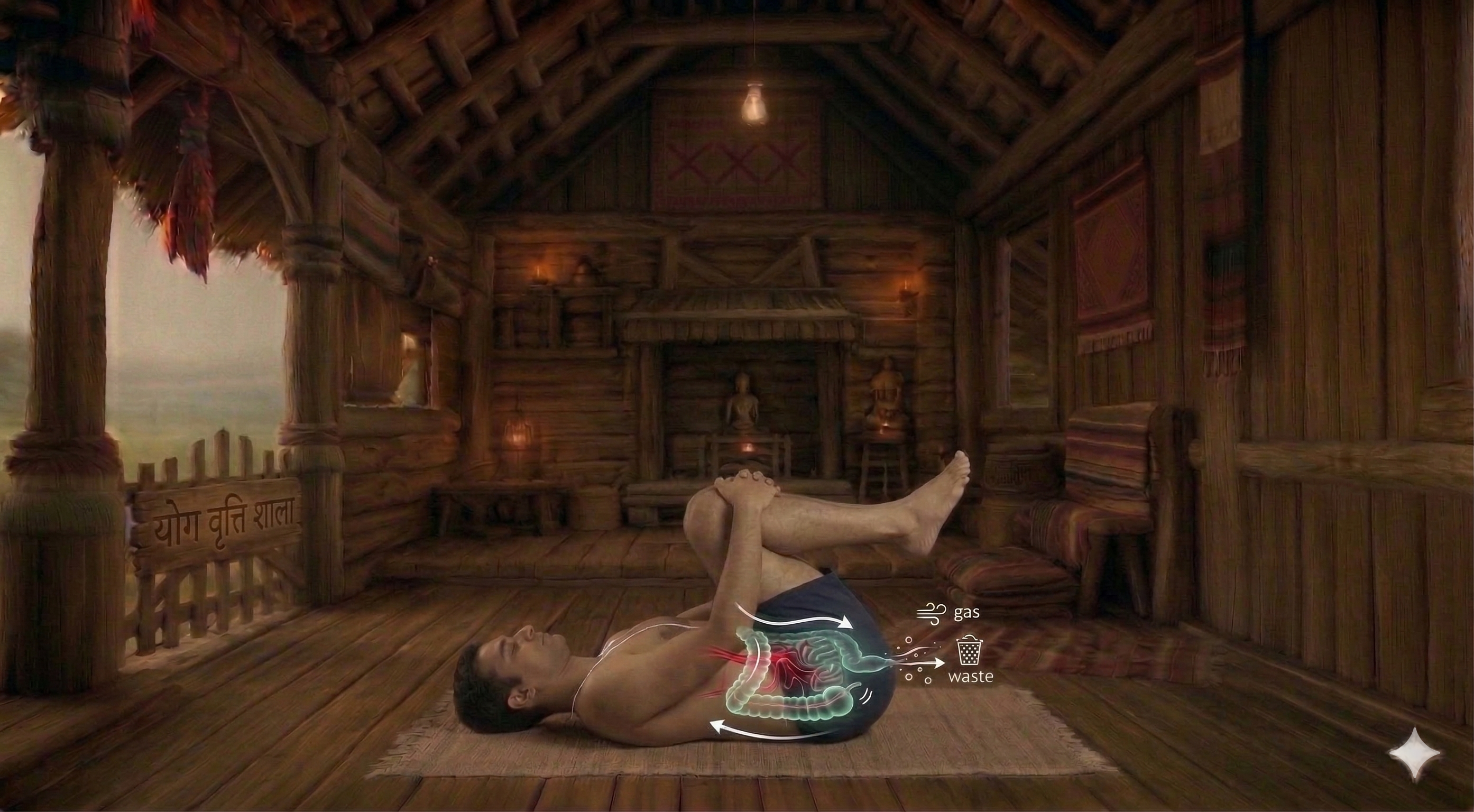
4. Exhale, draw both knees toward the chest.
5. Wrap both hands around the shins or clasp the knees.
5 more steps remaining
Register free to see the complete instructions
Register Free to ContinueAlready registered? Login
Frequently Asked Questions
Common questions about Dwi Pada Supta Pawanmuktasana
What is Double Knees-to-Chest Pose?
Double Knees-to-Chest Pose, also called Supine Wind Release Both Legs is a classical yoga posture. Its Sanskrit name Dwi Pada Supta Pawanmuktasana translates word-for-word as: Dwi (Two) · Pada (Legs) · Supta (Reclining) · Pavana (Wind). In this posture, the body releases into the support of the floor, allowing gravity to assist. The posture works to release the lower back, stretch the hip flexors and activate the glutes. Aids digestion and relieves gas. Stretches the glutes and hip flexors. It is particularly valued for alleviating back discomfort. Suitable for beginners and regular practitioners alike, it is a calming cool-down, particularly beneficial for beginners and seniors. Practitioners with abdominal surgery and hernia should approach with care or consult a qualified teacher.
What are the benefits of Double Knees-to-Chest Pose?
Releases lower back tension. Aids digestion and relieves gas. Stretches the glutes and hip flexors. Calms the nervous system. Very accessible for all levels.
Who should avoid Double Knees-to-Chest Pose?
Avoid this pose if you have: Recent abdominal surgery, Pregnancy (late stage — use single leg version), Hernia.
How many steps are in Double Knees-to-Chest Pose?
Double Knees-to-Chest Pose is practiced in 10 steps. Lie on the back (supine position).
Is Double Knees-to-Chest Pose suitable for beginners?
Yes, Double Knees-to-Chest Pose is a beginner-friendly pose suitable for all levels.
What conditions does Double Knees-to-Chest Pose help with?
Double Knees-to-Chest Pose is therapeutic for: back pain, digestive problems, anxiety, insomnia.
What poses should I do before Double Knees-to-Chest Pose?
Prepare with: Supta Tadasana, Apanasana. These warm up the relevant muscles and joints.
Related Poses
Similar poses you might enjoy
Build Your Own Sequence
Combine Dwi Pada Supta Pawanmuktasana with other poses