रूपांतर
उपकरण के साथ
बैठकर · शुरुआती
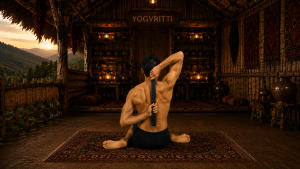
गोमुखासन (बैठे, बेल्ट के साथ संशोधन)
Cow Face Pose with Belt · Gomukhasana (seated, modifications with belt)
GoCowMukhaFaceAsanaPose
गोमुखासन की यह पट्टी-सहायता भिन्नता अभ्यासकर्ताओं को पीठ के पीछे हाथ पकड़ने की लचीलापन की आवश्यकता के बिना गहरे कंधे खोलने का अनुभव करने देती है।
स्तर शुरुआतीप्रकार बैठकरपक्ष एक ओर
अभ्यास की विधि
दंडासन में बैठें, और यदि आपके कूल्हे सख्त हैं तो अपने नितंबों के नीचे मुड़ा हुआ कंबल या ब्लॉक रखें।
अपने बाएँ घुटने को मोड़ें और बाएँ पैर को अपने दाएँ कूल्हे के पास रखें, बाहरी जाँघ को फर्श पर टिकाएँ।
अपने दाएँ पैर को बाएँ के ऊपर से ले जाएँ, घुटनों को एक-दूसरे के ऊपर रखें और दाएँ पैर को बाएँ कूल्हे के पास रखें।
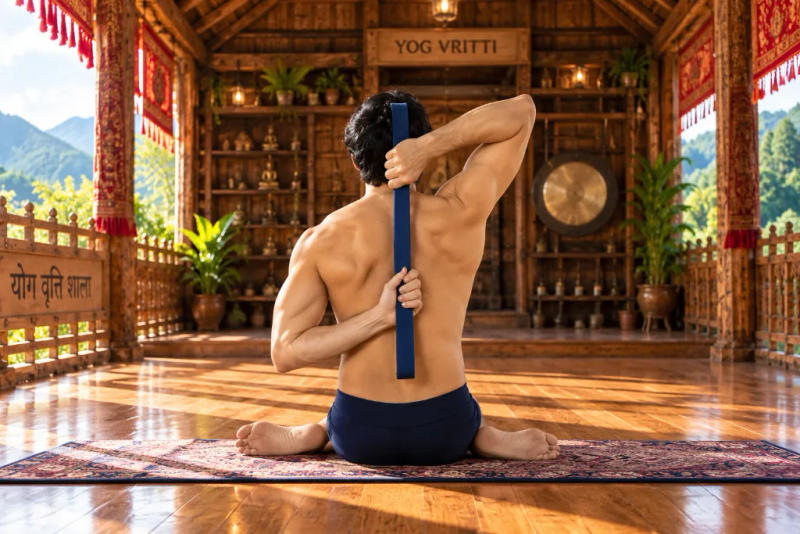
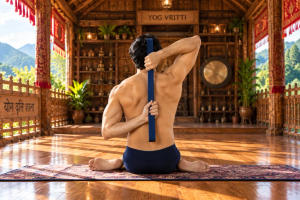
अपने दाएँ हाथ में स्ट्रैप पकड़ें और बाँह को सीधे छत की ओर ऊपर उठाएँ।
अपनी दाईं कोहनी मोड़ें और स्ट्रैप को अपनी पीठ के पीछे लटकाएँ, ऊपरी बाँह को कान के पास रखें।
शिक्षण संकेत
यह कहें
- Sit on the front edge of your sitting bones
- Lengthen the spine upward on each inhalation
- Keep the chest lifted and shoulders relaxed
- Ground down through the sitting bones
- Maintain an elongated spine — avoid rounding the back
- Allow the hip joints to open gradually — never force
- Surrender the weight of the body to the props and the floor
इन पर ध्यान दें
- Rounding the lower back — sit on a folded blanket if needed
- Forcing the knees down — let gravity work naturally
- Collapsing the chest and slouching forward
- Tensing the neck and jaw
- Rushing into the pose without proper alignment first
- Forcing the hips open beyond their current range
- Holding tension — allow complete release in the supported position
शरीर पर प्रभाव
मांसपेशियाँ देखने के लिए किसी भाग पर टैप करें3D anatomy adapted from Z-Anatomy, CC BY-SA 4.0
Hips & glutes
BothCow Face Pose with Belt both stretches and strengthens your hips and buttocks.
Muscles at work
- PiriformisContractsStretches⚑ Limits the pose
Engages to stabilize the sacroiliac joint and control internal/external hip rotation in standing poses and hip openers like Pigeon Pose.
Main action: Lateral rotation, abduction, and stabilization of the thigh at the hip joint
- Gluteus MaximusStretches⚑ Limits the pose
Powers hip extension and external rotation in backbends and standing postures while supporting structural grounding.
Main action: extends and outwardly rotates the hip; assists to stabilize fully extended knee via the iliotibial band
- Gluteus MediusContracts
Stabilizes the pelvis and femur in one-legged standing poses and balances internal/external rotation.
Main action: abducts and internally rotates hip; stabilizes pelvis during walking and standing
⚑ Where you’ll feel it
Tightness in the piriformis, gluteus maximus is what usually stops you going deeper here. Ease off at the first strong stretch and keep breathing — don’t force the end range. Props that help: strap, block, blanket.
- Opens the shoulders and chest progressively
- Stretches the hips and outer thighs
- Accessible for tight shoulders
- Improves posture
- Relieves upper back tension
सावधानियाँ
Shoulder Injury
Overhead loading and extreme shoulder rotation can impinge the subacromial space and overload rotator cuff tendons.
बदलाव · Reduce the range of motion, avoid full arm extension, and use props to limit load on the shoulder joint.
Knee Injury
Deep flexion or rotation at the knee can strain ligaments, meniscus, or cartilage, especially in a compromised joint.
बदलाव · Sit on a folded blanket to reduce the angle of knee flexion; never force the knee into Lotus without full range of motion.
Hip Injury
बदलाव · Sit on a block/blanket, do only one leg at a time, or keep the bottom leg straight.
Arthritis
बदलाव · Modify leg and arm positions for comfort, use props generously.
कक्षा में
 गोमुखासन (बैठे, बेल्ट के साथ संशोधन)यह आसन
इन क्रमों में शामिल
त्वरित उत्तर
गोमुखासन (बैठे, बेल्ट के साथ संशोधन) क्या है?
गोमुखासन की यह पट्टी-सहायता भिन्नता अभ्यासकर्ताओं को पीठ के पीछे हाथ पकड़ने की लचीलापन की आवश्यकता के बिना गहरे कंधे खोलने का अनुभव करने देती है।
गोमुखासन (बैठे, बेल्ट के साथ संशोधन) कैसे करें?
दंडासन में बैठें, और यदि आपके कूल्हे सख्त हैं तो अपने नितंबों के नीचे मुड़ा हुआ कंबल या ब्लॉक रखें। अपने बाएँ घुटने को मोड़ें और बाएँ पैर को अपने दाएँ कूल्हे के पास रखें, बाहरी जाँघ को फर्श पर टिकाएँ। अपने दाएँ पैर को बाएँ के ऊपर से ले जाएँ, घुटनों को एक-दूसरे के ऊपर रखें और दाएँ पैर को बाएँ कूल्हे के पास रखें।
क्या शुरुआती लोग गोमुखासन (बैठे, बेल्ट के साथ संशोधन) कर सकते हैं?
हाँ, यह शुरुआती स्तर का आसन है।
- आसन प्रकार
- Hip Opener, Shoulder Opener, Restorative
- मुख्य भाग
- Hips, Shoulders, Upper Body
- किसके लिए
- Beginners, Desk Workers, Prenatal, Postnatal, Seniors, Kids, Teens, Plus Size
- योग शैली
- Iyengar, Hatha, Yin, Restorative
- कब करें
- Warm Up, Cool Down, Restorative, Quick Practice