पीछे झुकाव · मध्यम
मत्स्यासन पद्मासन
Lotus Fish Pose · Matsyasana Padmasana
MatsyaFishAsanaPose
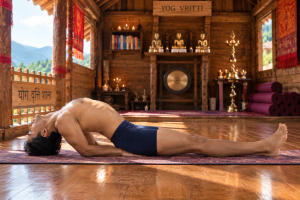
पद्मासन में मत्स्यासन — कमल में लेटकर छाती ऊपर, ताज जमीन पर, हाथ अंगूठे पकड़ते हैं।
स्तर मध्यमप्रकार पीछे झुकावपक्ष दोनों ओर
अभ्यास की विधि
- 1
पद्मासन में बैठें, केवल तभी जब घुटने आरामदायक हों।
- 2
हाथों के सहारे धीरे-धीरे पीछे लेटें।
- 3
साँस छोड़ते हुए पीठ को मोड़ें और छाती ऊपर उठाएँ।
- 4
सिर के शीर्ष को फर्श पर टिकाएँ।
- 5
पद्मासन को स्थिर रखते हुए हाथों से बड़े पंजे पकड़ें, या अपनी क्षमता के अनुसार कोहनियाँ फर्श पर रखें।
शिक्षण संकेत
यह कहें
- Initiate the backbend from the thoracic spine, not the lumbar
- Lift the sternum toward the ceiling
- Keep the gluteal muscles engaged to protect the lower back
- Broaden across the collarbones
- Maintain length in the back of the neck — do not drop the head back
इन पर ध्यान दें
- Compressing the lumbar spine — focus on thoracic extension
- Dropping the head back without control — keep the neck long
- Splaying the knees wider than the hips
- Pushing too deep too soon — build intensity gradually
- Forgetting to breathe or breathing shallowly
शरीर पर प्रभाव
मांसपेशियाँ देखने के लिए किसी भाग पर टैप करें3D anatomy adapted from Z-Anatomy, CC BY-SA 4.0
Upper back
StrengthenedLotus Fish Pose strengthens your upper back.
Muscles at work
- Latissimus Dorsi⚑ Limits the pose
Draws the chest forward and opens the heart center in backbends and upward-facing dog.
Main action: extends the arm from a flexed position, internally rotates, and adducts the arm
- RhomboidsContracts
Retracts the scapulae to open the chest in standing and twisting postures.
Main action: stabilizes, retracts (adducts), and rotates scapula downward
- TrapeziusContracts
Supports shoulder girdle stability, neck alignment, and arm balances like tolasana.
Main action: elevates, depresses, retracts, and rotates the scapula
⚑ Where you’ll feel it
Tightness in the latissimus dorsi is what usually stops you going deeper here. Ease off at the first strong stretch and keep breathing — don’t force the end range.
- Deep chest opener
- Stretches the throat and neck
- Stimulates thyroid
- Traditional counter-pose for Sarvangasana
सावधानियाँ
Neck Injury / Cervical Issues
Looking up, bearing head weight, or unsupported neck rotation can compress cervical vertebrae and irritate nerves.
बदलाव · Do not allow the head to drop back unsupported; keep the chin slightly tucked and look forward rather than up.
Knee Injury
Deep flexion or rotation at the knee can strain ligaments, meniscus, or cartilage, especially in a compromised joint.
बदलाव · Never push into pain; use a folded blanket under or between the knees and reduce the depth of the bend.
Back Injury / Back Pain
Spinal flexion, extension, or rotation under load can compress vertebral discs or strain the paraspinal muscles.
बदलाव · Limit the depth of the backbend, engage the core actively before moving, and avoid any movement that creates pinching in the lumbar spine.
कक्षा में
- Matsyasana Padmasanaमत्स्यासन पद्मासनयह आसन


त्वरित उत्तर
मत्स्यासन पद्मासन क्या है?
पद्मासन में मत्स्यासन — कमल में लेटकर छाती ऊपर, ताज जमीन पर, हाथ अंगूठे पकड़ते हैं।
मत्स्यासन पद्मासन कैसे करें?
पद्मासन में बैठें, केवल तभी जब घुटने आरामदायक हों। हाथों के सहारे धीरे-धीरे पीछे लेटें। साँस छोड़ते हुए पीठ को मोड़ें और छाती ऊपर उठाएँ। सिर के शीर्ष को फर्श पर टिकाएँ। पूरी विधि 9 चरणों में ऊपर दी गई है।
क्या शुरुआती लोग मत्स्यासन पद्मासन कर सकते हैं?
यह मध्यम स्तर का आसन है। शुरुआती लोग पहले आसान आसनों से तैयारी करें।
- आसन प्रकार
- Backbend
- मुख्य भाग
- Chest, Spine, Neck
- योग शैली
- Iyengar, Ashtanga, Hatha
- कब करें
- Cool Down