
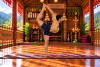
पीछे झुकाव · उन्नत
नटराजासन II
Lord of the Dance Pose II · Natarajasana II
NataDancerRajaKing (Shiva)AsanaPose
नटराजासन II एक उन्नत खड़ा हुआ बैकबेंड है जिसके लिए महत्वपूर्ण संतुलन, लचीलापन और शक्ति की आवश्यकता होती है। यह छाती और कूल्हों को खोलता है जबकि आसन और एकाग्रता में सुधार करता है।
स्तर उन्नतप्रकार पीछे झुकावपक्ष एक ओर
अभ्यास की विधि
- 1
ताड़ासन में पैरों को मज़बूती से जमाकर खड़े हों, दीवार के पास और ज़रूरत हो तो पास में स्ट्रैप रखें।
- 2
गहरी साँस लें, दायाँ घुटना मोड़ें और दाएँ हाथ से पीछे पहुँचकर पैर या टखने का भीतरी भाग पकड़ें, या उस पर स्ट्रैप लपेटें।
- 3
साँस छोड़ते हुए दाएँ पैर को शरीर से दूर लात की तरह धकेलना शुरू करें, जाँघ को फर्श के समानांतर की ओर उठाते हुए और छाती खोलते हुए।
- 4
बाईं बाँह को फर्श के समानांतर आगे फैलाएँ, उँगलियाँ सामने की ओर और कोहनी सीधी।
- 5
संतुलन के लिए सामने किसी एक बिंदु पर स्थिर दृष्टि रखें।
शिक्षण संकेत
यह कहें
- Initiate the backbend from the thoracic spine, not the lumbar
- Lift the sternum toward the ceiling
- Keep the gluteal muscles engaged to protect the lower back
- Broaden across the collarbones
- Maintain length in the back of the neck — do not drop the head back
- Allow the hip joints to open gradually — never force
- Fix the gaze on a steady point (drishti) for balance
इन पर ध्यान दें
- Compressing the lumbar spine — focus on thoracic extension
- Dropping the head back without control — keep the neck long
- Splaying the knees wider than the hips
- Pushing too deep too soon — build intensity gradually
- Forgetting to breathe or breathing shallowly
- Forcing the hips open beyond their current range
- Looking around the room — keep the gaze fixed
शरीर पर प्रभाव
मांसपेशियाँ देखने के लिए किसी भाग पर टैप करें3D anatomy adapted from Z-Anatomy, CC BY-SA 4.0
Quadriceps
BothLord of the Dance Pose II both stretches and strengthens the front of your thighs.
Muscles at work
- QuadricepsContractsStretches⚑ Limits the pose
Crucial for extending the knees, lifting the kneecap, and stabilizing standing and balancing poses.
Main action: extends the knee; rectus femoris also flexes the hip
⚑ Where you’ll feel it
Tightness in the quadriceps is what usually stops you going deeper here. Ease off at the first strong stretch and keep breathing — don’t force the end range. Props that help: wall, strap.
- Improves balance and coordination
- Strengthens legs and ankles
- Stretches hip flexors, thighs, and chest
- Improves posture
- Increases concentration
- Invigorates the body
सावधानियाँ
Low Blood Pressure
Rising quickly from low positions can cause a sudden drop in blood pressure, leading to dizziness or fainting.
बदलाव · Move slowly between positions, keep eyes open, and rest against a wall if dizziness arises.
Back Injury / Back Pain
Spinal flexion, extension, or rotation under load can compress vertebral discs or strain the paraspinal muscles.
बदलाव · Limit the depth of the backbend, engage the core actively before moving, and avoid any movement that creates pinching in the lumbar spine.
Knee Injury
Deep flexion or rotation at the knee can strain ligaments, meniscus, or cartilage, especially in a compromised joint.
बदलाव · Never push into pain; use a folded blanket under or between the knees and reduce the depth of the bend.
Shoulder Injury
Overhead loading and extreme shoulder rotation can impinge the subacromial space and overload rotator cuff tendons.
बदलाव · Draw the shoulder blades together without externally rotating aggressively; place hands on blocks to reduce range.
Ankle Injury
Unstable or injured ankle joints can be overstressed by weight-bearing, extreme dorsiflexion, or plantar flexion.
बदलाव · Avoid full weight-bearing on the injured ankle; use a blanket for cushioning or switch to a seated alternative.
Vertigo
बदलाव · Use a wall for support and hold a strap around the lifted foot.
Hip Injury
बदलाव · Don't lift the leg too high, use a strap to assist the grip.
Sciatica
बदलाव · Be cautious with hip rotation and avoid deepening the pose if pain occurs.
कक्षा में


त्वरित उत्तर
नटराजासन II क्या है?
नटराजासन II एक उन्नत खड़ा हुआ बैकबेंड है जिसके लिए महत्वपूर्ण संतुलन, लचीलापन और शक्ति की आवश्यकता होती है। यह छाती और कूल्हों को खोलता है जबकि आसन और एकाग्रता में सुधार करता है।
नटराजासन II कैसे करें?
ताड़ासन में पैरों को मज़बूती से जमाकर खड़े हों, दीवार के पास और ज़रूरत हो तो पास में स्ट्रैप रखें। गहरी साँस लें, दायाँ घुटना मोड़ें और दाएँ हाथ से पीछे पहुँचकर पैर या टखने का भीतरी भाग पकड़ें, या उस पर स्ट्रैप लपेटें। साँस छोड़ते हुए दाएँ पैर को शरीर से दूर लात की तरह धकेलना शुरू करें, जाँघ को फर्श के समानांतर की ओर उठाते हुए और छाती खोलते हुए।
क्या शुरुआती लोग नटराजासन II कर सकते हैं?
यह उन्नत स्तर का आसन है। शुरुआती लोग पहले आसान आसनों से तैयारी करें।
- आसन प्रकार
- Backbend, Balance, Hip Opener
- मुख्य भाग
- Full Body, Spine, Hips, Shoulders, Core
- किसके लिए
- Athletes, Runners
- योग शैली
- Hatha, Vinyasa, Iyengar, Ashtanga
- कब करें
- Peak Pose