
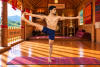

खड़े होकर · मध्यम
उत्थित हस्त पादाङ्गुष्ठासन B
Extended Hand-to-Big-Toe Pose B · Uttitha Hasta Padangusthasana B
UtthitaExtendedHastaHandPadaFootAngusthaBig ToeAsanaPose B
उत्थित हस्त पादाङ्गुष्ठासन B संतुलन और लचीलेपन को चुनौती देता है जबकि खड़े पैर और कोर को मजबूत करता है। उचित संरेखण के साथ आसन को बनाए रखने के लिए ध्यान और समन्वय की आवश्यकता होती है।
स्तर मध्यमप्रकार खड़े होकरपक्ष एक ओर
अभ्यास की विधि
- 1
ताड़ासन में खड़े हों और दोनों पैरों पर मज़बूती से स्थिर रहें; ज़रूरत हो तो पास में स्ट्रैप रखें।
- 2
साँस लेते हुए दाएँ घुटने को छाती की ओर उठाएँ।
- 3
दाएँ हाथ की तर्जनी, मध्यमा और अँगूठे से दाएँ पैर का बड़ा पंजा पकड़ें, या स्ट्रैप को पैर पर लपेटें।
- 4
साँस लेते हुए रीढ़ को लंबा करें और कंधे की हड्डियों को पीठ पर नीचे खींचें।
- 5
साँस छोड़ते हुए दाएँ पैर को धीरे-धीरे आगे फैलाएँ, उसे जितना हो सके सीधा रखें।
शिक्षण संकेत
यह कहें
- Ground firmly through all four corners of both feet
- Engage the quadriceps by lifting the kneecaps
- Lengthen the spine from the tailbone to the crown of the head
- Draw the shoulder blades down and back
- Maintain steady, even breathing throughout
- Allow the hip joints to open gradually — never force
- Fix the gaze on a steady point (drishti) for balance
इन पर ध्यान दें
- Locking the knees — keep a micro-bend or engage the quadriceps
- Collapsing the arches of the feet — distribute weight evenly
- Holding the breath or breathing shallowly
- Hunching the shoulders toward the ears
- Leaning weight to one side — keep both feet equally grounded
- Forcing the hips open beyond their current range
- Looking around the room — keep the gaze fixed
शरीर पर प्रभाव
मांसपेशियाँ देखने के लिए किसी भाग पर टैप करें3D anatomy adapted from Z-Anatomy, CC BY-SA 4.0
Hips & glutes
StrengthenedExtended Hand-to-Big-Toe Pose B strengthens your hips and buttocks.
Muscles at work
- Piriformis⚑ Limits the pose
Engages to stabilize the sacroiliac joint and control internal/external hip rotation in standing poses and hip openers like Pigeon Pose.
Main action: Lateral rotation, abduction, and stabilization of the thigh at the hip joint
- Gluteus MediusContracts
Stabilizes the pelvis and femur in one-legged standing poses and balances internal/external rotation.
Main action: abducts and internally rotates hip; stabilizes pelvis during walking and standing
⚑ Where you’ll feel it
Tightness in the piriformis is what usually stops you going deeper here. Ease off at the first strong stretch and keep breathing — don’t force the end range. Props that help: strap.
- Improves balance and coordination
- Strengthens legs and core
- Stretches hamstrings
- Opens hips
- Enhances focus
- Improves posture
सावधानियाँ
Low Blood Pressure
Rising quickly from low positions can cause a sudden drop in blood pressure, leading to dizziness or fainting.
बदलाव · Rise slowly from seated or lying positions, pause in a mid-level shape before fully standing, and use a wall for support.
Back Injury / Back Pain
Spinal flexion, extension, or rotation under load can compress vertebral discs or strain the paraspinal muscles.
बदलाव · Engage the core before any movement, keep a slight bend in the knees, and avoid locking the lower back.
Hip Injury
Deep hip flexion, external rotation, or weight-bearing can aggravate labral tears, impingement, or bursitis.
बदलाव · Do not force the hip into deep external rotation; keep the foot turned out only as far as is pain-free.
Hamstring Injury
Aggressive stretching of a torn or strained hamstring can reinjure muscle fibres — the attachment near the sitting bone is especially vulnerable.
बदलाव · Do not try to straighten the legs fully; prioritise a neutral pelvis and neutral lower back over hamstring length.
Back Pain
बदलाव · Keep the standing leg slightly bent, use a wall for balance.
कक्षा में


त्वरित उत्तर
उत्थित हस्त पादाङ्गुष्ठासन B क्या है?
उत्थित हस्त पादाङ्गुष्ठासन B संतुलन और लचीलेपन को चुनौती देता है जबकि खड़े पैर और कोर को मजबूत करता है। उचित संरेखण के साथ आसन को बनाए रखने के लिए ध्यान और समन्वय की आवश्यकता होती है।
उत्थित हस्त पादाङ्गुष्ठासन B कैसे करें?
ताड़ासन में खड़े हों और दोनों पैरों पर मज़बूती से स्थिर रहें; ज़रूरत हो तो पास में स्ट्रैप रखें। साँस लेते हुए दाएँ घुटने को छाती की ओर उठाएँ। दाएँ हाथ की तर्जनी, मध्यमा और अँगूठे से दाएँ पैर का बड़ा पंजा पकड़ें, या स्ट्रैप को पैर पर लपेटें। साँस लेते हुए रीढ़ को लंबा करें और कंधे की हड्डियों को पीठ पर नीचे खींचें। पूरी विधि 11 चरणों में ऊपर दी गई है।
क्या शुरुआती लोग उत्थित हस्त पादाङ्गुष्ठासन B कर सकते हैं?
यह मध्यम स्तर का आसन है। शुरुआती लोग पहले आसान आसनों से तैयारी करें।
- आसन प्रकार
- Balance, Hip Opener
- मुख्य भाग
- Lower Body, Core, Hips
- योग शैली
- Iyengar, Ashtanga
- कब करें
- Peak Pose