बैठकर · उन्नत
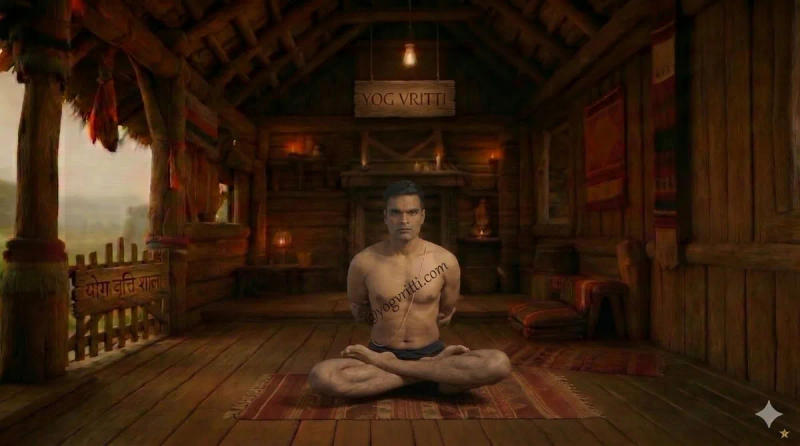
बद्ध पद्मासन
Bound Lotus Pose · Baddha Padmasana
BaddhaBoundPadmaLotusAsanaPose
बद्ध पद्मासन में पद्मासन में बैठकर हाथों को पीठ के पीछे से क्रॉस करके पैरों के अंगूठे पकड़े जाते हैं।
स्तर उन्नतप्रकार बैठकरपक्ष दोनों ओर
अभ्यास की विधि
- 1
पद्मासन में बैठें, केवल तभी जब घुटने आरामदायक हों।
- 2
साँस छोड़ते हुए दोनों बाँहों को कंधों से पीछे घुमाएँ।
- 3
दाएँ हाथ को पीठ के पीछे ले जाकर बाएँ पैर का बड़ा पंजा पकड़ें।
- 4
बाएँ हाथ को पीठ के पीछे ले जाकर दाएँ पैर का बड़ा पंजा पकड़ें।
- 5
बाँहों को पीठ के पीछे क्रॉस करें, और पंजे पकड़ना कठिन हो तो कंधे की हड्डियों को पास लाएँ।
शिक्षण संकेत
यह कहें
- Sit on the front edge of your sitting bones
- Lengthen the spine upward on each inhalation
- Keep the chest lifted and shoulders relaxed
- Ground down through the sitting bones
- Maintain an elongated spine — avoid rounding the back
- Allow the hip joints to open gradually — never force
इन पर ध्यान दें
- Rounding the lower back — sit on a folded blanket if needed
- Forcing the knees down — let gravity work naturally
- Collapsing the chest and slouching forward
- Tensing the neck and jaw
- Rushing into the pose without proper alignment first
- Forcing the hips open beyond their current range
शरीर पर प्रभाव
मांसपेशियाँ देखने के लिए किसी भाग पर टैप करें3D anatomy adapted from Z-Anatomy, CC BY-SA 4.0
Upper back
StrengthenedBound Lotus Pose strengthens your upper back.
Muscles at work
- RhomboidsContracts
Retracts the scapulae to open the chest in standing and twisting postures.
Main action: stabilizes, retracts (adducts), and rotates scapula downward
- TrapeziusContracts
Supports shoulder girdle stability, neck alignment, and arm balances like tolasana.
Main action: elevates, depresses, retracts, and rotates the scapula
- Deep chest and shoulder opening
- Improves posture significantly
- Stretches the entire front body
- Calms the mind for meditation
सावधानियाँ
Knee Injury
Deep flexion or rotation at the knee can strain ligaments, meniscus, or cartilage, especially in a compromised joint.
बदलाव · Sit on a folded blanket to reduce the angle of knee flexion; never force the knee into Lotus without full range of motion.
Shoulder Injury
Overhead loading and extreme shoulder rotation can impinge the subacromial space and overload rotator cuff tendons.
बदलाव · Reduce the range of motion, avoid full arm extension, and use props to limit load on the shoulder joint.
Hip Injury
Deep hip flexion, external rotation, or weight-bearing can aggravate labral tears, impingement, or bursitis.
बदलाव · Sit on a folded blanket or bolster to reduce the depth of hip flexion and external rotation.
Wrist Injury / Carpal Tunnel
Weight-bearing or extended wrist positions can compress the median nerve and aggravate inflamed tendons, worsening pain and causing numbness.
बदलाव · No wrist load in this seated posture — practise freely; use a strap if gripping the foot causes discomfort.
कक्षा में


त्वरित उत्तर
बद्ध पद्मासन क्या है?
बद्ध पद्मासन में पद्मासन में बैठकर हाथों को पीठ के पीछे से क्रॉस करके पैरों के अंगूठे पकड़े जाते हैं।
बद्ध पद्मासन कैसे करें?
पद्मासन में बैठें, केवल तभी जब घुटने आरामदायक हों। साँस छोड़ते हुए दोनों बाँहों को कंधों से पीछे घुमाएँ। दाएँ हाथ को पीठ के पीछे ले जाकर बाएँ पैर का बड़ा पंजा पकड़ें। बाएँ हाथ को पीठ के पीछे ले जाकर दाएँ पैर का बड़ा पंजा पकड़ें। पूरी विधि 9 चरणों में ऊपर दी गई है।
क्या शुरुआती लोग बद्ध पद्मासन कर सकते हैं?
यह उन्नत स्तर का आसन है। शुरुआती लोग पहले आसान आसनों से तैयारी करें।
- आसन प्रकार
- Hip Opener
- मुख्य भाग
- Chest, Shoulders, Hips
- योग शैली
- Ashtanga, Iyengar, Hatha
- कब करें
- Peak Pose, Morning