Royal Cobra Pose
Raja Bhujangasana · राज भुजंगासन
Also known as: King Cobra · Raja Bhujangasana
Royal Cobra Pose, also called King Cobra is a classical yoga posture. Its Sanskrit name Raja Bhujangasana translates word-for-word as: Raja (King / Royal) · Bhujanga (Cobra) · Asana (Pose). In this posture, the body opens the chest and stretches the entire front body. The posture works to strengthen the quadriceps, open the chest and open and strengthen the shoulders. Opens entire front body. Builds back strength. It is particularly valued for developing greater flexibility. Suitable for advanced practitioners with developed body awareness, it is a meaningful addition to any practice. Practitioners with spinal injury and neck pain should approach with care or consult a qualified teacher.
Anatomy Involved
Benefits
Spine Extensors(strengthening)
The muscles running along your spine, from your pelvis up to your neck, are working powerfully here to lift and extend your back. These deep spinal muscles concentrically contract, building incredible strength and resilience in your entire posterior chain, which helps to counteract the effects of gravity and prolonged sitting. This consistent engagement not only fortifies the spine but also awakens your inner core vitality, allowing prana to flow freely upwards through the central energetic channel (sushumna nadi).
Quadriceps(lengthening)
The large muscles on the front of your thighs are experiencing a deep, sustained stretch as your knees bend and your feet reach towards your crown. The rectus femoris, which crosses both the hip and knee joints, is particularly challenged, requiring significant release to allow this action. This profound lengthening in the quadriceps helps to free the hip flexors and pelvis, releasing accumulated tension and fostering a sense of lightness and ease in the lower body, enhancing mobility for both daily life and other advanced practices.
Hip Flexors(lengthening)
The deep muscles at the front of your hips, often tight from sitting, are significantly lengthened as your hips extend and your spine arches. This creates a powerful opening across the entire front of your pelvis and groin, releasing deep-seated tension. Releasing these muscles can alleviate strain in the lower back and facilitate a smoother flow of apana vayu, the downward-moving energy, promoting stability and a feeling of groundedness in the pelvic region.
- Full anatomical benefits — muscles, joints, organs →
Avoid If
Back Injury / Back Pain
Spinal flexion, extension, or rotation under load can compress vertebral discs or strain the paraspinal muscles.
Limit the depth of the backbend, engage the core actively before moving, and avoid any movement that creates pinching in the lumbar spine.
Neck Injury / Cervical Issues
Looking up, bearing head weight, or unsupported neck rotation can compress cervical vertebrae and irritate nerves.
Do not allow the head to drop back unsupported; keep the chin slightly tucked and look forward rather than up.
Pregnancy
Deep twists, abdominal compression, and lying flat on the back can restrict blood flow or cause discomfort as pregnancy progresses.
Widen the stance, avoid deep abdominal compression and twists, and consult a qualified prenatal yoga teacher.
Hernia
Strong abdominal compression and breath-holding under strain increase intra-abdominal pressure and can worsen a hernia.
Avoid any posture that causes pressure or bulging in the abdomen; work with a qualified teacher and your healthcare provider.
Common Mistakes to Avoid
Teaching Cues
For yoga teachers — verbal cues to guide students
5 cues
Teaching Cues
For yoga teachers — verbal cues to guide students
- 1Initiate the backbend from the thoracic spine, not the lumbar
- 2Lift the sternum toward the ceiling
- 3Keep the gluteal muscles engaged to protect the lower back
- 4Broaden across the collarbones
- 5Maintain length in the back of the neck — do not drop the head back
Pose Details
Helps With
Pose Type
Body Focus
Focus Areas
Yoga Styles
When to Practice
Position
Target Areas
Practice Flow
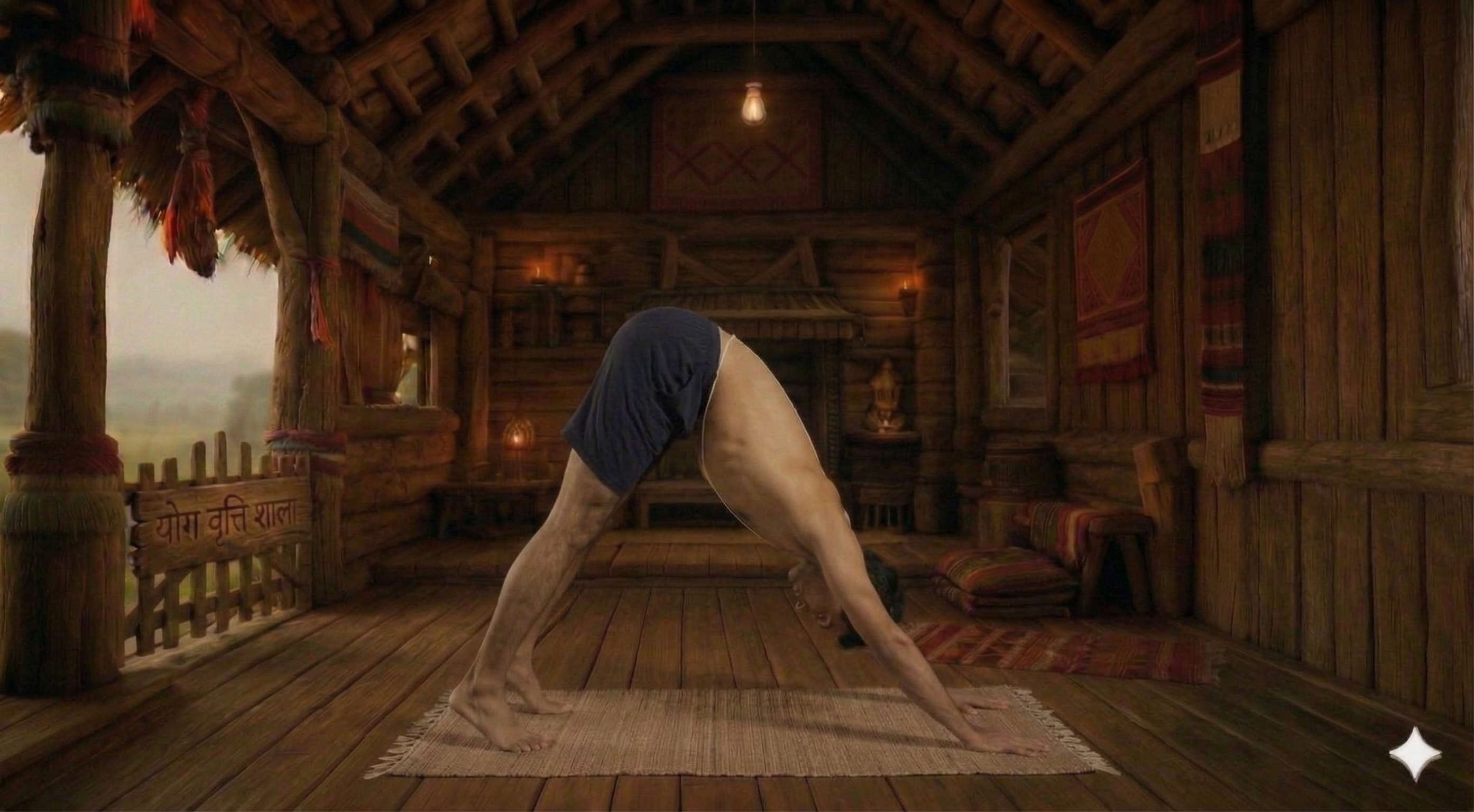
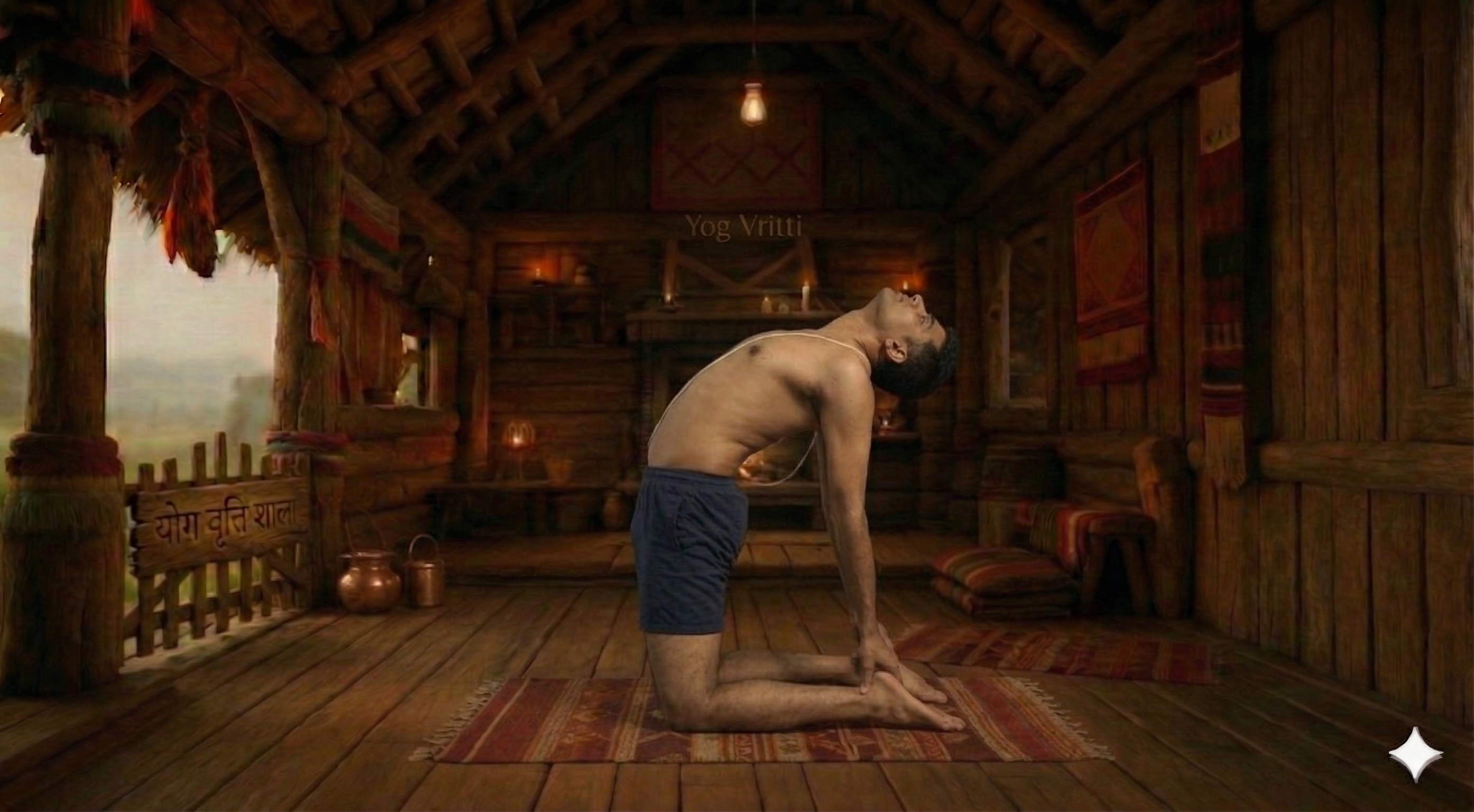

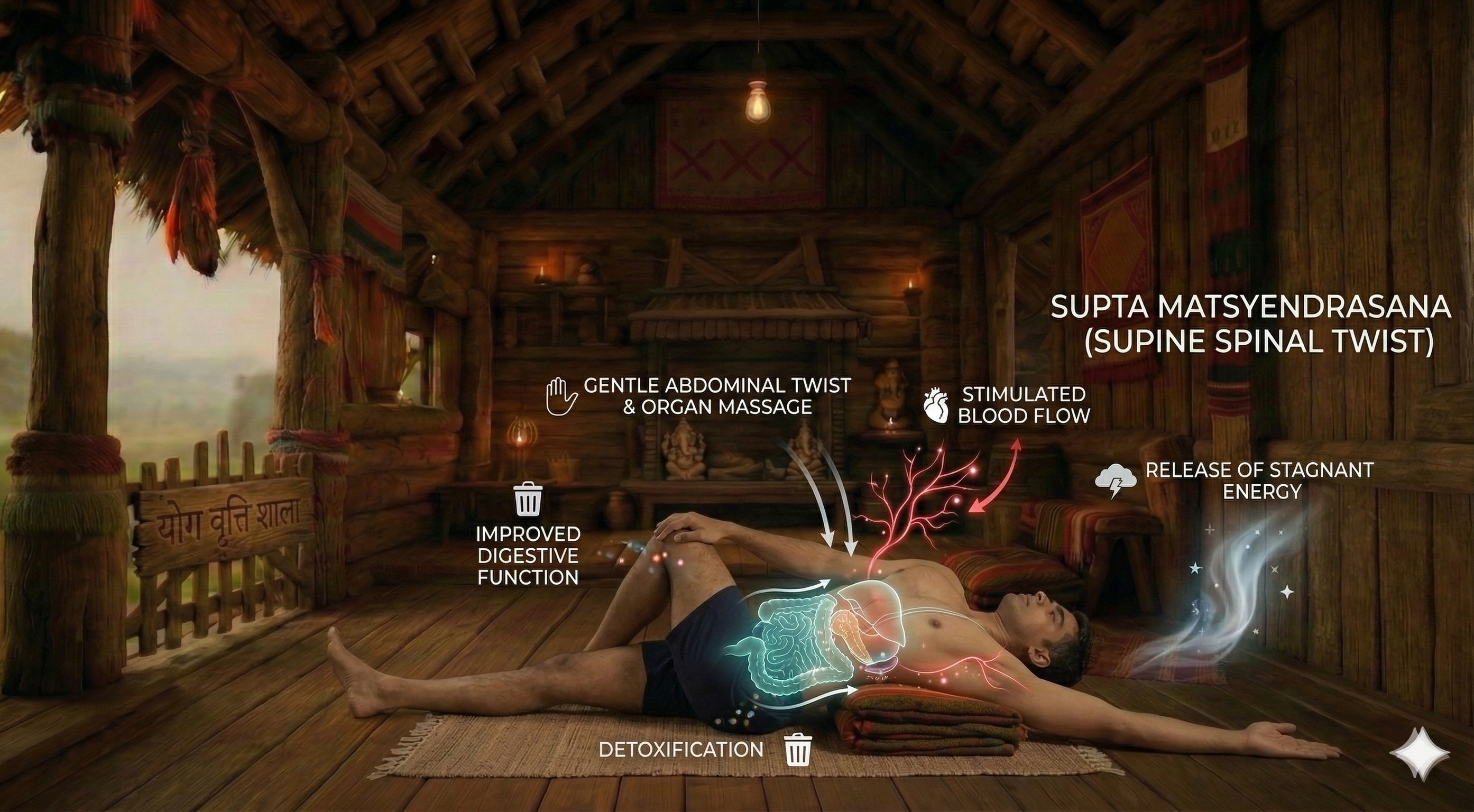
How to Practice
1. Lie face down.
2. Palms beside chest.
3. Inhale — lift chest (Cobra).
4. Arms straight.
5. Bend knees — bring feet toward head.
5 more steps remaining
Register free to see the complete instructions
Register Free to ContinueAlready registered? Login
Frequently Asked Questions
Common questions about Raja Bhujangasana
What is Royal Cobra Pose?
Royal Cobra Pose, also called King Cobra is a classical yoga posture. Its Sanskrit name Raja Bhujangasana translates word-for-word as: Raja (King / Royal) · Bhujanga (Cobra) · Asana (Pose). In this posture, the body opens the chest and stretches the entire front body. The posture works to strengthen the quadriceps, open the chest and open and strengthen the shoulders. Opens entire front body. Builds back strength. It is particularly valued for developing greater flexibility. Suitable for advanced practitioners with developed body awareness, it is a meaningful addition to any practice. Practitioners with spinal injury and neck pain should approach with care or consult a qualified teacher.
What are the benefits of Royal Cobra Pose?
Extreme spinal flexibility. Opens entire front body. Builds back strength. Advanced backbend mastery.
Who should avoid Royal Cobra Pose?
Avoid this pose if you have: Spinal injuries, Neck injuries, Pregnancy, Hernia.
How many steps are in Royal Cobra Pose?
Royal Cobra Pose is practiced in 10 steps. Lie face down.
Is Royal Cobra Pose suitable for beginners?
Royal Cobra Pose is an advanced-level pose. Beginners should practice with props or under guidance.
What conditions does Royal Cobra Pose help with?
Royal Cobra Pose is therapeutic for: flexibility.
What poses should I do before Royal Cobra Pose?
Prepare with: Adho Mukha Svanasana, Upward-Facing Dog Pose, Setu Bandhasana, Camel Pose. These warm up the relevant muscles and joints.
Related Poses
Similar poses you might enjoy
Build Your Own Sequence
Combine Raja Bhujangasana with other poses