खड़े होकर · शुरुआती
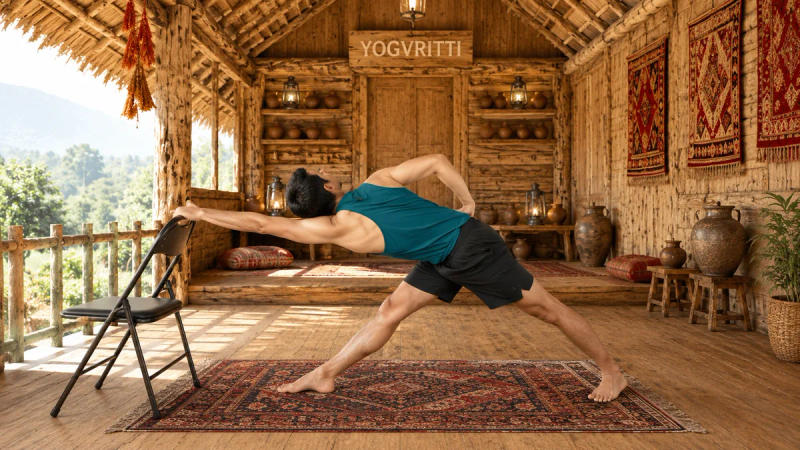
उत्थित पार्श्वकोणासन
Extended Side Angle Pose
UtthitaExtendedParsvaSideKonaAngleAsanaPose
उत्थित पार्श्वकोणासन रीढ़ की हड्डी, कमर और कमर को स्ट्रेच करता है, साथ ही पैरों और टखनों को मजबूत करता है। यह पाचन में सुधार करता है और तनाव से राहत दिलाता है, जिससे ग्राउंडिंग और स्थिरता की भावना को बढ़ावा मिलता है।
स्तर शुरुआतीप्रकार खड़े होकरपक्ष एक ओर
अभ्यास की विधि
ताड़ासन में अपनी चटाई के लंबे किनारे की ओर मुँह करके खड़े हों।
साँस लेते हुए, पैरों को 4 से 4.5 फीट की दूरी पर फैलाएँ या कूदकर खोलें, और बाँहों को कंधों की ऊँचाई तक बगल में, हथेलियाँ नीचे की ओर, उठाएँ।
साँस छोड़ते हुए, दाएँ पैर को 90 डिग्री दाएँ मोड़ें, और बाएँ पैर को थोड़ा अंदर की ओर रखें, बाएँ पैर को मज़बूत रखें।
दाएँ घुटने को तब तक मोड़ें जब तक जाँघ फर्श के समानांतर न हो जाए और घुटना सीधे टखने के ऊपर, समकोण बनाते हुए, आ जाए।
अपनी दाईं हथेली को दाएँ पैर के अंदर फर्श पर या ब्लॉक पर रखें, अपनी दाईं काँख को दाएँ घुटने के बाहरी हिस्से से दबाएँ; वैकल्पिक रूप से, अपनी दाईं कोहनी को अपनी दाईं जाँघ पर टिकाएँ।
शिक्षण संकेत
यह कहें
- Ground firmly through all four corners of both feet
- Engage the quadriceps by lifting the kneecaps
- Lengthen the spine from the tailbone to the crown of the head
- Draw the shoulder blades down and back
- Maintain steady, even breathing throughout
- Allow the hip joints to open gradually — never force
इन पर ध्यान दें
- Locking the knees — keep a micro-bend or engage the quadriceps
- Collapsing the arches of the feet — distribute weight evenly
- Holding the breath or breathing shallowly
- Hunching the shoulders toward the ears
- Leaning weight to one side — keep both feet equally grounded
- Forcing the hips open beyond their current range
शरीर पर प्रभाव
मांसपेशियाँ देखने के लिए किसी भाग पर टैप करें3D anatomy adapted from Z-Anatomy, CC BY-SA 4.0
Hips & glutes
BothExtended Side Angle Pose both stretches and strengthens your hips and buttocks.
Muscles at work
- Hip AbductorsStretches⚑ Limits the pose
The hip abductors stabilize the pelvis in single-leg balance poses like Tree Pose and maintain external alignment during standing postures.
Main action: Abduction of the hip joint
- Gluteus MaximusContractsStretches
Powers hip extension and external rotation in backbends and standing postures while supporting structural grounding.
Main action: extends and outwardly rotates the hip; assists to stabilize fully extended knee via the iliotibial band
- Gluteus MediusContracts
Stabilizes the pelvis and femur in one-legged standing poses and balances internal/external rotation.
Main action: abducts and internally rotates hip; stabilizes pelvis during walking and standing
- Gluteus MinimusContracts
Stabilizes the pelvis and internally rotates the back leg in standing poses like Warrior I to maintain neutral hip alignment.
Main action: Hip abduction and internal rotation
- Tensor Fascia LataContracts
Assists in fine-tuning hip flexion, internal rotation, and turning thighs inward during standing and balancing poses.
Main action: flexes, internally rotates and abducts the hip; supports femur on tibia during standing
- External RotatorsStretches
Position the hips in external rotation for lotus and seated cross-legged postures.
Main action: externally rotate and abduct the hip
⚑ Where you’ll feel it
Tightness in the hip abductors is what usually stops you going deeper here. Ease off at the first strong stretch and keep breathing — don’t force the end range. Props that help: block.
- Stretches the spine, waist, and groin
- Strengthens the legs and ankles
- Improves digestion
- Relieves stress
- Increases stamina
सावधानियाँ
High Blood Pressure
Vigorous effort and inverted positions temporarily raise blood pressure in the head, increasing strain on blood vessels.
बदलाव · Keep arms below shoulder height, breathe steadily, and avoid vigorous transitions.
Headache / Migraine
Physical exertion, inversions, and strong breath work can intensify an existing headache or trigger a migraine.
बदलाव · Keep effort minimal, breathe slowly, and skip any vigorous transitions.
Knee Injury
Deep flexion or rotation at the knee can strain ligaments, meniscus, or cartilage, especially in a compromised joint.
बदलाव · Do not allow the knee to travel beyond the ankle; keep weight evenly distributed and use a block under the hand for support.
Neck Injury / Cervical Issues
Looking up, bearing head weight, or unsupported neck rotation can compress cervical vertebrae and irritate nerves.
बदलाव · Keep the head in a neutral position aligned with the spine; avoid deep neck extension, flexion, or unsupported rotation.
Neck Pain
बदलाव · Keep head neutral, looking forward or down
कक्षा में
 उत्थित पार्श्वकोणासनयह आसन

त्वरित उत्तर
उत्थित पार्श्वकोणासन क्या है?
उत्थित पार्श्वकोणासन रीढ़ की हड्डी, कमर और कमर को स्ट्रेच करता है, साथ ही पैरों और टखनों को मजबूत करता है। यह पाचन में सुधार करता है और तनाव से राहत दिलाता है, जिससे ग्राउंडिंग और स्थिरता की भावना को बढ़ावा मिलता है।
उत्थित पार्श्वकोणासन कैसे करें?
ताड़ासन में अपनी चटाई के लंबे किनारे की ओर मुँह करके खड़े हों। साँस लेते हुए, पैरों को 4 से 4.5 फीट की दूरी पर फैलाएँ या कूदकर खोलें, और बाँहों को कंधों की ऊँचाई तक बगल में, हथेलियाँ नीचे की ओर, उठाएँ। साँस छोड़ते हुए, दाएँ पैर को 90 डिग्री दाएँ मोड़ें, और बाएँ पैर को थोड़ा अंदर की ओर रखें, बाएँ पैर को मज़बूत रखें।
क्या शुरुआती लोग उत्थित पार्श्वकोणासन कर सकते हैं?
हाँ, यह शुरुआती स्तर का आसन है।
- आसन प्रकार
- Lateral Bend, Hip Opener
- मुख्य भाग
- Lower Body, Core, Hips
- किसके लिए
- Beginners, Athletes, Runners
- योग शैली
- Iyengar, Hatha, Vinyasa, Ashtanga
- कब करें
- Warm Up, Peak Pose