twist · beginner· भरद्वाजासन I (संस्थित)
Bharadvaja's Twist with Blanket
Bharadvajasana I (with blanket) · Supported Bharadvajasana
BharadvajaSage BharadvajaAsanaPose with Blanket
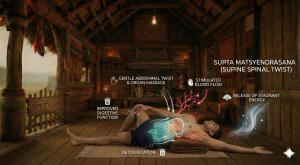
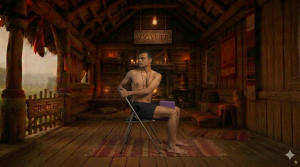
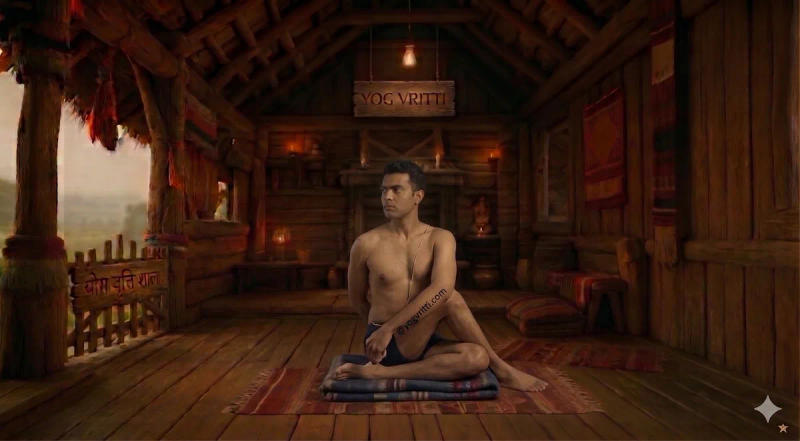
In this posture, the body rotates the spine, creating space between each vertebra. The posture works to lengthen the spine and open and strengthen the shoulders. Stimulates the abdominal organs. Relieves stress and tension. Suitable for beginners and regular practitioners alike, it is an excellent warm-up, particularly beneficial for beginners and seniors. A blanket and block can be used to make the posture more accessible and support correct alignment. Practitioners with pregnancy and digestive problems should approach with care or consult a qualified teacher.
Level BeginnerType TwistSides One side
How to practise
- 1
Begin in Dandasana with your legs stretched out in front, on a folded blanket to lift your hips.
- 2
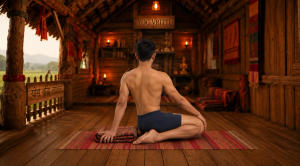
Bend your knees and bring both feet to the left side beside your left hip, with the outer edge of your left foot on the floor.
- 3
Rest your buttocks on the floor, or on the blanket, keeping your spine long.
- 4
Inhale, lengthen your spine and lift your chest.
- 5
Exhale and twist your torso to the right, keeping your spine long.
Teaching cues
Say this
- Lengthen the spine on the inhalation, deepen the twist on the exhalation
- Initiate the rotation from the navel, then the chest, finally the head
- Keep both sitting bones grounded equally
- Maintain the length of the spine — do not collapse into the twist
- Use the breath to create space for the rotation
- Allow the hip joints to open gradually — never force
Watch for
- Forcing the twist from the shoulders instead of initiating from the abdomen
- Rounding the spine — maintain length before rotating
- Lifting one sitting bone off the floor
- Holding the breath during the rotation
- Twisting beyond a comfortable range — respect your body's limits
- Forcing the hips open beyond their current range
What it works
Tap an area to see its muscles3D anatomy adapted from Z-Anatomy, CC BY-SA 4.0
Hips & glutes
BothBharadvaja's Twist with Blanket both stretches and strengthens your hips and buttocks.
Muscles at work
- Gluteus MaximusContracts⚑ Limits the pose
Powers hip extension and external rotation in backbends and standing postures while supporting structural grounding.
Main action: extends and outwardly rotates the hip; assists to stabilize fully extended knee via the iliotibial band
- PiriformisStretches⚑ Limits the pose
Engages to stabilize the sacroiliac joint and control internal/external hip rotation in standing poses and hip openers like Pigeon Pose.
Main action: Lateral rotation, abduction, and stabilization of the thigh at the hip joint
- Gluteus MediusStretches
Stabilizes the pelvis and femur in one-legged standing poses and balances internal/external rotation.
Main action: abducts and internally rotates hip; stabilizes pelvis during walking and standing
⚑ Where you’ll feel it
Tightness in the gluteus maximus, piriformis is what usually stops you going deeper here. Ease off at the first strong stretch and keep breathing — don’t force the end range. Props that help: blanket, block.
- Improves spinal mobility
- Stimulates the abdominal organs
- Relieves stress and tension
- Therapeutic for carpal tunnel syndrome
- Strengthens the back muscles
Take care
Headache / Migraine
Physical exertion, inversions, and strong breath work can intensify an existing headache or trigger a migraine.
Modify · Avoid inversions and strong pranayama; rest in a supported, restorative posture with a cool cloth on the forehead.
Diarrhea
Twisting and strong abdominal compression stimulate intestinal peristalsis, which can worsen diarrhoea.
Modify · Rest and allow the digestive system to recover; practise only very gentle, restorative postures.
Back Injury / Back Pain
Spinal flexion, extension, or rotation under load can compress vertebral discs or strain the paraspinal muscles.
Modify · Initiate the twist from the upper spine and ribs rather than forcing from the waist; keep both sitting bones grounded.
Pregnancy
Deep twists, abdominal compression, and lying flat on the back can restrict blood flow or cause discomfort as pregnancy progresses.
Modify · Twist from the upper thoracic spine only, opening the chest rather than compressing the abdomen; use a chair for support.
In a class
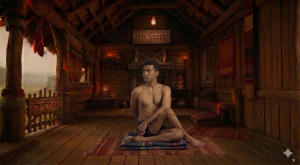 Bharadvaja's Twist with BlanketThis pose

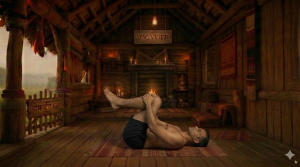

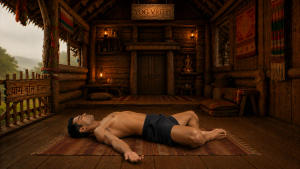
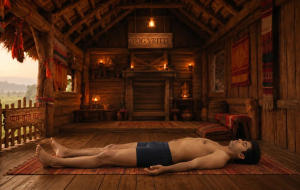
Quick answers
What is Bharadvaja's Twist with Blanket?
In this posture, the body rotates the spine, creating space between each vertebra. The posture works to lengthen the spine and open and strengthen the shoulders. Stimulates the abdominal organs. Relieves stress and tension. Suitable for beginners and regular practitioners alike, it is an excellent warm-up, particularly beneficial for beginners and seniors.
How do you do Bharadvaja's Twist with Blanket?
Begin in Dandasana with your legs stretched out in front, on a folded blanket to lift your hips. Bend your knees and bring both feet to the left side beside your left hip, with the outer edge of your left foot on the floor. Rest your buttocks on the floor, or on the blanket, keeping your spine long. Inhale, lengthen your spine and lift your chest. The full 9 steps are above.
What are the benefits of Bharadvaja's Twist with Blanket?
Improves spinal mobility. Stimulates the abdominal organs. Relieves stress and tension. Therapeutic for carpal tunnel syndrome.
Which muscles does Bharadvaja's Twist with Blanket work?
Bharadvaja's Twist with Blanket mainly works the spine, abdomen and shoulders.
Is Bharadvaja's Twist with Blanket good for beginners?
Yes, it is a beginner-level pose. Useful preparation: Supine Mountain Pose, Knees-to-Chest Pose and Seated Mountain Pose.
Who should avoid Bharadvaja's Twist with Blanket?
Take extra care, or skip it, with headache / migraine, diarrhea, back injury / back pain or pregnancy. If you are unsure, check with a qualified teacher or your doctor first.
Which props help with Bharadvaja's Twist with Blanket?
Helpful props: blanket and block.
- Pose type
- Twist, Hip Opener
- Body focus
- Spine, Hips, Shoulders
- Best for
- Beginners, Seniors, Prenatal, Postnatal, Desk Workers
- Yoga styles
- Iyengar, Hatha, Restorative
- When to practise
- Warm Up, Cool Down, Restorative, Quick Practice