





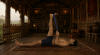
पीठ के बल · शुरुआती
सुप्त पादांगुष्ठासन I (दीवार)
Reclined Big Toe Pose at Wall · Supta Padangusthasana I at wall
SuptaRecliningPadaFootAngusthaBig ToeAsanaPose — I
सुप्त पादांगुष्ठासन I की यह दीवार भिन्नता टिके हुए पैर के लिए दीवार को सहारे के रूप में उपयोग करती है, श्रोणि को स्थिर और दोनों पैरों को सही संरेखण में रखती है।
स्तर शुरुआतीप्रकार पीठ के बलपक्ष एक ओर
अभ्यास की विधि
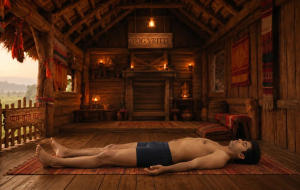
अपनी पीठ के बल लेटें, दोनों पैरों को सामने फैलाएँ और दोनों पैरों के तलवों को दीवार पर सीधा टिकाएँ।
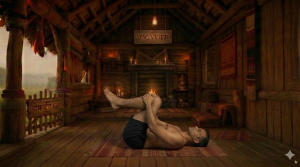
दाएँ घुटने को छाती की ओर मोड़ें और दाएँ पैर के पंजे पर स्ट्रैप लपेटें।
स्ट्रैप के दोनों सिरों को अलग-अलग हाथों से पकड़ें, बाँहें सीधी रखें और कंधों को फर्श पर टिका कर रखें।
साँस छोड़ते हुए दाएँ पैर को सीधा ऊपर छत की ओर नब्बे डिग्री के कोण पर उठाएँ।
बाएँ पैर को फर्श पर मज़बूती से टिका कर रखें और बाएँ तलवे को दीवार पर दबा कर रखें।
शिक्षण संकेत
यह कहें
- Press the back of the head gently into the floor
- Keep the lower back in its natural curve
- Relax the shoulders away from the ears
- Soften the facial muscles and jaw
- Breathe deeply into the belly
- Hinge from the hips, leading with the chest
इन पर ध्यान दें
- Lifting the shoulders toward the ears — keep them relaxed
- Flattening the natural curve of the lower back
- Tensing the facial muscles and jaw
- Holding the breath
- Forcing the legs into position rather than using props for support
- Rounding the spine instead of hinging from the hips
शरीर पर प्रभाव
मांसपेशियाँ देखने के लिए किसी भाग पर टैप करें3D anatomy adapted from Z-Anatomy, CC BY-SA 4.0
Hip flexors
StrengthenedReclined Big Toe Pose at Wall strengthens the front of your hips.
Muscles at work
- Hip FlexorsContracts
Acts as a key polyarticular core and hip flexor that links the lower back, pelvis, and hips in standing, lunging, and balancing poses.
Main action: flexes and laterally rotates the femur at the hip; flexes the trunk and anteverts the pelvis
- Ensures proper alignment during hamstring stretch
- Wall provides feedback for the grounded leg
- Deeper stretch with less compensatory movement
- Excellent for beginners learning alignment
- Therapeutic for lower back pain
सावधानियाँ
Hamstring Injury
Aggressive stretching of a torn or strained hamstring can reinjure muscle fibres — the attachment near the sitting bone is especially vulnerable.
बदलाव · Bend the knees significantly to remove tension from the hamstrings; fold only as far as the spine stays long.
Hip Injury
Deep hip flexion, external rotation, or weight-bearing can aggravate labral tears, impingement, or bursitis.
बदलाव · Limit the range of hip movement, avoid positions that cause clicking or sharp pain, and use props to support the hip.
Sciatica
बदलाव · Bend the knee of the lifted leg more, focus on gentle stretch, not pushing.
Knee Injury
बदलाव · Keep the knee bent, use a strap around the foot if needed for gentle pull.
Back Pain
बदलाव · Ensure the lower back is neutral on the floor, place a blanket under sacrum if needed.
Pregnancy
बदलाव · Use a bolster under the head, ensure comfort, avoid overstretching.
कक्षा में
 सुप्त पादांगुष्ठासन I (दीवार)यह आसन


त्वरित उत्तर
सुप्त पादांगुष्ठासन I (दीवार) क्या है?
सुप्त पादांगुष्ठासन I की यह दीवार भिन्नता टिके हुए पैर के लिए दीवार को सहारे के रूप में उपयोग करती है, श्रोणि को स्थिर और दोनों पैरों को सही संरेखण में रखती है।
सुप्त पादांगुष्ठासन I (दीवार) कैसे करें?
अपनी पीठ के बल लेटें, दोनों पैरों को सामने फैलाएँ और दोनों पैरों के तलवों को दीवार पर सीधा टिकाएँ। दाएँ घुटने को छाती की ओर मोड़ें और दाएँ पैर के पंजे पर स्ट्रैप लपेटें। स्ट्रैप के दोनों सिरों को अलग-अलग हाथों से पकड़ें, बाँहें सीधी रखें और कंधों को फर्श पर टिका कर रखें। साँस छोड़ते हुए दाएँ पैर को सीधा ऊपर छत की ओर नब्बे डिग्री के कोण पर उठाएँ।
क्या शुरुआती लोग सुप्त पादांगुष्ठासन I (दीवार) कर सकते हैं?
हाँ, यह शुरुआती स्तर का आसन है।
- आसन प्रकार
- Forward Bend
- मुख्य भाग
- Lower Body, Hips
- किसके लिए
- Beginners, Seniors, Prenatal
- योग शैली
- Iyengar
- कब करें
- Cool Down, Restorative